
GTM Engineering
Pipeline comes from two places. Most agencies only build for one.
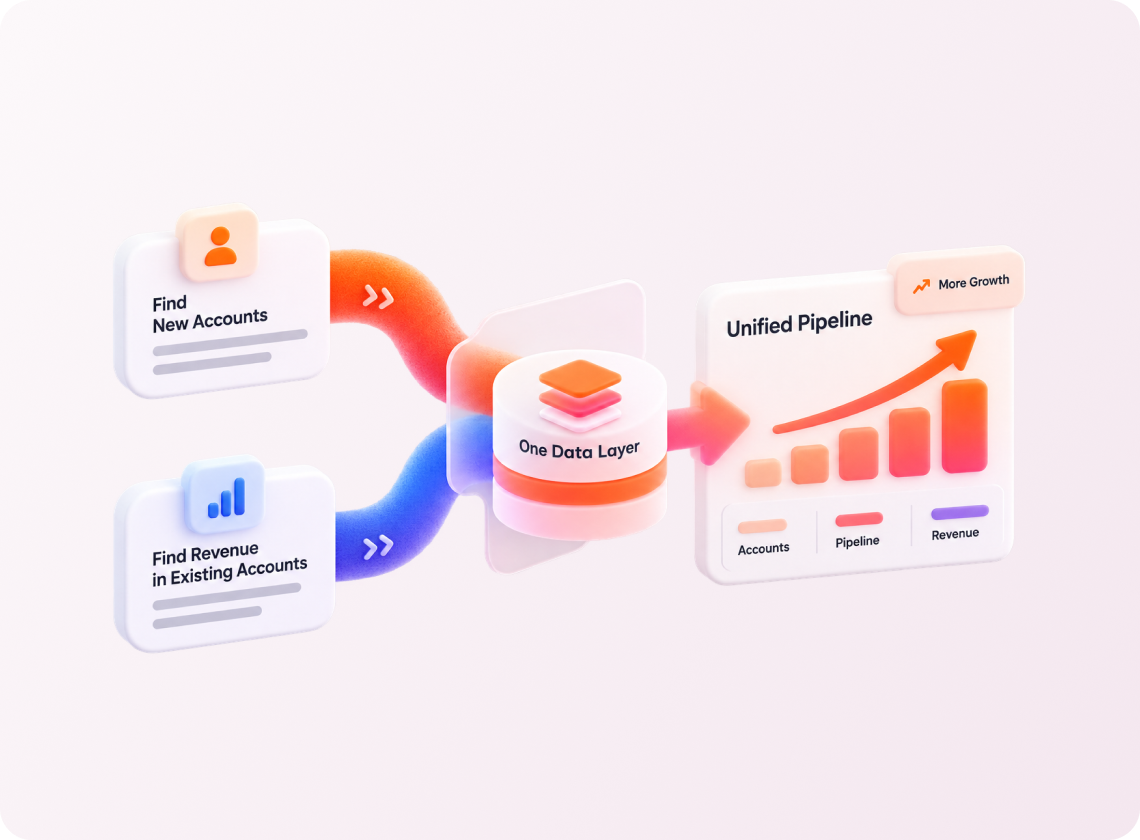
Nextvant engineers both: the system that finds new accounts and the system that finds revenue inside accounts you already won. Take either one on its own, or run both on one data layer.
Trusted by B2B software teams who needed a system, not another tool






Two services
Two different problems.
Two different builds.
New logo and expansion are not two halves of one program.
Different signals, different buyers, different plays.
What we build for new accounts.
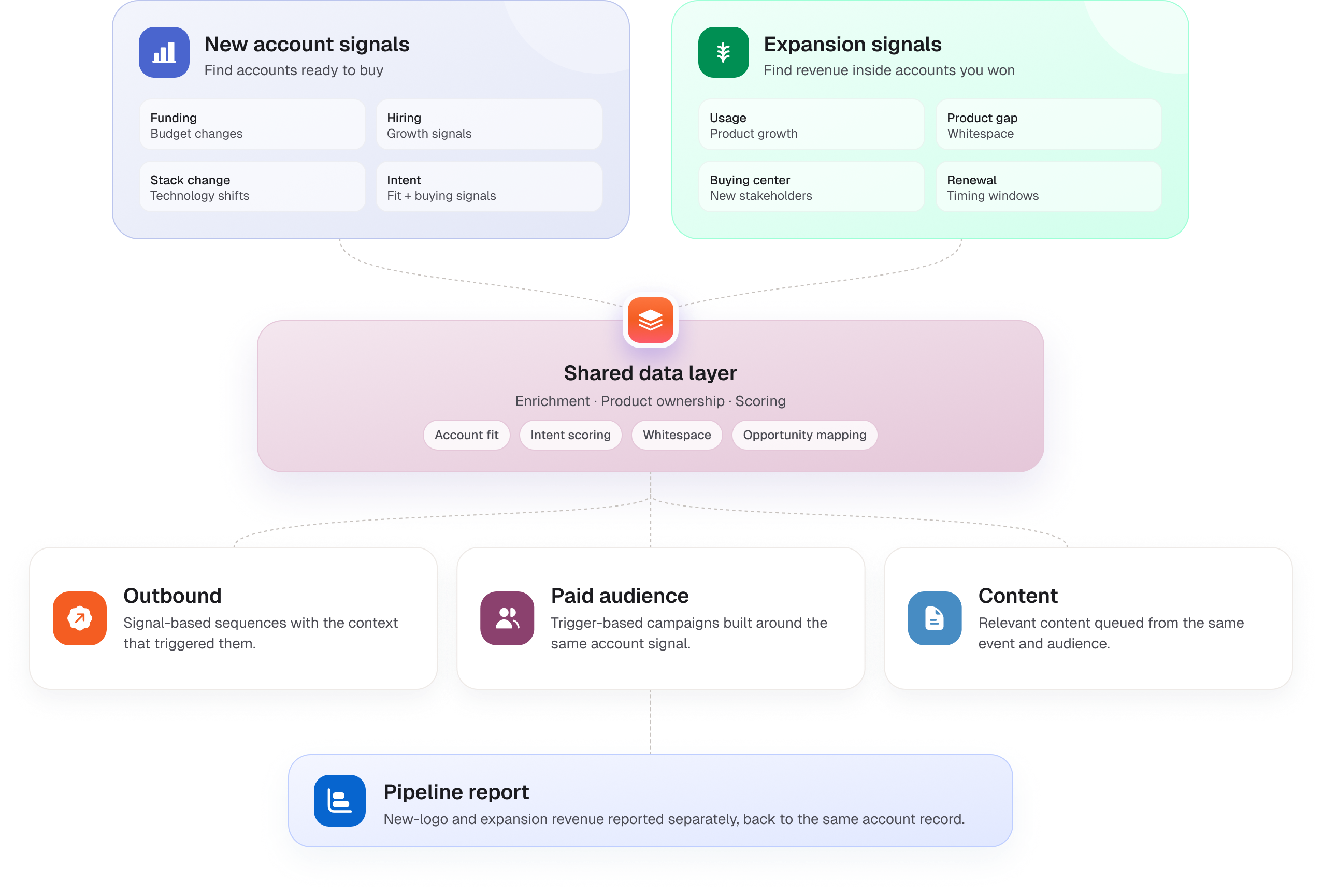
Enrichment, fit-and-intent scoring, and triggers on funding, hiring and tech stack
changes, wired to outbound, paid and content.

CRM data and enrichment
Continuous enrichment and a documented data model records your team trusts.

Signal-based outbound
Triggers on funding, hiring and stack changes, wired to sequences that carry the signal.

Signal-triggered paid and content
The same trigger builds an ad audience and queues the content that follows.
What we build for expansion
Whitespace mapping, expansion signals inside the install base, and campaigns
reaching stakeholders your team never contacted.

Whitespace mapping
Every account mapped against everything you sell, and who inside would buy it.

Expansion signal detection
Usage growth, relevant hires, renewal windows and product gaps, scored.

Multi-threaded paid and outbound
Campaigns reaching new buying centers, not the one contact you already have.
If you run both
Two services. One data layer underneath.
How We Work
Four jobs. Whichever service you buy.

Fix the data layer
Enrichment that stays current, not a cleanup that comes undone.

Score fit and intent
One number combining fit, intent and whitespace.

Fire signals across three channels
Models repeat outdated pricing and wrong categories. We find the sources feeding those errors and fix them.

Report what each one produced
Every channel writes back to the same record.
Explore by play
Four plays you could run next quarter


HOW AN ENGAGEMENT WORKS
Built in public. Yours to keep.
Teardown
What to keep, cut, build or consolidate, and which service first.
Data layer
Enrichment, or product ownership and whitespace. Nothing ships before it.
Signals live
Two-week cycles, something shipped at the end of each.
Hand Over
Every play documented, every tool in your name.
Integrations
We build inside the stack you already pay for.
We resell none of them, so recommendations aren’t commissions.
CRM and Reporting


Enrichment and Signals




Activation


FAQ
Frequently asked questions
What is GTM engineering?
GTM engineering is go-to-market built as a system rather than a headcount plan. The data layer, the account scoring, the triggers and the channel activation are engineered and wired together inside the CRM you already own, so revenue runs on infrastructure instead of individual effort.
Can we buy just the expansion work?
Yes. Account expansion is a standalone service and most companies who come to us for it never buy the acquisition side. It runs on data you already own, so it does not depend on any enrichment or sourcing work happening first.
Can we buy just the new account work?
Yes. If you sell one product to one buying center, expansion has nothing to work with yet and the acquisition build is the right starting point.
How do we know which one we need?
Expansion needs more than one product, or more than one buying center, and enough install base for whitespace to exist. If you have that, expansion revenue is usually cheaper and faster to win. If you do not, new accounts is the only real option. The teardown answers this in two weeks.
What is whitespace mapping?
Mapping every existing account against everything you sell to show what they have not bought, then identifying who inside that account would buy it. It turns an install base into a target list, and it runs on data you already own rather than data you have to purchase.
How is GTM engineering different from RevOps?
RevOps owns the process, the forecast and the reporting. GTM engineering builds the systems those processes run on. Most teams call us when RevOps already knows what it needs and has nobody to build it. Nextvant does both, because handing a specification to a separate build team is where most programs stall.
What is signal-based outbound?
Outbound triggered by something that actually happened at an account rather than by a list and a send date. A funding round, a job change, a competitor tool appearing in the stack, a usage jump, a renewal window. The signal decides who gets contacted and when, and it carries the context into the message.
Most agencies route a signal to a rep. What do you do differently?
The same trigger also builds an ad audience and queues the content that follows. Nextvant runs paid media and content in-house rather than subcontracting them, so all three channels fire off one event and report to the same account record. Routing to a rep is one third of what a signal is worth.
Do you build in Clay?
We use Clay where it earns its place, usually enrichment waterfalls and research agents, but never as a dependency. The data model, the triggers and the reporting live in your CRM. We have no reseller or partner relationship with any enrichment vendor, so what we recommend is what you need.
Which CRM do you work in?
Yours. Nextvant is a HubSpot Gold Partner and most builds run there. We also work alongside Salesforce, including setups where marketing runs on one platform and sales on the other.
How long before the pipeline moves?
The data layer goes first, usually running in the opening weeks. Signals go live once scoring is trusted. Expansion tends to move faster, because the relationships already exist and the only missing piece is knowing which account and which buyer.
What do you need from us to start?
Admin access to your CRM, whatever outbound and ad accounts you already run, and one internal owner who can make decisions about processes. For expansion work, add whoever owns Customer Success, since the install base is theirs.
Let’s Talk
Bring your CRM and whichever motion is under pressure. The teardown shows what to keep, cut, build or consolidate. You keep the findings.