B2C companies often prioritize emotive and narrative-driven messaging to resonate with their customers’ needs, desires, and aspirations.
B2B messaging is more feature- and benefit-focused, addressing clients’ business needs, challenges, and ROI.
To illustrate these differences in messaging approaches, let’s examine how five renowned B2B SaaS companies effectively communicate their value proposition.
Each example offers unique insights into how messaging can be tailored to highlight product features and benefits and resonate deeply with specific business audiences.
Dropbox: “Keep life organized and work moving—all in one place.”
Shopify: “Anyone, anywhere, can start a business.”
Zoom: “Bringing the world together, one meeting at a time.”
We aim to uncover actionable insights and a replicable framework for effective B2B SaaS messaging by dissecting these examples.
TL;DR:
7 Steps to crafting compelling messaging for B2B SaaS Product
The Power of Storytelling
Understanding the Audience
Defining Your Product’s Unique Value Proposition
Crafting a core message
Incorporating Emotional Appeal
Testing and Refining the Message
Consistency Across Channels
The Power of Storytelling
Imagine a startup founder, Jack, who developed an innovative Project management tool. Despite its advanced features and required marketing efforts, it needed to gain traction.
Enters Sarah, a seasoned product marketer who crafts messaging around the tool’s features and connects it to compelling stories about struggling teams that benefited from it.
The new message profoundly resonates with the customers and drives engagement and sales.
The story illustrates the power of effective product messaging.
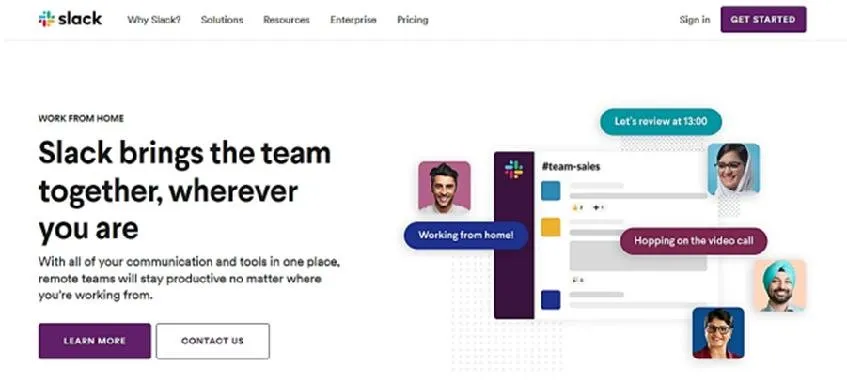
Developed initially as an internal tool for a gaming company, Slack began to gain traction when it shifted its messaging to focus on how its tool could revolutionize team communication by reducing email overload.
This narrative, highlighting a common pain point and offering a clear, compelling solution, resonated deeply with their target audience, leading to widespread adoption and success.
It’s not just about listing the features but about weaving the narratives that connect your products to the customers’ lives.
Understanding the Audience
In B2B Messaging, understanding your audience is paramount. It is about recognizing all segments of your target audience, their unique needs and preferences, and tailoring your messaging to their needs.
Identifying your audience: Identify your primary and secondary target audience segments. Use market research, customer interviews, and data analysis to gather comprehensive information on your target segment.
Needs and Preference: Use surveys and interviews to identify your target audience’s needs and preferences. Visit third-party review sites and forums to learn what your audience wants.
Pain points: Identifying customers’ challenges is crucial. Analyze customer feedback and market trends. Find common keywords that represent challenges on the third-party sites if you need customer data.
Build Personas and customer lifecycle: Create a detailed customer persona based on your research. This helps in crafting messaging that resonates with the target profile. Understanding the customer lifecycle also helps deliver the right message and time.
Continuous Learning: The audience’s needs and the market are dynamic and keep evolving, and your messaging should grow with them. It’s essential to go back to the messaging exercise once every month or quarter, depending on your business, and look at the marketing trends. *Top Tip – Scour through competitor reviews on third-party review sites like G2Crowd and create a list of common keywords mentioned in the problem they were looking to solve. Similarly, list keywords mentioned on how the competitor has solved the issue.
Taking Slack as an example again, its messaging, “Slack replaces email inside your company,” shows a deep understanding of its audience’s need for efficient communication. Their approach demonstrates how well they know their target market’s pain points.
Another example that you can refer to –
Shopify: “Anyone, anywhere, can start a business.”
Audience’s Needs: Starting an online business quickly.
Messaging: Inclusive and empowering, highlighting accessibility.
Defining Your Product’s Unique Value Proposition
The product’s unique value proposition is the cornerstone of your messaging framework. A clear UVP helps your product stand out in a crowded market but also helps drive attention and boost conversions.
Start by listing your product’s unique features. Think of all that differentiates you from your competitor. It could be a product feature, customer service, pricing model, or something else.
Most consumers want to understand what a product can do for them. Translate your unique feature into a tangible benefit for the customer. Demonstrate how the UVP would help them reach the promised land.
Create a clear, concise, and compelling statement that combines the unique value proposition with the product offering that resonates with the target audience.
Test your UVP with a segment of your target audience. Gather feedback and refine it to ensure it resonates with them.
Messaging: Straightforward, focuses on CRM solutions.
Salesforce messaging clearly articulates its Unique Value in offering a comprehensive CRM tool. This highlights the importance of defining a UVP that resonates with specific business needs.
Another great example to refer
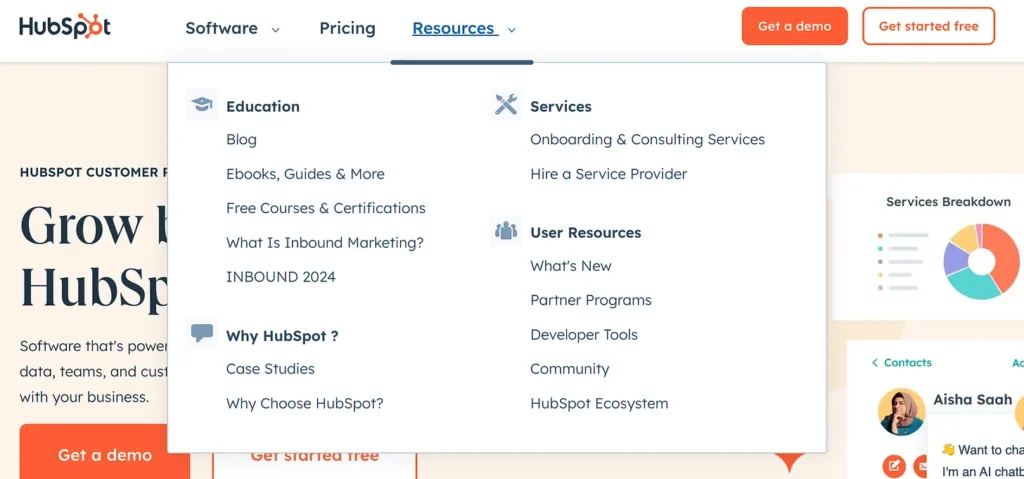
HubSpot, initially known for its inbound marketing software, strategically expanded its messaging to encompass a broader range of CRM tools and services.
This transition allowed HubSpot to target a more comprehensive business audience, addressing various customer management and marketing needs. Their messaging evolution mirrored this shift, focusing on complete, integrated business solutions.
*Tip – Highlight the UVP with statistics if possible. Relatable statistics help underscore the impact of UVP.
Crafting a core message
Crafting a compelling core message for your B2B product is like distilling its essence – what problem will it solve, or how does it enhance the users’ experience?
Next, identify your product’s unique features and translate them into benefits that resonate with customer needs.
The objective is to develop a clear and concise message and to bring out the essence of your products and their value proposition. Ensure that the message is relevant and targeted to your audience.
Once your core message is crafted, test this message with a small segment of your audience. Keep refining it as you receive the feedback.
Dropbox: “Keep life organized and work moving—all in one place.”
Audience’s Needs: Organizing files and facilitating work.
Unique Features: Cloud storage is accessible from anywhere.
Benefits: Streamlined organization and workflow.
Messaging: Emphasizes the all-in-one solution for work and life.
“Keep life organized and work moving—all in one place,” by Dropbox, exemplifies a clear and benefit-focused core message, aligning with their customers’ streamlined workflow needs.
Incorporating Emotional Appeal
Often, B2B messaging is dry of emotion, talking only about features and products. Emotional appeal in messaging is about connecting with your audience beyond features and benefits, tapping into aspects that drive business decision-making.
While crafting the messaging, it is essential to understand the emotional appeal of your persona – their desire for success and innovation. Crafting a message that speaks to these emotional needs and showing how your product supports these aspirations is extremely important.
Research indicates that emotional factors significantly influence B2B buyers. A CEB study found that B2B customers are more emotionally connected to their vendors than consumers.
Use your storytelling skills to create a narrative the audience can relate to, such as overcoming a business challenge your product solves. Messaging with a story humanizes a brand and makes it more relatable.
Emotionally engaged customers are three times more likely to recommend a product than to re-purchase.
IBM’s “Let’s Put Smart to Work” campaign is a great example. It goes beyond the technical prowess of IBM’s solutions and taps into the emotional aspect of innovation and making the world better through technology.
Incorporating emotional elements into your messaging can transform how users perceive your product.
Testing and Refining the Message
While crafting messaging requires much research and analysis, testing and refining the message constantly becomes essential. Below are a few ways to test your messaging –
A/B Testing – Conduct A/B tests by sending two variations of your message to a small audience segment—track which version garners more engagement or conversions.
Feedback Surveys – After message exposure, use surveys to gather direct feedback from the audience. Ask specific questions about message clarity, relevance, and persuasiveness.
Focus Groups – Organize focus groups with a sample of your target audience. Discuss the messaging in-depth to gain qualitative insights.
Refining your messaging
Analyze the data from these tests to understand what aspects of your messaging resonate the most. Make necessary adjustments, focusing on the elements that received positive responses.
Consistency Across Channels
In B2B marketing, ensuring that the message remains consistent across all the channels is as essential as the message itself. A unified core message should be the backbone for all your communication on your website, social media, Press release, or email.
However, tailoring your messaging to the platform’s nuances becomes essential, retaining the message’s essence. Ensure that the message is being regularly monitored and updated while maintaining uniformity.
Conclusion
In conclusion, creating an effective messaging strategy for your B2B product requires understanding your audience, defining the unique value proposition, and ensuring uniformity across the marketing channels.
The key to successful messaging lies in keeping your messaging up to date with the changing dynamics and requirements of your consumer and target audience.
The journey of perfecting your product’s message is ongoing and demands adaptability.
Product Marketing Managers (PMM) are crucial in bridging the gap between product and marketing. However, there often needs to be more clarity regarding the budget allocation for PMMs.
In an organization, Product marketing stands at a crossroads where products, markets, and finances converge, holding the reins of Brand positioning, market penetration, and customer engagement strategies.
Yet amidst the intricate role, one element often emerges as a formidable challenge: Budgeting.
This blog ventures into the heart of this challenge, drawing from diverse experiences and insights gathered from PMMs across geography.
It sheds light on the intricacies of budget resource distribution, prioritizing spending, and budget allocation to ensure that their product reaches the right market and thrives in it.
Do PMMs Have a Dedicated Budget?
The landscape of budget allocation for PMMs is of varied experiences and practices.
Drawing insights from over 30 Product Marketers, we’ll delve into budget allocation nuances, spending priorities, and strategies.
“If the head of PMM reports to the CEO directly, they would have a budget. Otherwise, it sits with the Head of Marketing. But of course, one can spend a % marketing budget on PMm core activities.”
Here are the learnings
Varied Experience: Some PMMs report having a dedicated budget, while others rely on shared resources from departments like Product or Marketing.
Dependence on Company Structure: Budget allocation to PMMs also depends heavily on the company’s internal structure and reporting hierarchy. Often reflecting how they perceive and value the role of product marketing in their corporate ecosystem.
Challenges and Strategies in PMM Budget Management
Managing the PMM budget is like balancing a thin rope between significant product launches on a tight budget.
The challenge is not just about managing the money; it’s also about proving why each expense is essential for the product’s success.
Product Marketers must be good with different teams and departments because they often have to pull resources and put them together in a way that makes the most sense to their marketing plan.
The key to doing well in this role is working with others effectively and being smart about using your budget.
How PMMs Spend Their Budgets?
The budgetary allocation by PMMs encompasses a spectrum of activities essential for the product’s life cycle.
From sponsoring insightful collaterals crafted by third-party analysts that may include performance benchmarks and competitive landscapes to sponsoring product-specific promotions at trade shows and user groups.
The budget also includes dedicated investment into customer interaction, content creation, and targeted product marketing campaigns, each tailored to the unique messaging and positioning of the product.
6 steps to create a Product Marketing budget
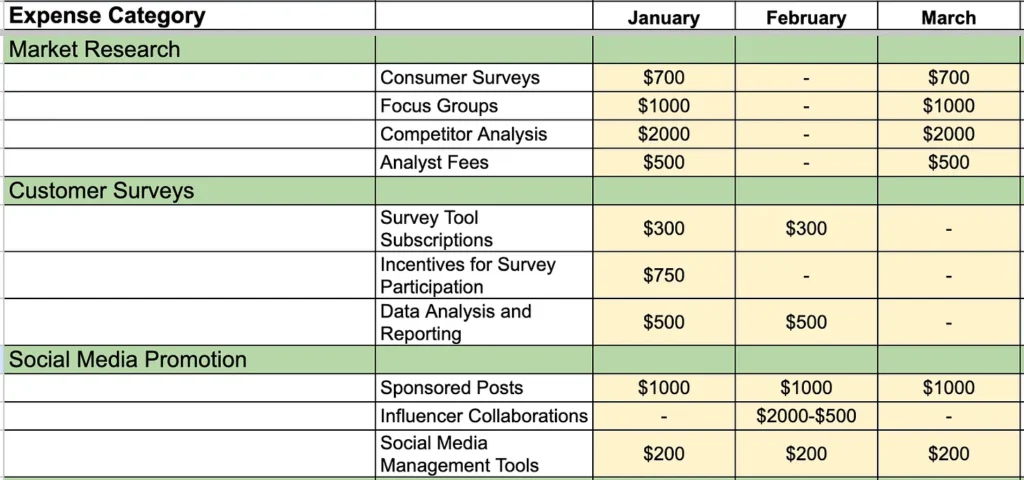
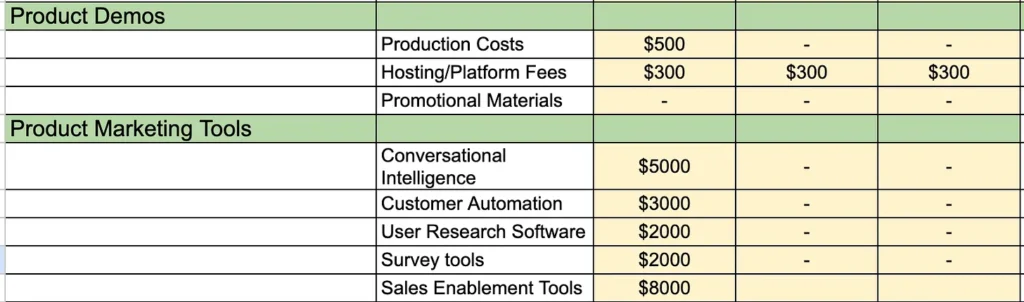
Step #1: Calculate the cost of Essential Components of Product Marketing
This category encompasses the critical elements necessary for effective product marketing.
It includes costs of obtaining external market insights from third-party analyst firms, direct promotional activities tailored to the product and engaging with customers through interviews.
These components are vital for understanding market trends, positioning the product effectively, and gaining customer feedback.
Third-Party Analyst Firms: Expenses for external market research, analyst reports, competitive analyses, and industry insights.
Product-Specific Promotion: Costs associated with promoting the product, such as advertising, user groups, trade shows, and third-party reviews.
Customer Interviews and Advisory Boards: Expenses for conducting customer interviews and setting up customer advisory boards, including any related travel and hospitality costs.
Step #2: Estimate Basic Expense
The fundamental cost of creating and distributing marketing content falls under this category.
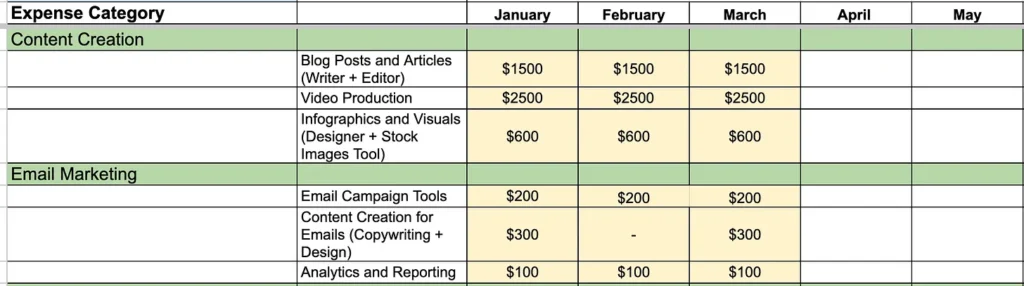
It includes budgeting for content creation across all formats, managing email marketing campaigns, including emailing tools for content creation, and conducting market research to understand consumer behavior and the competitive landscape.
These expenses are foundational to any marketing strategy, ensuring consistent communication and market understanding.
Content Creation: This includes costs for creating blog posts, articles, videos, infographics, and other marketing collateral.
Email Marketing: Budget for email campaign tools, content creation, and analytics.
Market Research: Funds allocated for conducting consumer surveys, focus groups, and competitor analysis.
Step #3: Calculate the Fixed Cost
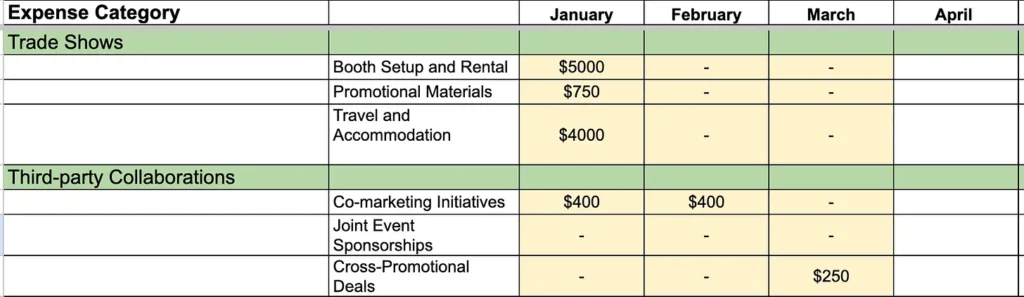
This category covers the more predictable, non-variable costs associated with events, tradeshows, and partnerships.
It includes all expenses associated with participating in Trade shows, organizing promotional events, and costs arising from strategic partnerships and collaboration.
These fixed costs are crucial for planning and networking opportunities and amplifying product visibility in the market.
Events and Trade Shows: Costs for booth setup, rental, promotional materials, and associated travel and accommodation for trade shows and other promotional events.
Partnerships and Collaborations: Budget for joint marketing initiatives, event sponsorships, and cross-promotional deals.
Step #4: Calculate the Technology Cost
Here, the focus is on the investment in marketing technology and tools.
This includes software for customer relationship management, data analytics platforms, and social media management tools.
Technology costs are essential for modern marketing operations, enabling efficient campaign management, data analysis, and customer engagement.
Marketing Tools and Platforms: Investment in marketing software and tools, such as CRM systems, analytics platforms, social media management tools, and other technology solutions that support marketing efforts.
Step #5: Estimate your miscellaneous costs
This category is reserved for unforeseen expenses and innovative marketing experiments. It accounts for unexpected costs during marketing initiatives and provides a buffer for exploring new marketing tactics, tools, or campaigns.
Allocating funds for miscellaneous costs ensures flexibility and the ability to adapt to changing market conditions or to capitalize on new opportunities.
Unexpected Expenses: Allocation for unforeseen costs that may arise during the execution of marketing plans.
Innovation and Experimentation: A portion of the budget for trying new marketing tactics, tools, or campaigns that may fall outside the regular marketing activities.
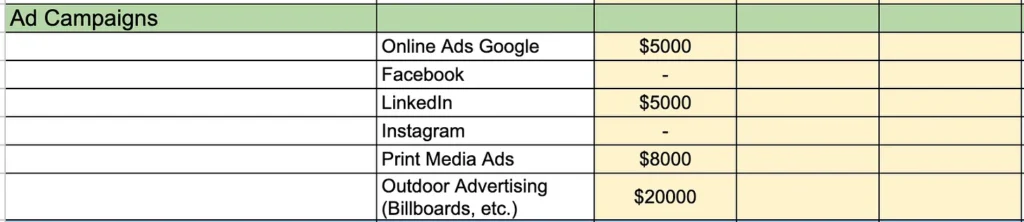
Step #6: *Estimate Ad Campaign Costs
“It depends on what you can get away with in your company. Often, you would be stopped because you are on some other marketing team’s turf. It’s risky to try a campaign without corporate buy-in.”
Product Marketing Managers (PMMs) are responsible for a product’s overall positioning, messaging, and go-to-market strategy.
This can include overseeing or collaborating on ad campaigns, primarily when these campaigns are directly related to product launches, feature updates, or specific product-focused promotions.
PMM might work closely with Ads or Demand Generation teams to ensure the Ads align with the strategy.
However, in many organizations, the creation and management of ad campaigns are primarily handled by a separate marketing or advertising team, like a Demand Generation team.
PMMs in these settings might provide input on the product-related aspects of the campaign but might not directly control the budget or execution of the campaigns.
In summary, whether ad campaigns fall under the purview of Product Marketing can vary based on how a company organizes its marketing functions and allocates responsibilities between different teams.
In some companies, PMMs have direct involvement and budget allocation for ad campaigns, while in others, they may play a more consultative role, focusing on product strategy and messaging.
Tips for managing Product Marketing budget
Here are some tips for managing your Product Marketing budget effectively throughout the year:
Align with Business Goals: Ensure your budget aligns with the broader business objectives. Understand the company’s key performance indicators (KPIs) and tailor your budget to support these goals.
Prioritize Wisely: Identify and prioritize high-impact initiatives that promise the greatest return on investment (ROI).
Stay Agile: Be prepared to reallocate funds as needed to capitalize on new opportunities or adjust to shifting market dynamics.
Leverage Cross-Functional Collaboration: Product marketing doesn’t operate in a silo. Work closely with sales, product development, and other departments to ensure your budgeting decisions support broader company initiatives.
Track your spending: It is essential to track your spending to stay within your budget. This will also help you to identify areas where you can save money.
Embrace Experimentation: Set aside a portion of your budget for testing new strategies and tools. This might include experimenting with new marketing platforms, trial campaigns, or emerging market trends.
Use free and low-cost recruitment tools: Several free and low-cost tools are available. Try them out.
Plan for Scalability: As your product and market presence grow, your budgeting needs will evolve. Plan for scalability by building a flexible budgeting framework accommodating growth and change.
Spend on skill development: Learning and skills development of the team are just as important as tech skills in the industry.
Stay Informed on Market Trends: Keep your finger on the pulse of the latest marketing trends and technologies. Staying informed helps you make more educated decisions about where to allocate your budget for maximum impact.
Plan your recruiting budget effortlessly.
Ensure that your cost does not increase exponentially for any given year and should be in sync with the business goal, revenue growth, and the number of customers. Download a sample budgeting sheet for 2024.
As the calendar flips to new pages. And we enter the first month of a new year.
SaaS companies across the globe come up with their share of reports.
But the report that is much awaited by SEO experts, content writers, Performance marketers, and product marketers alike is – the SEMRush Google Ranking Factors Report.
The latest report is 99 pages long! 😮💨 (If you still wish to read it, you can find it – here)
But
I decided to read it, and here is everything I found interesting.
But before we start
What are Google Ranking factors, and why should I care?
Let’s start with how Google explains it –
“To give you the most useful information, Search algorithms look at many factors and signals, including the words of your query, relevance, usability of pages, expertise of sources, and your location and settings. The weight applied to each factor varies depending on the nature of your query.” (ref)
To put it in simple terms
Ranking factors are elements or signals of your website that Google considers while looking for information.
These could be the content’s relevance, length, URL structure, images, or simply the website on which the content has been written.
How your content or page accesses these factors depends on how top the order would rank on the Google search engine.
Higher ranking often results in higher organic traffic to the website, increasing business.
There are hundreds of factors that impact your ranking on Google.
And that’s the reason SEO experts across the globe spend hours and hours going through the updates and implementing them on the website.
So, what does SEMRush Reports cover?
SEMRush 2024 reports give a critical insight into Google’s ranking factors that reflect the evolving SEO landscape.
It emphasizes a heightened emphasis on content quality and relevance and a gradual shift away from the keyword density metrics.
The report also highlights the growing significance of the user experience on the website, which is often governed by site speed, mobile friendliness, intuitive design, etc.
There is also mention of a renewed focus on backlink strategy, with the quality and context of backlinks being more important than the sheer quantity.
These insights give a holistic approach to SEO strategy, which would help achieve a higher ranking on Google.
NOTE: I have divided the summary into 3 categories:
Key Metrics - Top metrics that impact your SERP position
Top Tips - Tips to improve
To Avoid - Things to refrain from to improve your rankings.
Let’s dive deep into each section of the report.
1. Content Quality & Relevance
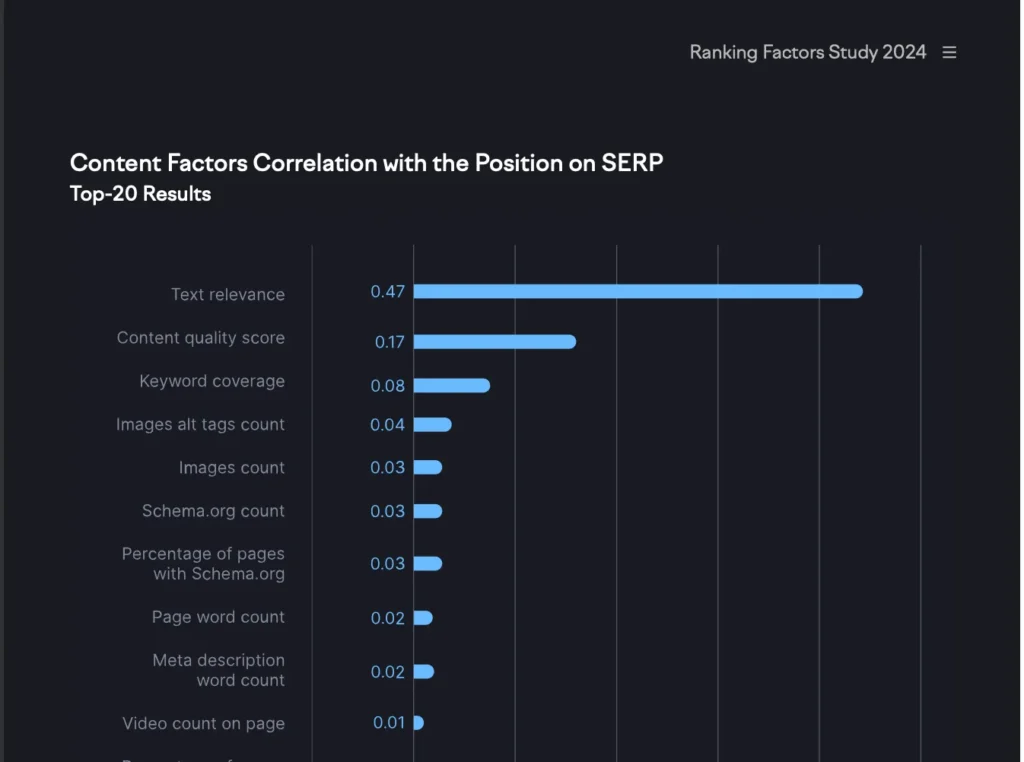
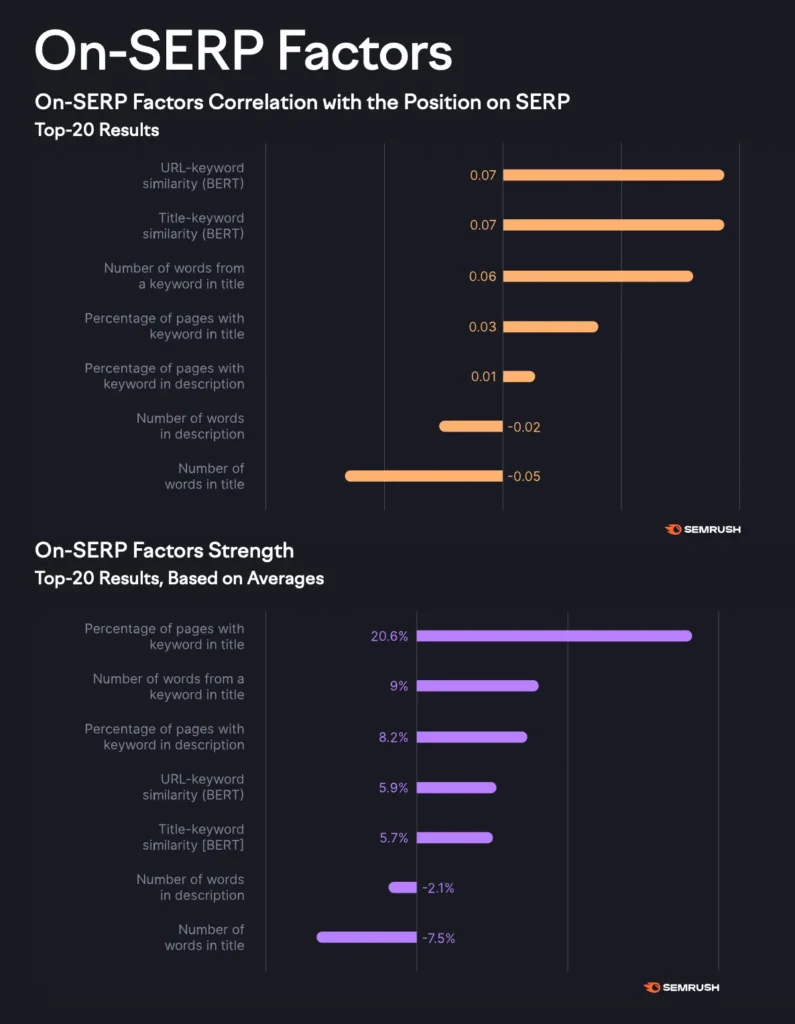
The section emphasizes the relevancy of the content with the search query, which is evident based on the result in the image below. It’s time authors keep their focus on E-E-A-T for a longer term. The number of words, keywords, Readability score, etc., had a very low significance in ranking a particular page.
Key Metrics:
Depth and Comprehensiveness: Coverage of topics in a thorough and detailed manner.
Content Freshness: Regular updates and addition of new, relevant information.
User Engagement Metrics: Such as time on page and bounce rate, indicating content relevance and quality.
Top Tips:
Focus on User Intent: Tailor content to meet your audience’s needs and questions.
Use Rich Media: Incorporate relevant images, videos, and infographics to enhance user engagement. (*Google loves images on the page)
Regular Updates: Keep your content updated with the latest information and trends in your industry.
Structured Content: Use headings, lists, and short paragraphs to make content easy to read.
To Avoid:
Avoid Thin Content: Don’t publish content that lacks depth or doesn’t fully address the topic.
Steer Clear of Over-Optimization: Don’t overuse keywords at the expense of natural language and readability.
Refrain from Neglect User Experience: Ensure that the content on your site is informative and easy to navigate and engage with.
2. The Impact of Backlinks
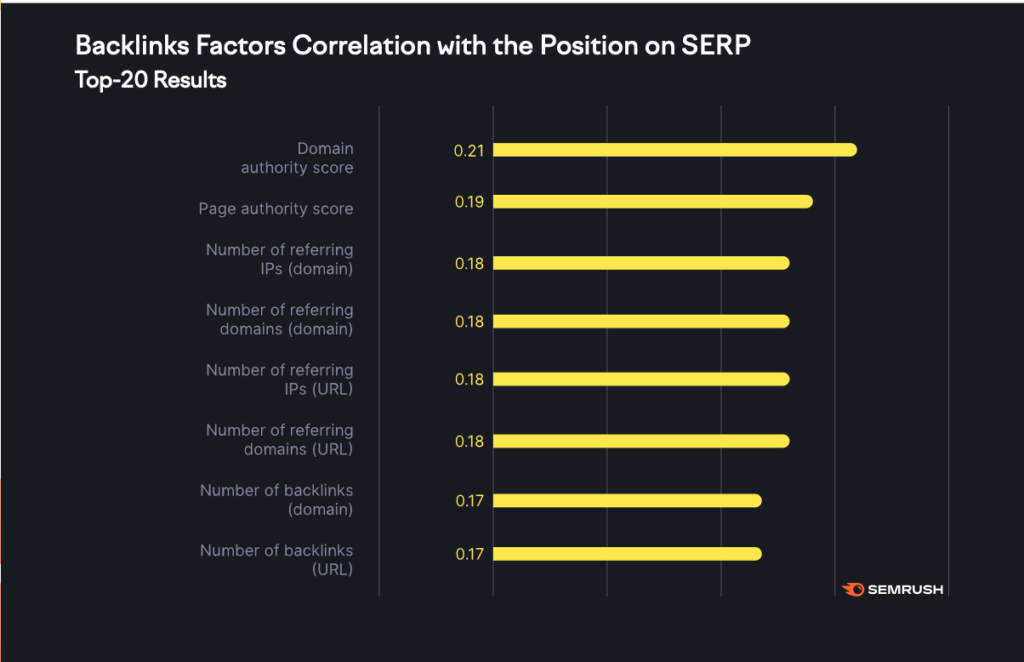
Google would focus a lot more on the quality of backlinks than the quantity. As an SEO expert focusing on backlink building, I target relevant backlinks that add value. Unethical hacks might be penalized severely going forward.
Key Metrics:
Backlink Quality: The authority and relevance of linking domains to your niche.
Backlink Quantity: Backlink quantity would play a role but with less importance.
Link Diversity: Focus on the variety in types of backlinks (e.g., from different domains, different types of content).
Top Tips:
Create Link-Worthy Content: Develop content that naturally attracts backlinks, such as original research, comprehensive guides, or insightful analyses.
Guest Blogging: Write high-quality guest posts for reputable sites in your niche to gain backlinks.
Leverage Relationships: Build relationships with industry influencers and websites to gain authoritative backlinks.
Monitor Your Backlink Profile: Regularly check your backlink profile to understand where your links are coming from and identify any potentially harmful links.
To Avoid:
Avoid Buying Links: This can lead to penalties from search engines and damage your site’s credibility.
Steer Clear of Low-Quality Link Directories: Links from spammy directories can negatively impact your SEO.
Don’t Rely Solely on Automated Link Building Tools: These can often lead to unnatural link patterns that search engines might penalize.
Avoid Link Exchanges: Search engines can flag Excessive link exchanges as manipulative.
3. URL and Domain Metrics
This was so much of a Chicken and Egg problem!
The report explains –
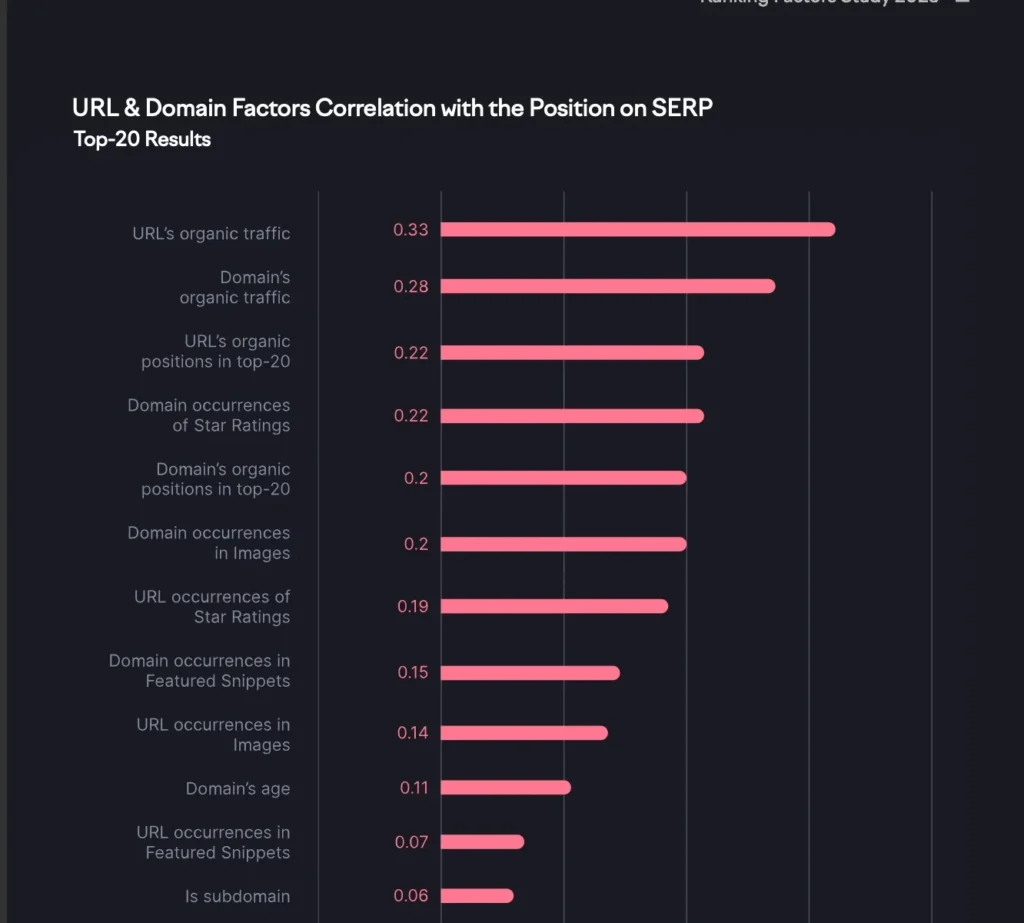
Any URL’s organic traffic, Domain’s organic traffic, and URL Listing in the top 20 correlate most to the SERP (Search Engine Results Page) factors.
This means higher organic traffic results in higher ranking, which would result in more increased traffic.
Key Metrics:
Domain Authority: A measure of the trustworthiness and quality of a domain, often influenced by backlink profiles.
URL Structure: The clarity, brevity, and relevance of a webpage’s URL to its content.
Domain Age: Older domains are considered more credible, although this is less significant than other factors.
Keyword Usage in URL: Appropriately use the keywords in the URL for relevance; DO NOT over-optimize.
Top Tips:
Simplify URL Structure: Use clear, concise, and descriptive URLs that include relevant keywords and are easy to read.
Consistent Domain Usage: Stick with a single, primary domain to build authority over time.
Secure Your Domain: Use HTTPS to enhance security and trustworthiness.
Optimize for Crawlability: Ensure that your site structure and URL hierarchy are logical and easily navigable by search engines.
To Avoid:
Avoid Overly Complex URLs: Long or confusing URLs can negatively impact user experience and crawlability.
Avoid Keyword Stuffing: Overusing keywords in URLs can be seen as spammy and may hurt rankings.
Avoid Frequent Domain Changes: Regularly changing your Domain can disrupt the building of domain authority.
Don’t Neglect HTTPS: Unsecured websites (HTTP) are often penalized in rankings and can deter users.
4. SERP Factors
To simplify, SERP (Search Engine Result Pages) are responses that Google shares when you query.
SERP determines how your site appears on Google – and that’s why they are so important.
Hence, knowing the best strategies for SERPs optimizes your content for ranking presentation and engagement on the SERPs.
Key Metrics:
Click-Through Rate (CTR): Improve your title and description to increase the number of clicks from SERP.
Local Pack Listings: How often your site appears in local pack results for local businesses defines your ranking.
Meta Title and Description Quality: Your meta titles and descriptions’ relevance and compelling nature.
Top Tips:
Optimize for Featured Snippets: Structure your content for featured snippets, and write clear and concise answers.
Improve Local SEO: Ensure accurate and complete Google My Business profiles and use local keywords for local pack optimization.
Craft Compelling Meta Titles and Descriptions: Write engaging and relevant meta titles and descriptions that encourage clicks.
Utilize Schema Markup: Implement structured data to enhance the likelihood of your content appearing in rich results and other SERP features.
To Avoid:
Neglecting Meta Title and Description: Failing to optimize will lead to lower CTRs
Overusing Keywords in Meta Tags: Stuffing keywords in titles and descriptions could be penalized.
Ignoring Mobile Optimization: Not optimizing for mobile users can adversely affect your visibility and user experience on mobile devices.
Overlooking Structured Data: Need to use schema markup.
5. User Experience and SEO Signals
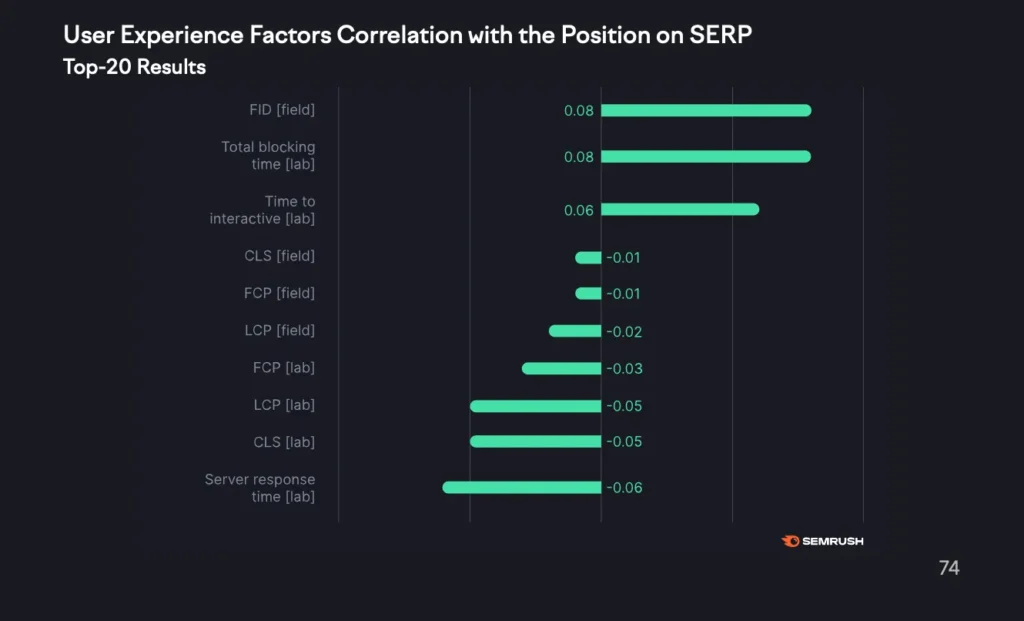
SEMRush also evaluates user experience signal on a website, correlating with SERP position. Signals like CLS (Cumulative Layout Shift), FCP (First Contentful Paint), FCP [field], FID (First Input Delay).
This is actually in alignment with Google’s statement –
“While not all of these may be directly used to inform ranking, we find that all of these aspects of page experience align with success in search ranking and are worth attention.” (ref)
As per the report, there was minimal to no correlation between these signals individually on the ranking factors.
But collectively, they can impact user experience on the website, impacting the retention or bounce-off rate.
Hence, actively monitoring these performances for a satisfactory user experience is suggested.
Conclusion
And there you have it, folks – a tour of the SEMRush Google Ranking Factors Report for 2024.
Let’s face it: SEO can sometimes feel like trying to solve a Rubik’s Cube blindfolded, but this report sheds some much-needed light on what Google’s looking for.
The days of keyword stuffing are outdated. Now, it’s all about enriching your content with value, building quality backlinks, and making your website on the internet that users and search engines love.
Remember, in the ever-changing landscape of SEO, staying informed and adaptable is your golden ticket.
Use these insights from the SEMRush report not just as a one-time fix but as a compass for your ongoing SEO journey.
Imagine this: a company, much like yours, increases its sales conversions by an astounding 30% within a quarter.
The secret?
A meticulously managed CRM pipeline.
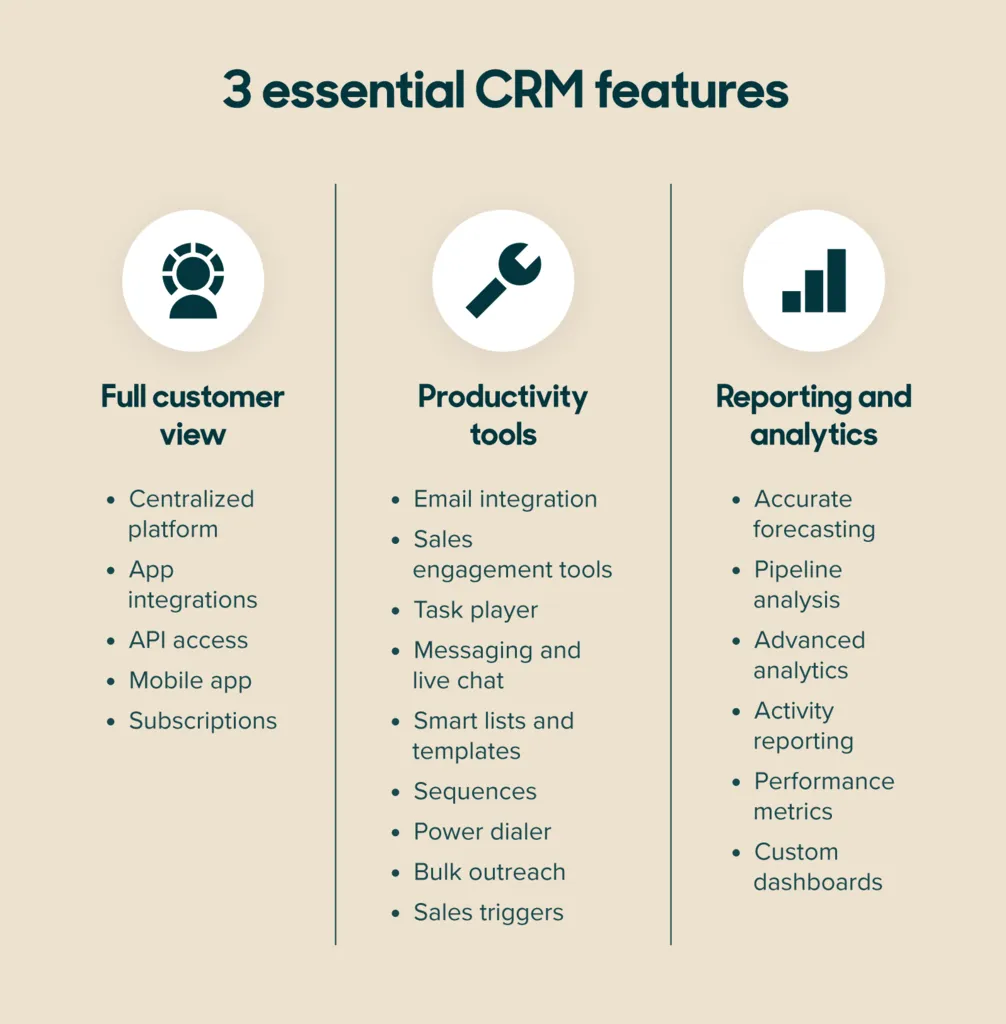
Most CRM systems do more than manage customer interactions.
They are the backbone for strategizing and executing campaigns with precision and personalization.
At the heart of the CRM’s effectiveness lies its capability to structure the customer journey into various stages known as – CRM Pipeline Stages.
CRM pipeline stages can be defined as a roadmap for transforming prospects into loyal customers.
Understanding CRM stages is crucial for any marketer, as these stages represent a customer’s journey from initial awareness to product purchase.
Each stage has distinct characteristics and objectives, from identifying initial interests to guiding them toward sales.
Understanding these stages can help marketers tailor their strategies for leads at every step, enhancing the effectiveness and efficiency of their campaign.
The objective of this guide is straightforward yet vital – to equip marketers with the knowledge to navigate and optimize each stage of the CRM pipeline.
This will help marketers create a more optimized sales process and build a lasting customer experience.
We will delve into each CRM pipeline stage, exploring their significance and how they impact a customer journey.
Whether you are new to marketing or just optimizing your CRM, this guide aims to provide valuable insights to help manage your CRM pipeline.
Why do marketing and sales need a unified CRM?
The alignment of Sales and Marketing is crucial for the success of any business, and a CRM plays a vital part in facilitating it.
The convergence of the two functions is not restricted to sharing information but strategically aligning to improve conversion and customer experience.
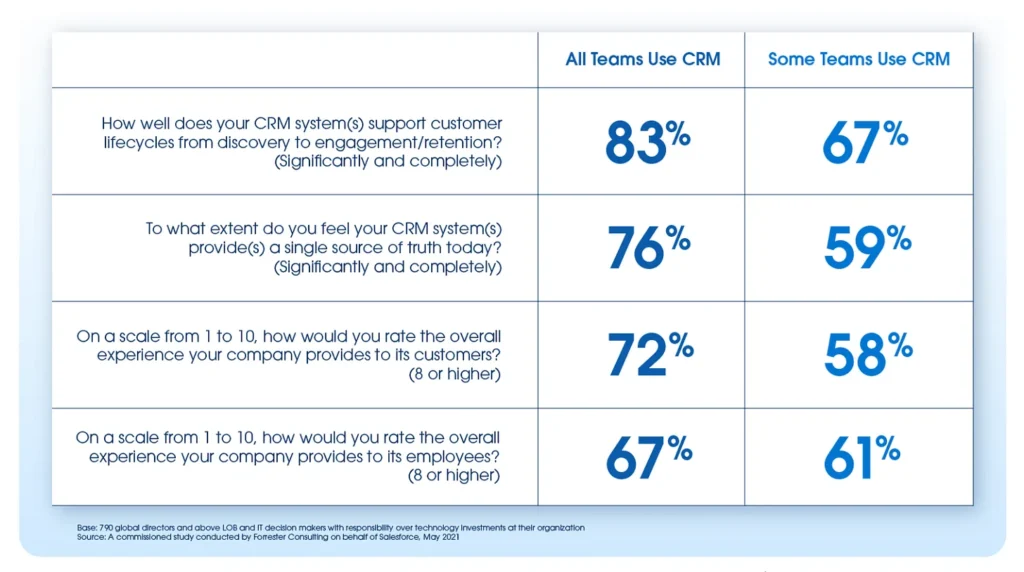
Here are stats from the Salesforce report that says “There are tangible business benefits when CRM systems are used across teams to support the entire customer lifecycle versus siloed by department:”
Why is it important?
Unified Customer View – It provides a comprehensive view of the customer, allowing marketing and sales to understand better customer needs throughout the journey.
Enhanced Communication – When marketing and sales work together, communication barriers are broken. This ensures that teams work together rather than in silos.
Efficient Lead Management – A well-aligned system ensures that leads are nurtured and passed along the pipeline efficiently, increasing the chances of conversion and reducing the lead-to-sale time.
Breaking Down the CRM Pipeline Stages
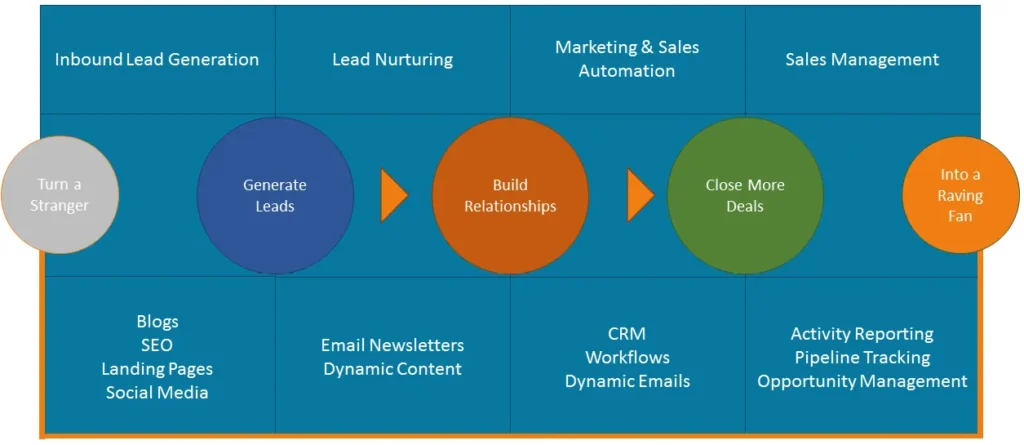
CRM pipeline is a structured representation of a customer journey, depicting the progression of a lead (potential customer) through various stages until they become a buyer.
The CRM pipeline is not linear but a sophisticated web of various stages reflecting customer interaction and buying decision-making.
Each stage in the CRM addresses a specific aspect of the customer journey so that marketing and sales can apply targeted strategies based on these stages.
These stages are critical for tracking the effectiveness of sales and marketing strategies and forecasting revenue.
While the specific stages can vary depending on the business model, a typical pipeline includes:
Lead Generation (Marketing)
Usage: The initial stage where potential customers are identified and attracted.
Context: Involves marketing activities like content marketing, SEO, ads, and social media to generate leads.
Lead Qualification (Marketing/Sales)
Usage: Determining if leads have the potential to become customers.
Context: Often involves using BANT (Budget, Authority, Need, Timeline) or similar models to evaluate leads.
MQL (Marketing Qualified Lead)
Usage: A lead is likelier to become a customer based on their engagement with marketing efforts.
Context: Identified through actions like downloading content or high email engagement.
SAL (Sales Accepted Lead)
Usage: A lead accepted by the sales team for follow-up, indicating potential for conversion.
Context: Overlaps with SQL criteria imply the sales team’s agreement to pursue the lead.
SQL (Sales Qualified Lead)
Usage: A lead evaluated by the sales team as ready for direct sales follow-up.
Context: Meets specific criteria demonstrating interest in purchasing.
Prospecting (Sales)
Usage: Initiating contact with qualified leads to assess their interest.
Context: Involves reaching out through calls, emails, or LinkedIn.
Needs Assessment (Sales)
Usage: Understanding the specific needs and pain points of prospects.
Context: Conducting detailed discussions or surveys to identify requirements.
Proposal/Presentation (Sales)
Usage: Presenting a solution that addresses the prospect’s needs.
Context: Tailoring proposals or demos to the prospect’s problem.
Negotiation (Sales)
Usage: Finalizing terms of the deal.
Context: Discuss and agree on pricing, terms, and conditions.
Closing (Sales)
Usage: Concluding the sales process with a purchase.
Context: Final agreement and signatures on contracts.
Closed Won
Usage: The stage where the sales process successfully concludes with a purchase.
Context: Lead makes a purchase or signs a contract.
Closed Lost
Usage: The stage where the lead does not make a purchase.
Context: The lead opts for a competitor or loses interest.
Disqualified
Usage: A lead determined as not fit for the company’s offerings.
Context: Lack of fit based on budget, authority, need, or timing.
Post-Purchase (Sales/Marketing)
Usage: Ensuring customer satisfaction and loyalty post-sale.
Context: Providing support, onboarding, and follow-up services.
*In some models, particularly for complex B2B sales, these stages might be further divided or include additional steps like pilot projects or legal reviews.
The alignment of marketing and sales in managing these pipeline stages is crucial for the smooth transition of leads from initial awareness to becoming customers.
(Stage 1 to Stage 3) – Key Strategies for Early CRM Pipeline Stages
Stage 1 – Lead Generation
CRM system adeptly captures leads from various sources like websites, events, trade shows, etc. To enhance lead quality, focus on the right audience, and capture comprehensive data.
Use CRM to identify the Ideal Customer Profile and capture the right information, such as personal details, source, and interest.
Stage 2 – Lead Qualification
Implement a lead scoring system within your CRM to evaluate leads based on demographic, engagement, behavior, or other metrics.
This process helps in distinguishing potential leads from less viable ones. Leverage CRM segmentation functionality to follow up with personalization.
Stage 3 – MQL (Marketing Qualified Lead)
Transitioning a lead to MQL is gauging a prospect’s likelihood to purchase. Track lead interactions like website visits or content downloads. This data helps identify leads engaging more with your marketing content, signaling readiness for sales engagement.
*Ensure smooth handover to the sales team by setting up CRM alerts for when leads attain MQL status and providing sales with comprehensive insights for effective follow-up.
In the early stages, the CRM is a strategic tool that measures relevant signals and transitions a lead from marketing to sales with the right intent and information.
(Stage 4 to Stage 8) – Streamlining Mid-Pipeline Stages in CRM
Stage 4 – 6 – From SAL to Prospecting
The stage between Sales Accepted Lead and Sales Qualified Lead is crucial in the CRM pipeline. At this juncture, sales accepts the lead from marketing, evaluating the buying potential or the conversion possibilities.
The sales team gauges the marketing interaction of the lead to evaluate its qualification as a buyer. It is essential to refine SQL criteria regularly to improve the lead quality.
One can also analyze past interactions and preferences logged in the CRM to tailor communication and improve engagement.
Stage 7 – Needs Assessment (Sales)
In the need assessment, understanding and addressing the specific needs of each prospect is the key.
Use the CRM to collect and analyze data of all previous relevant customers and interactions, enabling sales reps to create a tailored approach.
The data can also be used to conduct personalized discussions, thereby identifying prospects’ exact needs and pain points.
Stage 8 – Proposal
Crafting a proposal that resonates with the prospect is critical.
Use the information in the CRM to craft a personalized proposal that directly addresses the specific challenge based on the interaction and information available. Keep track of how the prospect uses the proposal – number of opens, clicks, shares, etc.- and gather feedback.
Enable continuous improvements to your proposal strategy.
Managing these middle stages in the CRM pipeline ensures that leads are nurtured with personalized attention, enhancing the probability of successful conversions.
(Stage 9 – Stage 11) – Closing Stages – Sealing the Deal and Beyond
Stages 9-11: From Negotiation to ClosingThe final stage of the pipeline is crucial; this is where negotiations turn into closures. Strategies for this stage include
Strategic Negotiations: – Utilize CRM data to understand prospect’s needs and interactions, which could be leverage for negotiation. This information helps in more strategic and informed bargaining.
Closing with confidence – CRM systems aid in closing deals by providing a comprehensive view of the lead’s journey. This helps address any final concern by the prospect and offers tailored closure. *Set up automated reminders and follow-ups in the CRM to ensure timely communication and maintain momentum toward deal closure.
Post-Purchase: Ensuring Customer SatisfactionAfter closing a deal, the focus shifts to nurturing customer relationships. Strategies for effective post-purchase engagement include:
Onboarding and Support: Utilize CRM to manage and streamline the onboarding process. Provide comprehensive support and resources, ensuring a smooth transition for the customer.
Regular Check-ins: Schedule regular follow-ups and check-ins using CRM reminders.
Building Loyalty: CRM tools can track customer feedback, manage loyalty programs, and personalize ongoing communication. This consistent engagement fosters a sense of value and loyalty among customers.
Successfully managing the CRM pipeline’s closing stages leads to successful sales and lays the foundation for long-term customer relationships.
Conclusion
As we wrap up this guide, take a moment to reflect on how these stages align with your current practices and where there’s room for innovation.
Whether you’re just setting up your CRM journey or are on the path to refining an established system, there’s always a new layer, a fresh perspective to explore.
So, go forth and apply these insights.
Experiment, refine, and watch as your CRM pipeline transforms from a mere business process into a thriving ecosystem of customer engagement and success.
Imagine if each search query on the web is a key to the door with a specific tailor-made solution.
This is the power of Programmatic SEO in B2B SaaS.
It’s like crafting 10,000 keys for 10,000 doors designed to fit perfectly.
In a landscape where “61% of B2B decision-makers start the decision-making process with a broad web search,” Programmatic SEO is no longer advantageous but essential.
Much has been written and spoken in the last few years about Programmatic SEO and its benefits. But only a few have covered its usage in B2B Businesses.
In this newsletter edition, I will dive deep into the programmatic SEO for B2B SaaS and how to get started.
What is Programmtic SEO?
Programmatic SEO is about automating the creation of web pages to target a wide range of specific queries.
Think of it as mass-producing pages, each tailored for a different, often particular topic or keyword phrase.
This approach departs from traditional SEO (Search Engine Optimization), which usually focuses on high-traffic keywords spread across fewer pages.
For B2B SaaS companies, programmatic SEO is usually helpful.
It allows you to address your potential customers’ countless specific questions and needs, ensuring that your solutions are visible in search results across a broad spectrum of queries.
This strategy is vital in the B2B SaaS, where the audience often seeks detailed, specific information.
By leveraging programmatic SEO, you can effectively align your digital content with your target market’s diverse and precise queries.
Programmatic SEO vs. Dynamic Pages
While programmatic SEO and dynamic pages are powerful content marketing tools, they serve different purposes in the B2B SaaS context.
Programmatic SEO is about creating many pages, each optimized for a specific keyword or query.
It’s like having a dedicated page for every possible customer question, ensuring a wide net is cast in search engines.
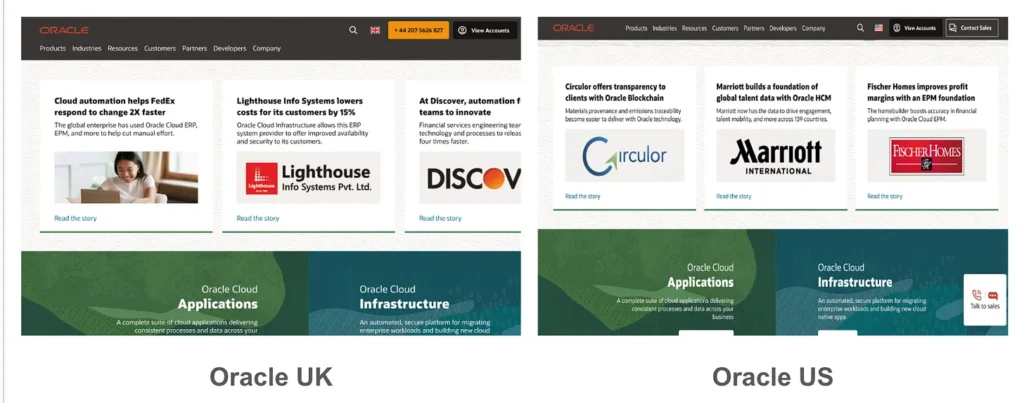
This is where companies like SAP and Oracle shine. Their websites allow you to select a region or country, leading you to content tailored to that geographic area.
This approach is excellent for personalizing the user experience to meet regional needs and preferences.
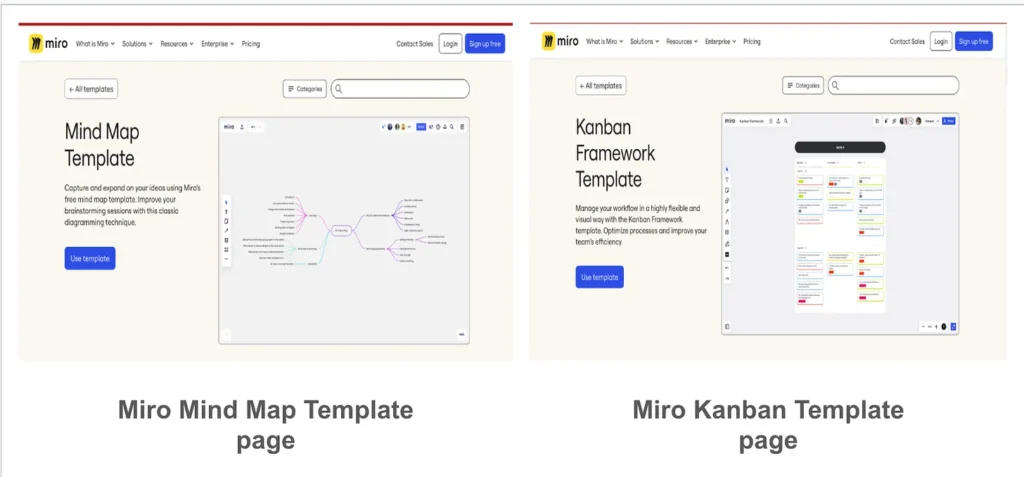
On the other hand, dynamic pages are about adaptability. They change their content based on the user’s behavior, preferences, or location.
Dynamic pages, as illustrated by Miro’s “Mind Map” solutions page, change content based on user interaction. This strategy allows Miro to provide a personalized and interactive experience where the content adapts to the user’s needs and actions.
Together, these strategies can be incredibly effective. Programmatic SEO brings users in through a wide range of search queries, while dynamic content keeps them engaged by providing relevant and localized information.
This combination is especially powerful for global B2B SaaS companies with a diverse clientele.
Programmatic SEO – B2B vs B2C
Take an example of a travel website creating pages for different cities (like “Find the best places to visit in [City Name]”) in B2C; the approach is indeed more straightforward and formulaic.
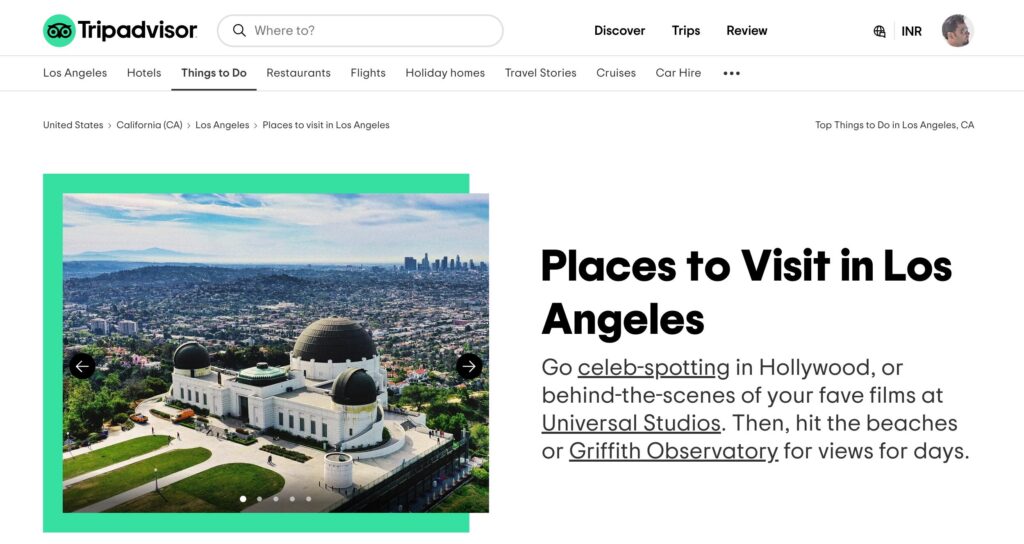
Trip Advisor pages can be a great example. It creates dynamic pages based on the ‘city.’ And then it suggests hotels, things to do, restaurants, etc.
The basic structure of each page remains the same, with key elements like the city name, local deals, and inventory being dynamically inserted based on the user’s query or location.
This approach is highly scalable and requires less customization for each page.
In contrast, B2B programmatic SEO, mainly for SaaS companies, often requires more nuanced customization.
This is due to several factors:
Complex Buyer Personas: B2B audiences often have more specific and complex needs than B2C consumers. Tailoring content to these diverse personas (like different industry verticals, job roles, and company sizes) often requires more than just changing a few keywords.
In-depth Content: B2B products and services, such as SaaS solutions, often need a more detailed explanation and demonstration of value, which can mean more in-depth and varied content on each page.
Sales Cycle Considerations: The B2B sales cycle is typically longer and involves multiple stakeholders. This requires content addressing different buying process stages and appeals to other decision-makers. Look to create a lot more Bofu content to help your sales cycle.
Industry-Specific Requirements: B2B solutions often need to address industry-specific challenges and regulations, which can require more detailed and customized content.
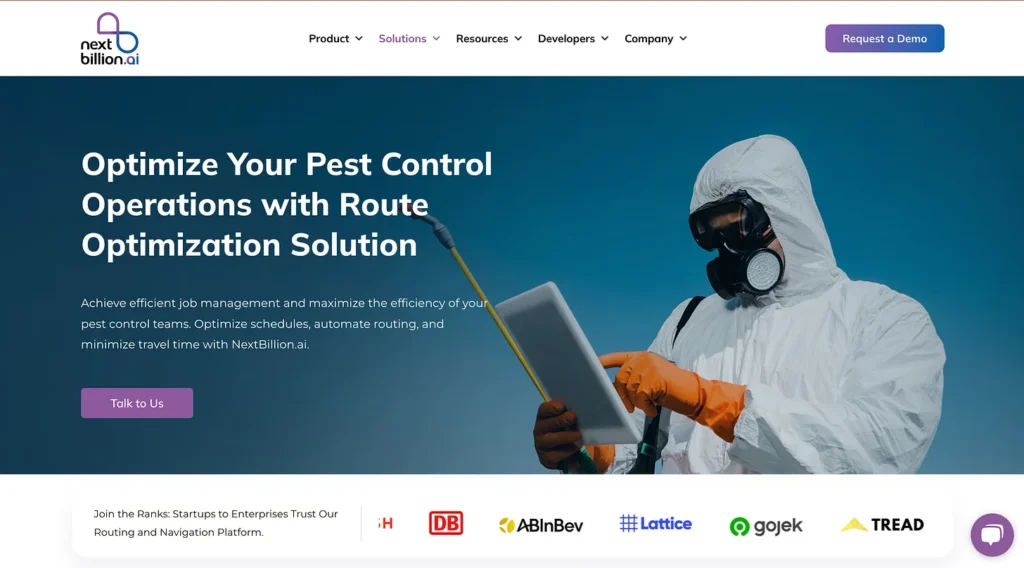
I created NextBillion.ai’s solution pages, which can be a good example of using programmatic SEO for B2B.
In these pages, a pre-created template is customized based on the targeted audience and industry.
Every solution page is personalized per the buyer persona and industry pain point while building on the same template. This reduced development time significantly, while we could cover multiple industries simultaneously.
However, this doesn’t mean B2B programmatic SEO is about creating individual landing pages.
The key is to find the right balance between automation and customization:
Templates and Modules: Using flexible templates or content modules that can be easily adapted for different audiences or use cases. For example, a template for a case study page that can be quickly modified with industry-specific data and testimonials.
Dynamic Content Insertion: Similar to the B2C example, inserting dynamic content (like industry statistics, user testimonials, and product features) based on the user’s industry, company size, or other relevant factors.
Automated Optimization: Using data and AI to continuously optimize these pages regarding SEO, user engagement, and conversion.
So, while B2B programmatic SEO might require more customization than some B2C scenarios, it still leverages automation and scalability.
The goal is to efficiently produce content highly tailored to specific audience segments and optimized for search engines.
Implementing Programmatic SEO in B2B SaaS
Programmatic SEO in B2B SaaS involves a strategic approach to creating many web pages, each tailored to target specific search queries related to the business’s niche.
This method contrasts with traditional SEO, which typically focuses on optimizing a limited number of pages for broader keywords.
Keyword Research: Identify a comprehensive list of keywords relevant to your business and audience. This includes both high-volume and long-tail keywords.
Content Templates Creation: Develop versatile templates for web pages that can be modified to suit different keywords and topics.
Automating Page Creation: Utilize tools to automatically populate these templates with content, creating individual pages for each keyword or phrase.
Focus on Scalability: Ensure your system can manage and efficiently update many pages as your content strategy grows.
SEO Optimization: Each page should be optimized for SEO, including proper URL structures, meta tags, and keyword integration.
Monitoring and Adjusting: Regularly track the performance of your pages using analytics tools and refine your approach based on the insights gathered.
Tools and Technologies: Invest in SEO and content management tools that facilitate keyword research, page automation, and performance tracking.
*** EXAMPLE ⬇️ ***
Let’s understand this using an example of a B2B HR Tech Software –
Consider a B2B SaaS company specializing in HR technology.
The keyword research might reveal the following 10 targeted keywords for the business.
automated employee scheduling
HR analytics tools
cloud-based HR compliance
employee wellness tracking
HR software for small businesses
performance management systems
HR data security
payroll processing software
employee onboarding solutions
HR strategy development tools
For each identified keyword, a specific page is created using the templates.
The URL structure for these pages could be like “/features/automated-employee-scheduling” or “/User-Guide/hr-analytics-tools,” ensuring each page is easily identifiable and SEO-friendly.
This approach’s scalability allows the company to continually adapt its website to target new, emerging keywords in the HR tech space.
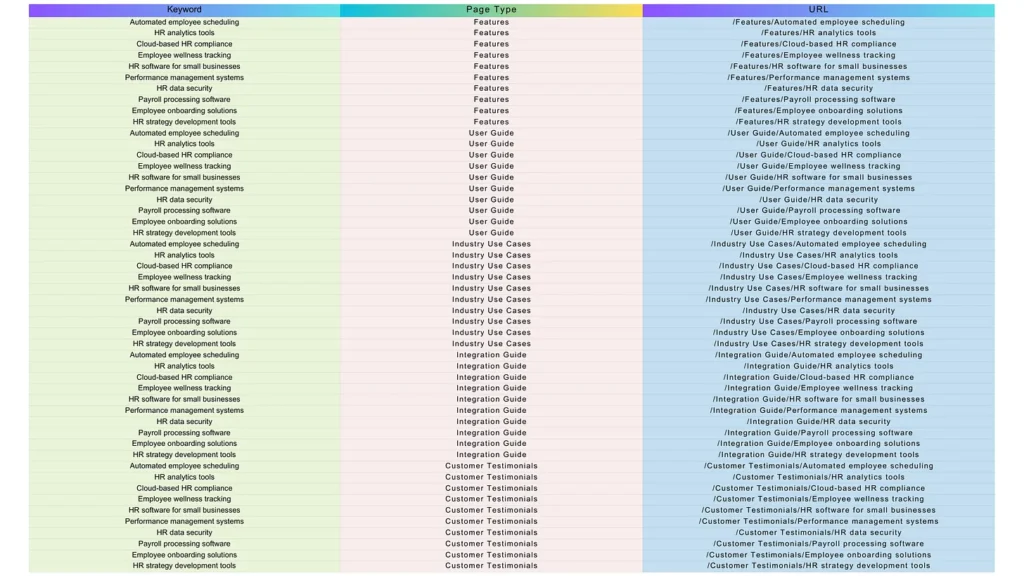
Below is how we can quickly create 50+ pages for the above keyword using the Programmatic SEO strategy.
templates = [“{keyword} – Features” for keyword in keywords]
templates += [“{keyword} – User Guide” for keyword in keywords]
templates += [“{keyword} – Industry Use Cases” for keyword in keywords]
templates += [“{keyword} – Integration Guide” for keyword in keywords]
templates += [“{keyword} – Customer Testimonials” for keyword in keywords]
And this is how my final URL structure would look like –
Programmatic SEO Strategies for B2B SaaS
Embarking on the journey of programmatic SEO in B2B SaaS is like charting a course through a complex but rewarding terrain.
It’s about fine-tuning your approach to connect with a niche yet crucial audience.
Here’s how you can create a programmatic SEO strategy that aligns with your business goals and resonates with your target market:
In-Depth Keyword Research:Begin with extensive keyword research. Focus on broad industry terms and explore long-tail, niche keywords that your specific audience might use. Tools like SEMrush or Ahrefs can be invaluable in uncovering these keywords.
Creating Versatile Content Templates:Develop a range of content templates for different web pages – from detailed product features and use cases to industry-specific solutions and customer success stories.Ensure these templates can be easily adapted to include various sets of keywords.
Automated Content Generation:Employ content management systems (CMS) that facilitate the automation of content generation. Populate these templates with the identified keywords to create unique, SEO-optimized pages.With its various SEO plugins, WordPress can be a good platform.
Ensuring Scalability:Your system should be capable of handling the creation and management of a large number of pages, which is crucial for programmatic SEO.Consider cloud-based hosting solutions that offer scalability and reliability.
Comprehensive SEO Optimization:Each page should be meticulously optimized for search engines. This includes using keywords and optimizing meta tags, headers, and URL slugs.For example, a page focusing on a specific feature might have a URL like “/features/cloud-based-analytics.”
Regular Monitoring and Refinement:Utilize analytics tools to track the performance of your pages. Google Analytics can provide insights into traffic, engagement, and conversion rates.Continuously refine your strategy based on this data, focusing on what works best.
Align with Business Objectives:Ensure your programmatic SEO efforts contribute to your overall business goals, whether it’s lead generation, brand awareness, or thought leadership. Regularly review your SEO strategy in the context of these goals, making necessary adjustments to align with them.
Following these, B2B SaaS companies can create a robust programmatic SEO strategy that improves their search engine visibility and ensures the content is highly relevant and tailored to their target audience’s needs.
Challenges and Best Practices in Programmatic SEO for B2B SaaS
The biggest challenge with Programmatic SEO is keeping your content top-notch. As you pump out more pages, ensuring that each one is just as good as the last is tricky.
Plus, you’ve got to be careful not to step on your toes with your keywords – it’s easy to end up with a bunch of pages that all try to rank for the same thing.
Let’s remember that SEO itself keeps changing. Keeping up with the latest Google updates and SEO trends can feel like a full-time job.
But don’t worry; there are ways to tackle these challenges.
First off, don’t skimp on quality checks. Make sure someone’s keeping an eye on all that new content.
Map out which pages should target which keywords so you’re not competing against yourself.
Consider investing in solid SEO and content management tools for scalability. They can be lifesavers when dealing with a lot of content.
As for staying current, try to keep learning. SEO is one of those fields where you always continue being a student. Or you can subscribe to my Newsletter if you haven’t yet.
Last but not least, listen to your users and your team. Feedback is gold – it can give you great insights into how to tweak your content and make it even better.
In short, yes, programmatic SEO in B2B SaaS can be a bit of a balancing act. But with the right approach, you can keep your content quality high, stay on top of your SEO game, and keep growing your online presence.
Conclusion
The road to Programmatic SEO has challenges – keeping up with content quality, avoiding keyword cannibalization, and staying on top of the ever-changing SEO landscape.
But now, you’re armed with the strategies and know-how to navigate these challenges skillfully.
Remember, the beauty of Programmatic SEO lies in its precision and scalability. It’s about crafting content that not only ranks but resonates. It’s like creating a unique solution for each of your customers.
So, keep those quality checks rigorous, your content fresh, and your SEO strategies flexible. And most importantly, keep listening – to your users, data, and the pulse of the ever-evolving digital world.
The dazzling success stories of tech giants like Google, Amazon, and Facebook cast long shadows.
Many startups try to copy these tech giants’ marketing ways, thinking it’s a shortcut to success.
But this approach is tricky.
While inspiration is beneficial, the direct imitation of these giants often leaves startups grappling with strategies ill-suited to their unique challenges and scale.
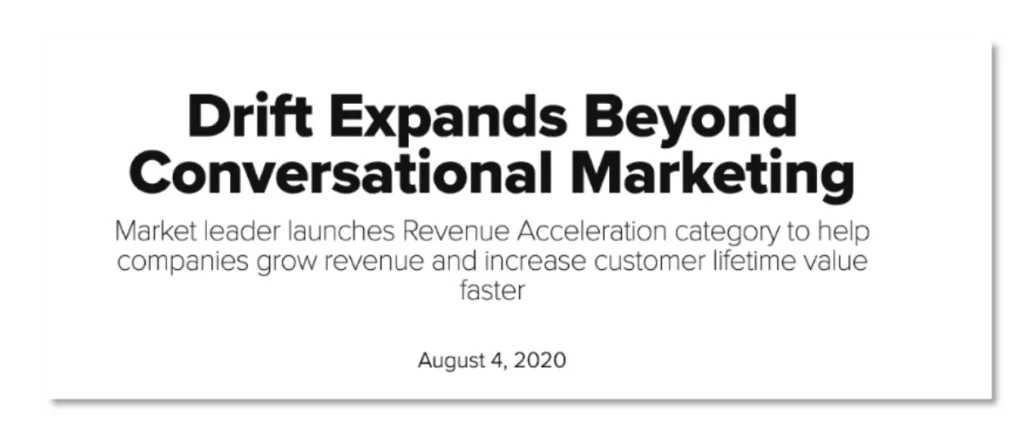
Take Drift, for instance, a company that didn’t just market a product but created a new category: conversational marketing.
However, this level of innovation demands significant resources and investment – a luxury most startups can’t afford.
Meditation app Headspace formed partnerships with big companies to offer its services, an approach that requires a robust business development team and resources to manage these partnerships.
Peloton‘s use of celebrity instructors and studio-quality class production for its fitness app demanded substantial investment in talent and production capabilities.
In this newsletter, I explore why imitating these giants can be a misstep and how startups can find their path to success by understanding their unique strengths and limitations.
We’ll examine examples of content marketing, conversational approaches, and community building, such as PandaDocs, Drift, and Asana, and discuss how startups can draw inspiration from these without imitating them directly.
The Pitfalls of Copycat Marketing Strategies
The tales of Y Combinator graduates like Dropbox, Airbnb, and Stripe (or Google, Facebook, Amazon, etc.) have a unique allure.
These companies started as small ventures with big ideas and grew into industry leaders, redefining their respective sectors.
For burgeoning startups, the appeal lies not just in the financial success but in the innovative approaches these companies took, overcoming challenges and scaling rapidly.
Dropbox: Rather than heavy advertising, they used a referral program offering extra storage space, effectively leveraging word-of-mouth.
Airbnb: They famously used professional photography to enhance their listings, significantly improving the appeal and credibility of their rental offerings.
This draws many new startups towards replicating such successes, often overlooking the nuanced differences in resources, timing, and market dynamics.
We’ll examine why the magnetic stories of Big tech companies can be both inspiring and misleading for startups aiming to chart their course.
1. Misunderstanding Branding and Audience Engagement
Startups often struggle with branding and audience engagement by trying to replicate the strategies of established companies without considering their unique brand identity and audience.
For instance, a startup imitating Slack’s informal and conversational branding might fail if its audience expects a more formal and professional tone.
Similarly, a tech startup attempting to mirror Apple’s minimalist branding could misfire if its products require more detailed explanations and customer education.
Startups must understand their unique brand voice and audience expectations, developing a branding and engagement strategy that resonates authentically with their market segment.
2. Expensive and Broad Marketing Campaigns
Startups often emulate the wide-reaching marketing campaigns of larger companies in pursuit of growth.
These efforts typically involve extensive advertising across multiple channels, social media blitzes, and high-profile sponsorships. However, for startups, such campaigns can quickly deplete their marketing budgets without guaranteeing a solid return on investment.
Unlike larger companies with established brand recognition and a wide customer base, startups need to measure the impact of every marketing dollar spent carefully.
Overcommitting to costly, broad-scale campaigns can divert crucial resources from more targeted and effective marketing approaches better suited to their immediate goals and audience.
Therefore, startups must critically assess the scalability and sustainability of their marketing efforts, focusing on strategies that offer more direct engagement with their target audience.
3. Implementing Complex CRM Systems Prematurely
Many startups, inspired by the success of larger companies, prematurely adopt complex CRM systems like Pardot, the enterprise version of HubSpot, or other high-end sales CRM.
These systems are designed for larger organizations with extensive sales processes and customer databases.
For startups, these tools’ high cost and sophistication can be excessive, leading to underutilization and wasted resources.
Startups must evaluate simpler, more affordable CRM solutions that align with their current operational needs and customer management capabilities.
This approach ensures they don’t overextend their resources on overly complex systems that exceed their immediate requirements.
4. Misguided Content Marketing Strategies
Startups often look to replicate the content marketing success of larger companies but can misjudge their unique content needs.
For instance, a tech startup might invest heavily in creating extensive whitepapers and technical blogs, imitating a strategy used effectively by a company like IBM.
However, the startup’s content may not gain traction without IBM’s brand authority and audience.
This mismatch highlights the importance of startups developing content strategies that resonate with their target audience and fit their brand’s growth stage.
Tailoring content to their audience’s specific interests and needs, rather than producing large volumes of generalist content, can lead to more effective engagement and better use of resources.
5. The Scale Mismatch
The journey from startup to tech giant is not just about scaling up; it’s about understanding how different strategies work at different scales.
While large companies like Drift or HubSpot have the resources to invest in extensive market research and sophisticated marketing strategies, startups operate differently.
They often face limitations in resources, brand recognition, and customer base. This scale mismatch means that marketing strategies that are successful for giants might not be feasible or effective for startups.
It’s not just about the size of the budget but also about the relevance and adaptability of marketing tactics to a startup’s specific stage of growth and audience.
Understanding this scale mismatch is crucial for startups to avoid missteps in their marketing efforts and focus on strategies more suited to their current capabilities and growth trajectory.
Building a Startup-Specific Approach
To create effective marketing strategies, startups must focus on approaches that align with their size and market context.
This means embracing agility and capitalizing on unique startup advantages like flexibility and innovation. Startups should engage in targeted marketing efforts, such as niche influencer partnerships or community-driven campaigns, which are more sustainable and relevant for their audience.
Utilizing lean methodologies in marketing, like testing small changes and scaling what works, can also be highly effective.
Startups need to craft strategies that resonate with their brand identity and connect with their specific target audience rather than imitating large-scale models.
Conclusion
The stories of tech giants and successful startups alike provide valuable lessons, but the path for each new venture must be its own.
By understanding their unique position, audience, and resources, startups can develop marketing strategies that are not only effective but also sustainable.
Embracing agility, focusing on targeted efforts, and aligning marketing strategies with their brand identity and growth stage is crucial.
As startups chart their course, the wisdom is learning from others while forging a path tailored to their journey.
At the heart of Amazon’s success is a concept known as the Amazon Flywheel.
It’s a strategy that revolves around creating a positive feedback loop where each part of the business fuels growth in others.
By focusing on customer experience, offering a wide selection of products, and ensuring competitive pricing, Amazon has managed to continually attract more customers and sellers.
This cycle of growth benefits every aspect of their operation, from sales to service. In this blog, we’ll dive into how the Amazon Flywheel works and explore its potential impact on businesses looking to replicate Amazon’s success.
This strategy isn’t just for the retail giant; it offers valuable lessons for marketing teams across industries aiming to create synergy and drive performance.
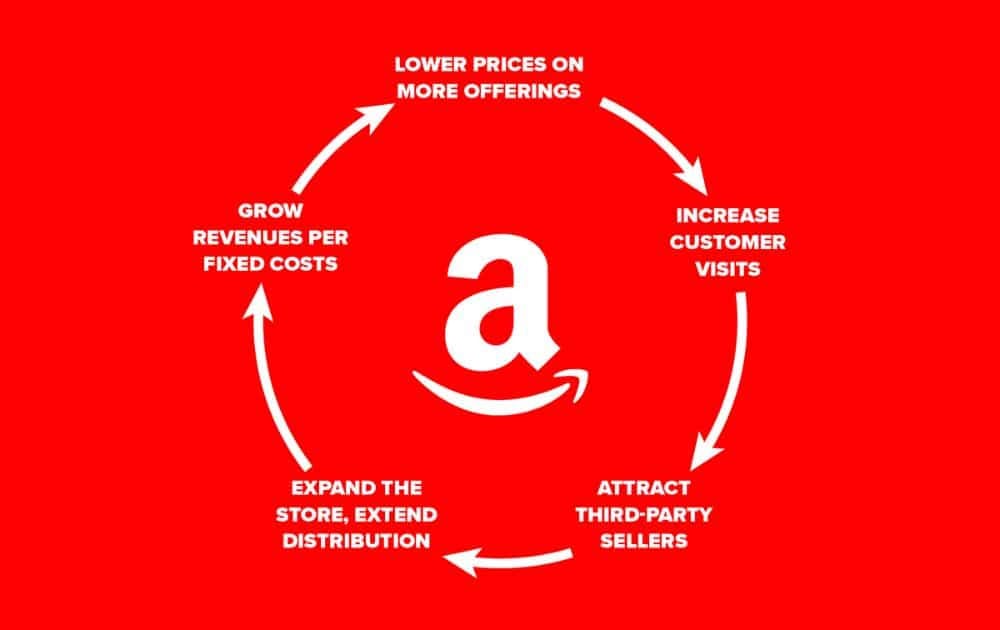
What is the Amazon Flywheel Concept?The Amazon Flywheel is a strategy that emphasizes a virtuous cycle of growth for businesses.
It operates on the principle that lower prices lead to more customer visits. More customers attract a wider selection of products; more products attract more sellers; and more sellers enhance the customer experience and efficiency.
This cycle fuels itself, driving down costs and increasing the volume of transactions.
Essentially, the Flywheel harnesses the interconnectedness of customer experience, selection, and cost to perpetuate business growth, making it an invaluable model for marketers and businesses aiming for sustainable success.
Building on the Amazon Flywheel’s principles, this blog will delve into how marketing teams can leverage these ideas for enhanced performance.
We aim to dissect the Flywheel model across various marketing functions such as Content Marketing, SEO, Performance Marketing, Social Media, and Email Marketing.
By understanding how each function can contribute to and benefit from the Flywheel effect, marketing teams can create a more cohesive and effective strategy.
Our goal is to showcase practical ways to apply these principles, fostering a culture of continuous improvement and synergy within marketing departments.
Segmenting Marketing Flywheel
The concept of the Amazon Flywheel, while comprehensive, gains even more power when applied to specific marketing functions.
It’s like focusing a lens on different parts of your marketing department—Content Marketing, SEO, Performance Marketing, Social Media, and Email Marketing—to magnify their impact.
Each area has its role in driving the Flywheel, attracting and engaging customers, and ultimately contributing to the business’s growth.
By examining how these functions can individually and collectively harness Flywheel’s principles, we can optimize their performance and create a seamless, self-reinforcing marketing strategy that mirrors the cohesive success of the Amazon model.
Applying the Flywheel Model to Marketing Functions
Content Marketing
TL;DR
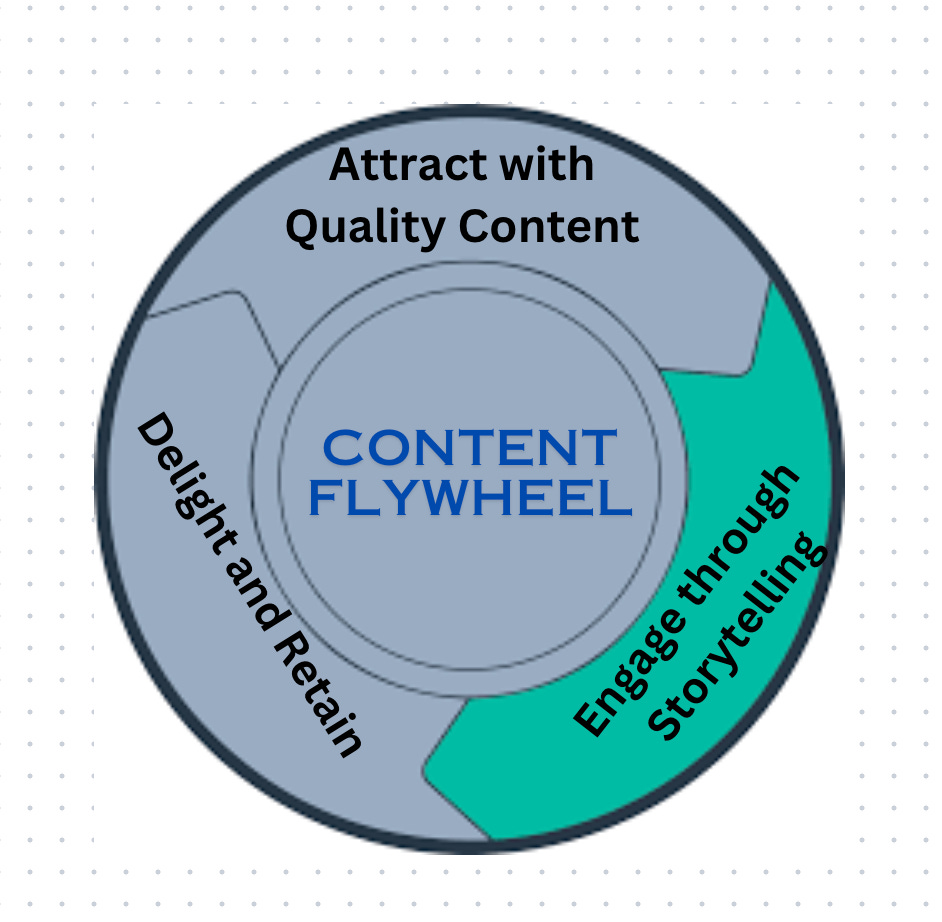
Attract with Quality Content: How creating valuable, engaging content can draw in potential customers, similar to Amazon’s vast selection.
Engage through Storytelling: Techniques for keeping the audience engaged with brand storytelling, leading to deeper connections.
Delight and Retain: Strategies for using content to delight customers post-purchase, encouraging loyalty and advocacy.
Expanding the Amazon Flywheel into Content Marketing, the strategy unfolds in stages, starting with attracting audiences through high-quality, relevant content, much like Amazon attracts customers with its vast product range.
This content is the magnet that draws people in, setting the stage for deeper engagement. The engagement phase leverages compelling storytelling, crafting narratives that resonate with the audience’s values and experiences, turning casual visitors into engaged readers.
But the process doesn’t stop there. After engagement, the focus shifts to delighting and retaining customers through content that continues to add value post-purchase.
This could mean offering insightful articles, helpful guides, or exclusive updates that keep the audience connected and invested in the brand.
The success of this Flywheel approach in content marketing is measured by increased audience loyalty, higher engagement rates, and ultimately, a community of brand advocates.
These advocates not only return for more content but also share their positive experiences with others, attracting new audience members and perpetuating the cycle of growth.
By consistently delivering content that attracts, engages, and delights, marketing teams can spin their own Flywheel, creating a self-sustaining cycle of growth and engagement.
This model underscores the importance of seeing content not just as a means to an end, but as a continuous cycle that feeds into itself, mirroring the Amazon Flywheel’s principles of momentum and sustainable growth.
SEO
TL;DR
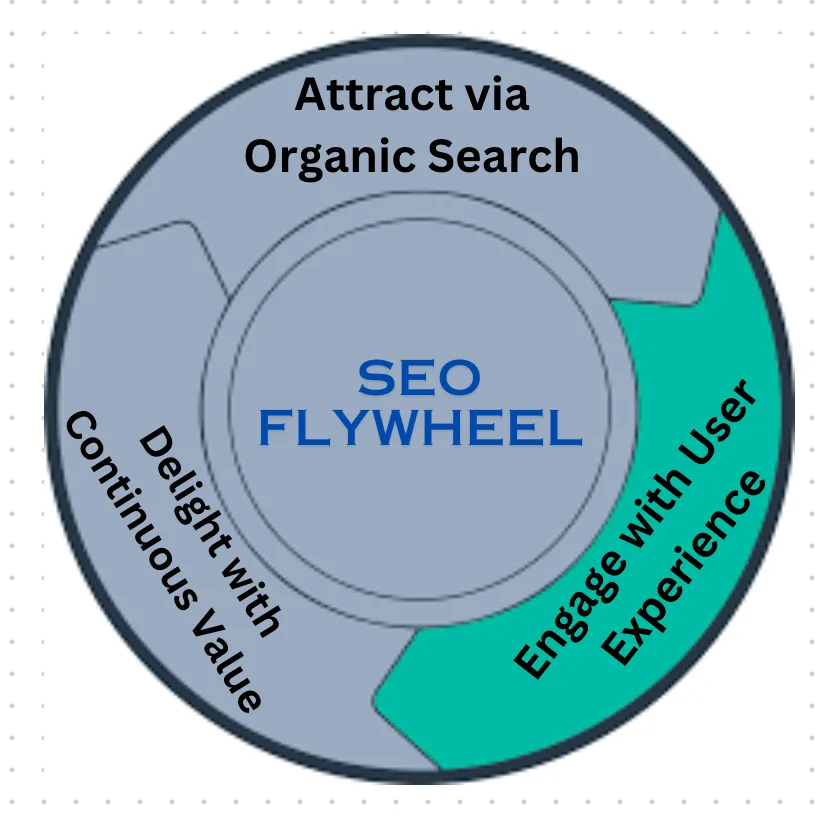
Attract via Organic Search: Optimizing content to attract traffic through high search rankings, mirroring the Flywheel’s momentum-building aspect.
Engage with User Experience: Enhancing website navigation and content relevance to improve engagement metrics.
Delight with Continuous Value: Regularly updating content to maintain rankings and relevance, encouraging return visits.
Implementing the Amazon Flywheel model into SEO strategies involves a meticulous approach starting with attracting visitors through organic search.
This initial phase is about optimizing content to secure high search rankings, echoing the Flywheel’s momentum-building phase.
High rankings serve as a beacon, guiding potential customers to your site just as Amazon draws in shoppers with its vast array.
The engagement step enhances the user experience by improving site navigation and ensuring content relevance.
This phase is critical because it converts initial interest into meaningful interactions, keeping visitors on the site longer and reducing bounce rates.
The delight phase in SEO is about offering continuous value to the audience. This is achieved by regularly updating content to maintain high rankings and relevance.
Such updates not only cater to the evolving needs of your audience but also signal to search engines that your site is a valuable resource, encouraging them to rank it higher.
Success in this SEO Flywheel is visible through increased organic traffic, higher engagement metrics, and a growing return visitor rate.
These outcomes signify a thriving SEO strategy, where each improvement in ranking, user experience, and content value contributes to the next, creating a self-sustaining cycle of growth and engagement.
This cycle mirrors the Amazon Flywheel by leveraging momentum, where each positive change propels the next, leading to sustained organic growth.
Performance Marketing
Tl;DR
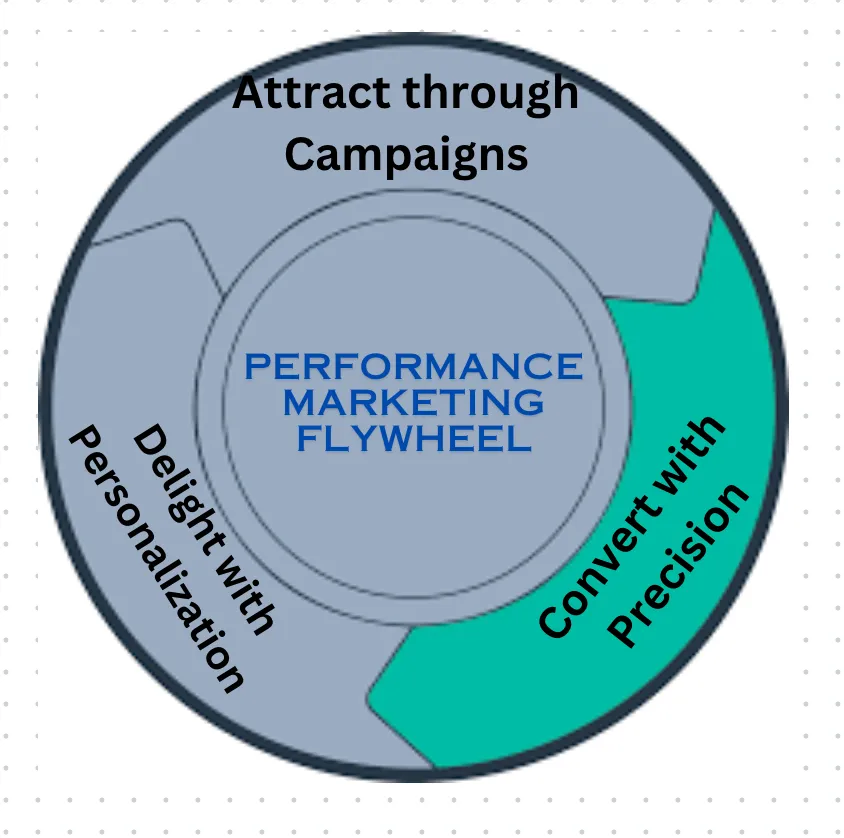
Attract through Targeted Campaigns: Using data-driven insights to create effective ad campaigns that attract a specific audience.
Convert with Precision: Optimizing landing pages and ad copy for higher conversion rates, directly feeding into the Flywheel’s momentum.
Delight with Personalization: Tailoring retargeting efforts and promotions to create personalized experiences that foster loyalty.
Adopting the Amazon Flywheel approach, Performance Marketing begins by attracting a targeted audience through data-driven ad campaigns.
This step uses insights to identify and engage specific segments likely to convert, mirroring Amazon’s strategy of using data to meet customer needs precisely.
Conversion is the next focus, where landing pages and ad copy are optimized to turn interest into action efficiently.
This optimization directly contributes to the Flywheel’s momentum by increasing conversion rates and driving growth.
The final stage, delight, involves personalizing retargeting efforts and promotions. This customization deepens the relationship with customers, encouraging loyalty and repeat purchases.
By continuously analyzing data and refining strategies, Performance Marketing creates a self-reinforcing cycle of attraction, conversion, and delight, each element boosting the others and fueling overall marketing success.
This method ensures that marketing efforts are not just a series of discrete actions but a cohesive strategy that builds upon itself, leading to sustained growth and a stronger brand-customer bond.
Email Marketing
TL;DR
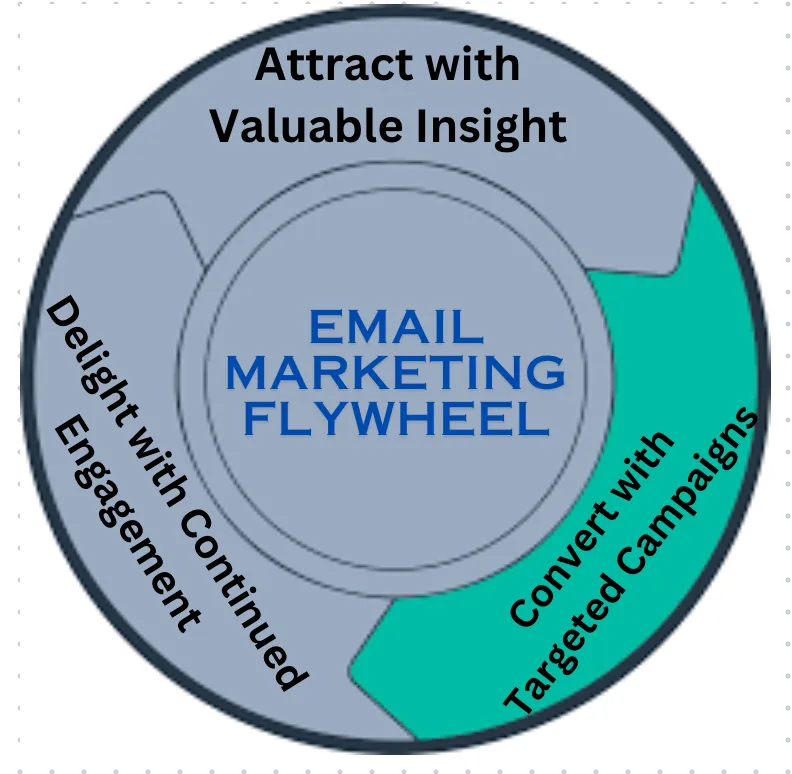
Attract with Valuable Insights: Capturing interest through informative and engaging email content that offers real value.
Convert with Targeted Campaigns: Using segmentation and personalization to craft email campaigns that drive conversions.
Delight with Continued Engagement: Keeping subscribers engaged with regular updates, exclusive content, and personalized offers.
Email Marketing within the Amazon Flywheel framework starts by captivating subscribers with emails filled with actionable insights and engaging stories, similar to how Amazon attracts customers with its value proposition.
The goal is to offer content that stands out for its usefulness and relevance, laying the groundwork for a relationship based on value.
Following attraction, the strategy shifts towards conversion, employing segmentation and personalization to ensure that each campaign resonates deeply with its intended audience.
This level of customization boosts the likelihood of turning readers into active customers.
The cycle doesn’t end with conversion; it extends into delighting subscribers with continuous engagement.
This involves sending regular updates, offering exclusive content, and making personalized offers that cater to the individual preferences and needs of the audience.
By maintaining this level of engagement, the strategy not only secures loyalty but also encourages subscribers to become brand advocates.
Implementing this cyclical approach ensures that every email sent contributes to the momentum of the marketing efforts, creating a self-sustaining loop.
This loop mirrors the effectiveness of the Amazon Flywheel by leveraging the compound effects of attract, convert, and delight strategies, thereby enhancing the overall impact of email marketing initiatives.
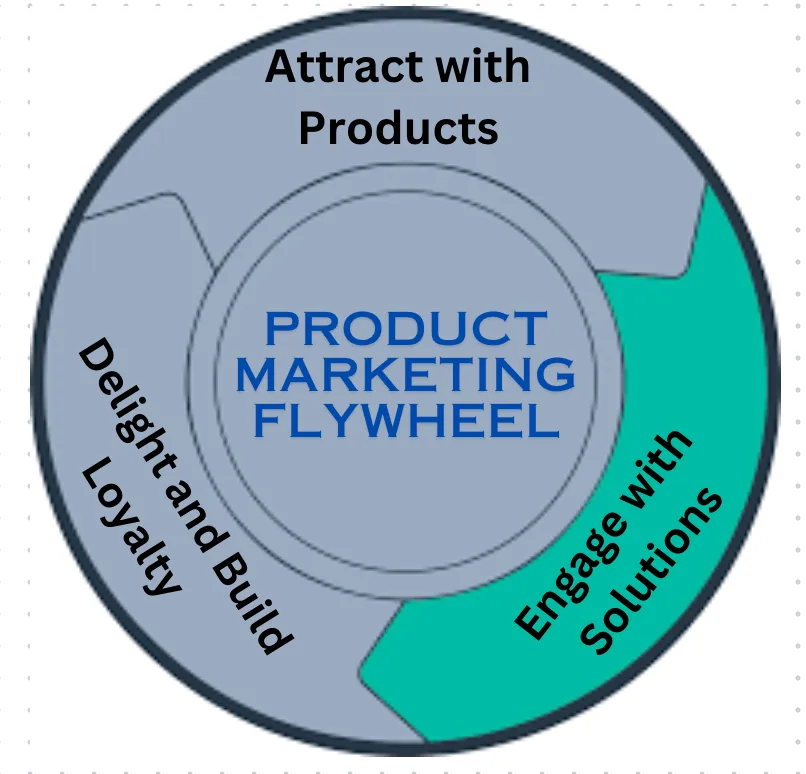
Product Marketing
TL;DR
Attract with Compelling Products: Highlighting unique features and benefits in a way that resonates with potential customers is key to attracting interest.
Engage with Solutions: Beyond initial attraction, product marketing must engage customers by demonstrating how the product solves their problems or improves their lives.
Delight and Build Loyalty: Encouraging feedback and fostering a community around the product can turn satisfied customers into advocates, driving word-of-mouth and repeat business.
Applying the Amazon Flywheel model to Product Marketing involves a strategic cycle of attracting, engaging, converting, and delighting customers.
The process begins with identifying and understanding the target market’s needs, ensuring that products are designed and marketed to meet these demands effectively.
Attraction is achieved through clear, compelling messaging that highlights the product’s unique value propositions.
Engagement deepens as customers interact with the product, facilitated by targeted marketing efforts that emphasize benefits and solutions to pain points.
Conversion strategies focus on making the purchasing process as smooth and appealing as possible, leveraging customer insights to drive sales.
The cycle completes with efforts to delight customers post-purchase, through superior customer service, continuous product improvement, and personalized follow-up communications.
This not only secures loyalty but also transforms satisfied customers into brand advocates.
Throughout this cycle, every touchpoint and interaction is an opportunity to reinforce the product’s value and strengthen the customer-brand relationship.
Driving the momentum that fuels sustained growth and market penetration, embodying the self-sustaining nature of the Amazon Flywheel in the context of product marketing.
Challenges and Solutions for Implementation
Adopting the Flywheel model in marketing can face challenges like integrating diverse data sources and aligning varied strategies across functions.
Solutions include leveraging advanced technology for seamless data sharing and analytics, and ensuring all marketing efforts are informed by up-to-date insights.
Additionally, cultivating a collaborative culture across departments can bridge gaps between different marketing functions, ensuring that everyone is aligned with the Flywheel philosophy.
This approach encourages open communication and shared goals, implementing the Flywheel model a unifying strategy for the entire marketing team.
Conclusion
In wrapping up, the essence of the Amazon Flywheel model in marketing underscores the vital interconnectedness of all marketing functions.
Each function, from Content Marketing to SEO, and from Performance Marketing to Email Marketing, doesn’t just fulfill its role in isolation but significantly contributes to the overall momentum and success of the marketing strategy.
The synergy among these functions, fueled by their collective efforts, drives the marketing Flywheel forward, ensuring sustained growth and a competitive edge in the market.
Particularly for marketers at startups in growth phases.
The constantly shifting market and emerging competitors complicate pinpointing the exact persona.
I’ve always found ICP creation to be a complex task.
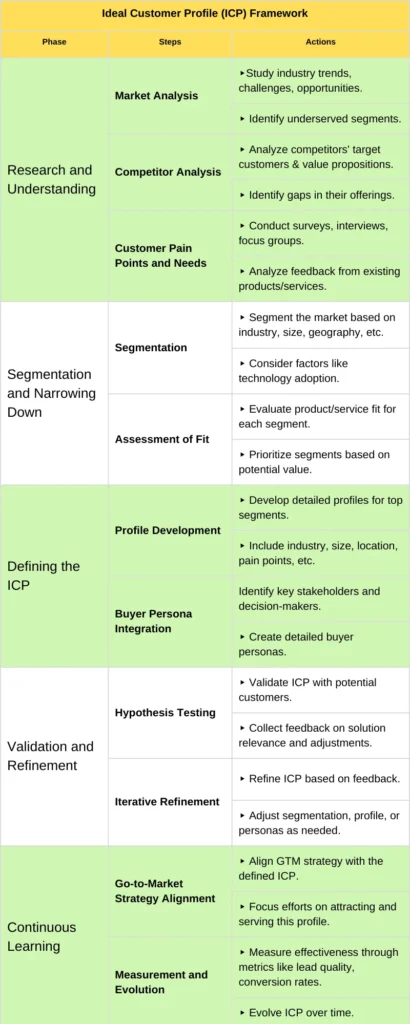
I created a simple guide to refer to when I create the next ICP.
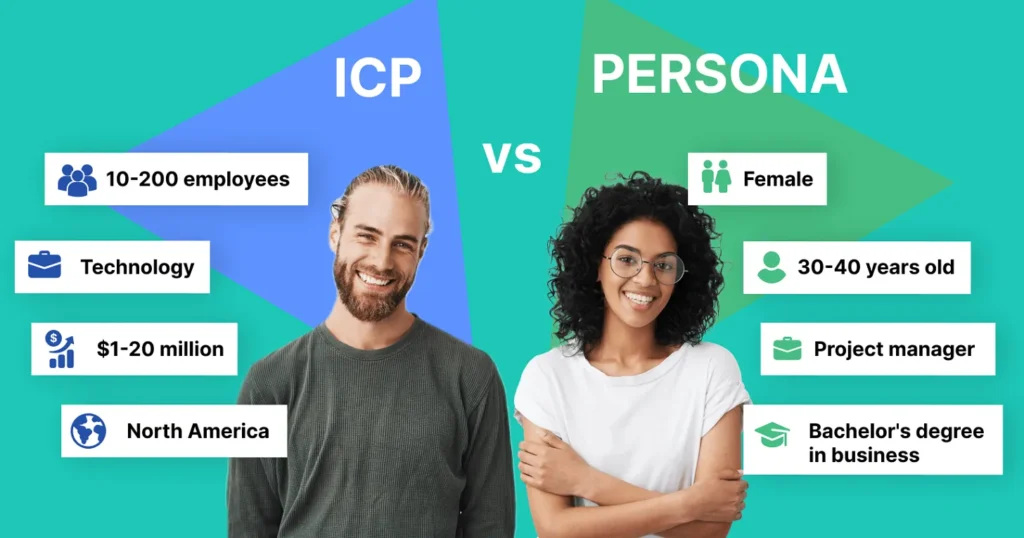
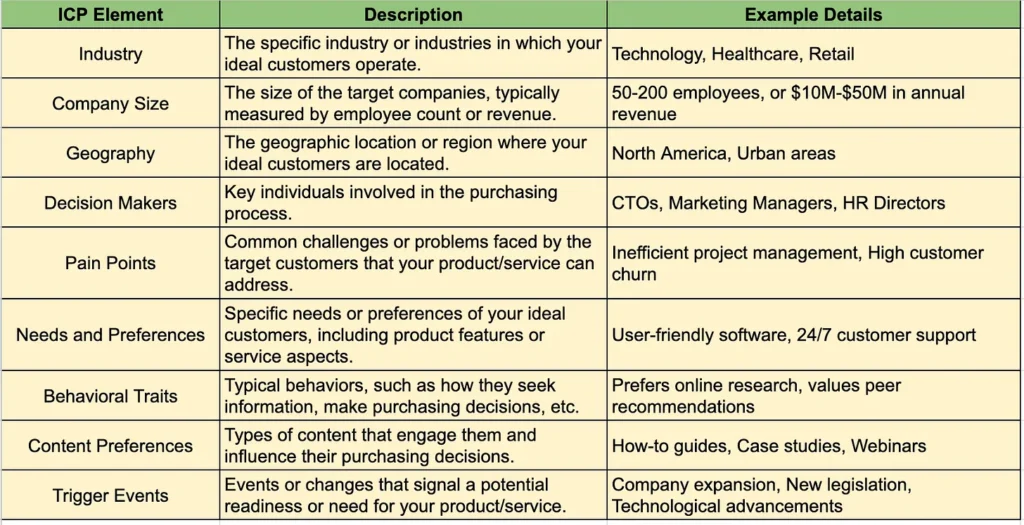
ICP, or Ideal Customer Profile, is one of the most crucial parts of the GTM strategy for any business.
A well-defined ICP results in high-quality leads showing better conversion rates because the messaging and value proposition resonate well with them.
They would have a shorter sales cycle and much happier customers (higher NPS). This would also mean the business will witness less average churn and higher referrals.
Eventually, this leads to a high lifetime value for an average customer.
A clear ICP steers the success of businesses of any size, sector, or industry, and it helps craft a well-defined growth strategy that impacts the outcome.
But building ICP is where most businesses struggle. In this article, we will discuss what ICP is and its benefits and create a framework to help you replicate the method quickly.
Understanding the Fundamentals
What is an ICP?
An ICP defines a hypothetical company or organization representing the perfect customers for your product or service.
This profile is not an individual customer but an organization – its size, industry, budget, revenue, and other information that would align with your product or services.
Creating an ICP involves deep diving into the characteristics of the buyer who is most likely to buy the offerings, would not churn, and find the best value.
While creating the ICP, most marketers often confuse it with Buyer personas. Understanding the difference before diving deep into the ICP framework is essential.
Differences between ICP, Buyer Persona, and Target Market
Ideal Customer Profile: ICP focuses on the perfect organization or account that would benefit most from your product or service. It’s a B2B concept emphasizing company-level attributes like industry, size, and specific pain points your solution addresses.
Buyer Persona: Buyer Persona is a semi-fictional representation of an individual buyer within the organization. It details the roles, challenges, goals, and personal attributes of the people involved in the purchasing process. While ICP looks at the company, buyer personas dive into understanding the individuals making the buying decisions.
Target Market: Target Market refers to the broader group of potential customers your business aims to reach. It’s a more general category encompassing various market segments, including ideal and non-ideal customers. It’s about the broader audience that might benefit from your product without the specific focus of an ICP.
Why ICP?
Having a clear ICP helps ensure that your product development and marketing strategies are closely aligned with the needs of your most valuable customers.
By understanding these ideal customers’ specific challenges and requirements, you can tailor your product’s features, messaging, and marketing campaigns to address those needs directly.
This alignment enhances your product’s appeal and increases your marketing efforts’ efficiency by targeting those most likely to convert – TheHigh-Value Customers.
Identifying your ICP allows you to direct sales and marketing efforts toward market segments with the highest return potential.
This focus on nurturing leads that match your ICP enhances sales strategy effectiveness.
It increases the chances of attracting loyal customers with high lifetime value who advocate for your brand.
Concentrating on these customers ensures efficient resource use, driving sustainable growth and profitability for startups and established businesses.
Section 2: The ICP Creation Framework
Phase 1: Research and Understanding
This initial phase is foundational, setting the stage for a deep understanding of the market environment, competitive landscape, and customer needs. It involves three key components:
Market Analysis
Market Analysis explores industry trends, understands market dynamics, and identifies specific market segments relevant to your product or service. This involves:
Trend Identification: Analyzing industry reports, market research studies, and trade publications to identify emerging trends impacting demand for your products or services.
Market Segmentation: Dividing the market into distinct segments based on various criteria such as demographics, psychographics, geographic locations, or behavior. This helps in understanding the specific needs and preferences of different market segments.
Demand Estimation: Assessing each segment’s current and future demand to determine market size and growth prospects. This helps in identifying the most lucrative market segments to target.
Market Dynamics: Understanding factors that influence market dynamics, such as barriers to entry, supply chain logistics, regulatory environment, and the degree of competition.
Competitor Analysis
Competitor Analysis involves examining the offerings and strategies of your competitors to identify their strengths and weaknesses relative to your own. This component includes:
Competitive Landscape Mapping: Identifying critical players in the market and categorizing them based on their market share, product offerings, and strategic focus.
SWOT Analysis: Conduct a Strengths, Weaknesses, Opportunities, and Threats (SWOT) analysis for significant competitors to understand their competitive positioning and identify any opportunities or threats they pose.
Positioning and Differentiation: Analyzing how competitors position themselves in the market and differentiate their products or services. This helps identify market gaps that your product or service can fill.
Pricing Strategies: Review competitors’ pricing strategies to understand the market’s price sensitivity and identify any opportunities for competitive pricing.
Customer Pain Points and Needs
Understanding customer pain points and needs involves direct interaction with potential and existing customers to gather insights to inform your ICP. This can be achieved through:
Surveys and Interviews: Conduct structured surveys and interviews with target customers to gather qualitative and quantitative data on their challenges, needs, and preferences.
Focus Groups: Organizing focus group discussions to dive deeper into specific issues or opportunities identified through surveys and interviews.
Customer Feedback Analysis: Analyzing feedback from existing customers, including support tickets, product reviews, and social media conversations, to identify common pain points and areas for improvement.
Persona Development: Creating detailed customer personas based on collected data. These personas should include demographic information, behavioral traits, goals, challenges, and preferred communication channels.
Phase 2: Segmentation and Narrowing Down
After gathering comprehensive insights in Phase 1, Phase 2 aims to use this information to identify the most promising market segments for targeted marketing efforts. This phase consists of two main components:
Segmentation
Segmentation divides the broader market into smaller, more defined categories based on shared characteristics.
This division helps focus on groups most likely to benefit from and purchase your product or service. Segmentation can be based on various criteria:
Demographic Segmentation: Dividing the market based on demographic information such as age, gender, income level, education, occupation, etc. This is often used for products or services that meet the needs of specific demographic groups.
Geographic Segmentation: Categorizing the market by location, ranging from broad regions to specific cities or neighborhoods. This is crucial for businesses whose products vary in popularity by location.
Psychographic Segmentation: Segmenting the market based on lifestyles, interests, values, attitudes, and personality traits. This helps target customers with specific interests or values that align with your product.
Behavioral Segmentation: Dividing the market based on consumer behavior, including purchasing habits, brand interactions, product usage, and loyalty. This is particularly useful for tailoring marketing messages and offers to fit the behavior patterns of specific segments.
Assessment of Fit
Once the market has been segmented, the next step is to evaluate the potential value of each segment to your product or service. This involves:
Segment Attractiveness: Assessing each segment’s size, growth potential, accessibility, and profitability. This helps identify large segments that are profitable and have growth potential.
Product-Segment Fit: Evaluating how well your product or service meets the needs and expectations of each segment. This includes considering how your value proposition aligns with the segment’s pain points and needs.
Competitive Analysis within Segments: Analyzing the level of competition within each segment to identify areas where you have a competitive advantage or where the market is underserved.
Resource and Capability Alignment: Assessing whether you have the resources and capabilities to target and serve the segment effectively. This includes considering marketing, sales, distribution, and support capabilities.
Narrowing Down
The final step in this phase is to narrow the segments to those that offer the most potential value and align best with your business goals and capabilities.
This involves:
Prioritization: Ranking segments based on their attractiveness and your business’s ability to serve them effectively. This helps focus on segments most likely to lead to successful outcomes.
Selection: Choosing one or more targeted segments based on the prioritization process. This selection becomes the focus of your marketing and sales strategies.
Strategic Planning: Developing targeted strategies for engaging the selected segments, including tailored marketing messages, customized product offerings, and specific sales approaches.
By meticulously segmenting the market and rigorously assessing the fit of each segment.
Businesses can ensure that their efforts are concentrated on the most promising areas, thereby increasing the efficiency of their marketing and sales.
Phase 3: Defining the ICP
Profile Development
After identifying and prioritizing the most promising market segments, the next step is to develop detailed profiles for these segments.
A comprehensive ICP should include a variety of characteristics that help sales and marketing teams recognize and target potential customers effectively.
This involves:
Demographic Information: Age, gender, income level, education, and job title relevant to the B2C or B2B context. This basic information helps in creating targeted marketing messages.
Geographic Details: Location specifics, such as urban vs. rural, climate factors, or regional preferences, can influence purchasing decisions.
Psychographics: Interests, hobbies, values, and attitudes that can affect how potential customers view your product or service. Understanding these helps in aligning your product’s value proposition with customer values.
Behavioral Data: Purchasing habits, product usage patterns, and brand interactions that offer insights into how customers make buying decisions.
Needs and Pain Points: Specific challenges or problems your product or service can solve for the customer. This is crucial for highlighting the benefits and features of your offering that are most relevant to your target audience.
Decision Triggers: Events or circumstances that prompt the customer to seek your solution. Identifying these can help in timing marketing and sales efforts more effectively.
Each profile should be as detailed as possible, providing a deep understanding of the ideal customer’s characteristics, needs, and behaviors.
This enables personalized and highly effective marketing and sales strategies.
Buyer Persona Integration
Within each target segment, some individuals play key roles in decision-making.
Identifying and understanding these decision-makers is crucial for tailoring your sales approach and messaging.
This step involves:
Identifying Decision-Makers: In B2B contexts, this could include various roles such as end-users, influencers, gatekeepers, and economic buyers. In B2C, it might focus on the individual or collective family decision-making processes.
Creating Buyer Personas: For each decision-maker or influencer type, create a detailed persona that includes job titles, roles in the purchase process, goals, challenges, and information sources. This helps in understanding their motivations and how they prefer to receive information.
Tailoring Messages: Develop tailored messages that speak directly to the concerns, needs, and interests of each decision-maker or influencer type. This ensures that marketing and sales efforts are relevant and engaging for all parties involved in the decision-making process.
Channels and Tactics: Determine the most effective channels and tactics for reaching each buyer persona. This could include targeted content marketing, personalized email campaigns, social media engagement, or direct sales outreach, depending on where each persona is most active and receptive.
Implementation
With the ICP and buyer personas defined, the following steps involve integrating these profiles into all aspects of marketing and sales strategies.
This includes content creation, lead generation, sales outreach, and customer engagement tactics.
Phase 4: Validation and Refinement
Hypothesis Testing
Once the ICP and buyer personas have been defined, the next step is to validate these profiles through hypothesis testing. This involves:
Developing Hypotheses: Based on the ICP, formulate specific hypotheses about how these ideal customers will respond to your product or service. This could include predictions about which marketing messages will resonate, which channels are most effective, and what product features will be most valued.
Designing Experiments: Create experiments to test these hypotheses. This could involve A/B testing marketing messages, offering targeted promotions, or conducting small-scale product launches in specific segments.
Collecting Data: Implement the experiments and collect data on customer responses. This should include quantitative metrics (e.g., conversion rates, engagement rates, sales figures) and qualitative feedback (e.g., customer surveys, interviews).
Analyzing Results: Analyze the data to determine whether the hypotheses were supported or refuted. Look for patterns and insights to validate or challenge your understanding of the ICP.
Iterative Refinement
Based on the insights gained from hypothesis testing, the ICP can be refined to match better the characteristics and needs of the most promising customers.
This involves:
Adjusting Profiles: Update the ICP and buyer personas with new information and insights. This could include refining demographic details, psychographics, pain points, or decision triggers based on what you learned from the experiments.
Evolving Strategies: Adjust marketing and sales strategies based on what was learned about the most effective messages, channels, and tactics. This might involve focusing more on specific channels, tweaking messaging to address customer pain points better, or emphasizing different product features.
Continuous Feedback Loop: Establish a constant feedback loop where data and customer feedback are regularly collected and analyzed. This ensures that the ICP remains accurate and relevant over time, adapting to changes in customer behavior or market conditions.
Measuring Success: Develop clear metrics for measuring the success of the refined ICP in achieving business goals. This could include customer acquisition, engagement, retention, and revenue growth metrics. Regularly review these metrics to assess the effectiveness of the ICP and make further refinements as necessary.
Importance of Validation and Refinement
This phase is crucial for several reasons:
Ensures Relevance: It ensures that the ICP remains relevant and accurate over time, adapting to changes in the market or customer behavior.
Improves Effectiveness: By continuously refining the ICP based on real-world data, businesses can enhance the effectiveness of their marketing and sales strategies, leading to better outcomes.
Reduces Wastage: It helps optimize resources by focusing efforts on the most promising customer segments, thereby reducing wastage of time and marketing spend.
Validation and refinement are not one-time activities but ongoing processes that help businesses stay aligned with their most valuable customers.
By regularly testing, updating, and refining the ICP, companies can ensure that their strategies remain effective and responsive to the evolving marketplace.
Phase 5: Continuous Learning
Go-to-Market Strategy Alignment
Once the ICP has been validated and refined, aligning your GTM strategy with this profile is essential to ensure that all customer-facing activities are targeted effectively.
This involves:
Marketing Strategy: Tailoring marketing messages, campaigns, and channels to the preferences and behaviors of the ICP. This includes content marketing, advertising, social media, and any other channels identified as effective during the validation phase.
Sales Strategy: Adjusting sales approaches, pitches, and engagement tactics based on the insights gained about the decision-makers and influencers within the ICP. This might involve training sales teams on the nuances of the ICP, developing new sales collateral, or adopting new sales technologies.
Product Development: Ensuring product features, development priorities, and roadmaps align with the needs and pain points of the ICP. Feedback from the ICP can inform product innovation and customization.
Customer Success and Support: Designing customer support and success programs that meet the expectations of the ICP, ensuring high satisfaction and retention rates.
Measurement and Evolution
Continuous measurement and evolution are necessary to ensure the ICP continues to serve its purpose and remains aligned with the market.
This involves:
KPI Tracking: Establishing key performance indicators (KPIs) that will measure the success of the GTM strategy in engaging and converting the ICP. This could include conversion rates, customer acquisition costs, lifetime value, retention rates, and satisfaction scores.
Regular Review Cycles: Setting up regular intervals (quarterly, semi-annually) to review the performance against these KPIs and assess whether the ICP still accurately represents the most valuable customer segments.
Feedback Mechanisms: Implement mechanisms to gather feedback from customers, sales teams, and other stakeholders.This could include surveys, interviews, focus groups, and analysis of customer support interactions.
Iterative Refinement: Using the insights gained from measurement and feedback to make iterative refinements to the ICP, GTM strategies, and possibly even the product or service offering itself.
Importance of Operationalization and Continuous Learning
This final phase is critical for several reasons:
Ensures Alignment: The organization’s strategies and operations remain aligned with the most valuable customer segments, maximizing efficiency and effectiveness.
Drives Growth: By continuously refining the approach based on real-world performance and feedback, businesses can more effectively drive growth and adapt to changing market conditions.
Fosters Agility: Establishing a continuous learning and adaptation culture helps organizations remain agile, responsive to customer needs, and competitive in the marketplace.
Continuous learning transforms the ICP from a static document into a dynamic tool that drives strategic decisions and adaptations across the organization.
Practical Steps to Create Your ICP
Step 1: Compile a Dream List of Customers
Think about the types of customers who would benefit most from your product or service and who, in turn, would contribute significantly to your business’s success.
Establish criteria that define your dream customers. This might include industry, company size, revenue, geographic location, or specific challenges they face that your product can solve.
Utilize databases, LinkedIn, industry reports, and networking events to find companies and contacts that match these criteria.
Compile a comprehensive list of these potential dream customers, including as much detail as possible about each one. This list will guide your research and outreach efforts.
Step 2: Deep Dive into Buyer Persona and Users
Understanding the people behind the buying decisions is crucial.
This step involves identifying the key stakeholders involved in the purchasing process of your dream customers.
Identify the roles within the organizations that would interact with your product or service. This could include end-users, influencers, decision-makers, and gatekeepers.
Understand how each role influences the buying process. What are their priorities, goals, and challenges?
Develop detailed buyer personas for each role, including demographic information, job responsibilities, pain points, and how your product can address their needs.
Step 3: Analyzing a Day in the Life of Your Customer
Empathy is a powerful tool in marketing and sales. This step involves walking a mile in your customer’s shoes to understand their daily experiences, challenges, and needs.
Document a typical day for your customer, focusing on their work routine, challenges, and the goals they strive to achieve.
Identify where they encounter obstacles or inefficiencies in their day that your product or service could alleviate.
Look for opportunities where your product could naturally fit into their daily routine, making their life easier or helping them achieve their goals more effectively.
Step 4: Understanding Customer Behavior
Knowing where customers spend their time and what influences their decisions is key to engaging them effectively.
Identify the tools, platforms, and technologies your customers use regularly in their professional lives.
Understand the types of content they consume, the topics they are interested in, and their preferred formats.
Identify the key influencers, thought leaders, and information sources that impact your customers’ decision-making processes.
Step 5: Identifying Trigger Events
Trigger events are specific occurrences that indicate a potential customer is more likely to be in the market for your product or service.
These include organizational changes (e.g., new executive hires, mergers/acquisitions), regulatory changes, significant industry developments, or personal achievements within the target companies.
Develop a system for identifying and tracking these trigger events using tools like Google Alerts, industry news feeds, and LinkedIn notifications.
Create tailored outreach strategies that align your solution with the needs or opportunities created by these trigger events.
Implementing these practical steps systematically will help create a well-defined and actionable Ideal Customer Profile.
Implementing Your ICP in Business Strategy
Implementing your Ideal Customer Profile (ICP) in business strategy transforms insights into actionable steps across various departments, ensuring your organization is uniformly focused on attracting and serving your most valuable customers.
Some examples of how ICP impacts your business
Initially focusing on budget travelers looking for unique accommodations, Airbnb‘s ICP evolved as it identified opportunities among different customer segments, including higher-end travelers and those seeking experiences beyond just lodging.
Salesforce‘s approach to segmenting its market and creating tailored solutions for different industries (e.g., healthcare, finance, retail) is a testament to the power of a well-defined ICP. By understanding each segment’s unique needs,
Salesforce has developed specialized products and marketing strategies that resonate deeply with potential customers, fueling its growth and dominance in the CRM space.
Integrating ICP with Marketing and Sales
The integration of ICP with marketing and sales strategies is pivotal.
It enables the tailoring of messaging and campaigns to specifically resonate with your ICP, enhancing the effectiveness of marketing efforts and increasing conversion rates.
By understanding the preferences, pain points, and decision-making processes outlined in your ICP, marketing teams can create content and campaigns that speak directly to these elements.
Similarly, sales strategies can be refined to align with the buying journey of your ICP, ensuring that sales efforts are focused and efficient.
Product Development and Innovation
ICP insights are invaluable for guiding product development and innovation.
They clearly understand your target customers’ specific needs, challenges, and preferences, allowing product teams to prioritize features and enhancements that deliver the most value.
This customer-centric approach to product development ensures that new offerings are innovative and closely aligned with the evolving needs of your most valuable customers.
As a result, your products become more competitive and better positioned to meet market demands.
Customer Success and Support
Aligning customer success and support services to satisfy the needs of your ICP is crucial for retaining valuable customers and fostering long-term loyalty.
By understanding the common issues and queries your ICP may have, you can tailor your support services to be more proactive and responsive.
This might involve training support staff on your ICP’s specific challenges, developing targeted help resources, or offering personalized support solutions.
Such alignment ensures that customers receive the help they need when needed, improving overall satisfaction and success rates.
By keeping the ICP at the core of these efforts, businesses can better align with customer needs, leading to increased loyalty, higher conversion rates, and more successful product launches.
Conclusion
A well-crafted ICP acts as a lighthouse, guiding your product development, marketing strategies, and resource allocation toward the shores of sustainable growth and profitability.
By focusing on the organizations that benefit the most from your offerings, you streamline your efforts and enhance your potential for creating meaningful, lasting relationships with your customers.
Remember, the journey to identifying your ICP is ongoing. Markets evolve, customer needs shift, and your product will adapt.
Therefore, revisiting and refining your ICP should be integral to your business strategy. Armed with a clear, detailed ICP, you’re not just casting a wide net hoping to catch anything. Instead, you’re spearfishing for the prize catches that will nourish and sustain your business for years.
Dive deep into the process, and you may find that your ideal customers are closer than you think.
Imagine you’re at a bustling cafe and overhear someone at the following table talking about how they can’t find the perfect pair of headphones.
They’re not just looking for headphones; they want something that cancels noise, feels like they’re wearing clouds, and doesn’t make them look like they’re piloting a spaceship.
This is where Jobs Theory, or as the cool kids call it, JTBD (Jobs-to-be-Done), comes into play.
So, what’s JTBD? Think of it as seeing the world through the eyes of our customers.
It’s not about the headphones themselves but about the “job” these customers are “hiring” the headphones to do.
In the above example, the job isn’t just about listening to music; it’s about finding peace in a noisy world, feeling comfortable for hours, and looking good.
Here’s the kicker: JTBD tells us that people don’t buy products; they hire them to make progress in specific situations. It’s like, “Hey, I’ve got this situation, and I need something to get me from point A to point B.” That’s the job.
We determine what those jobs are and how our products can be the best candidates.
Now, why should we, as marketers, care?
Because it flips the script on how we think about our products and customers,
Instead of pushing features or categories, we pull insights from real human needs and desires.
It’s not about being the best headphones on the market; it’s about being the best at helping our customers find their peace, comfort, and style.
How do we apply this? We start listening differently.
We dive into our customers’ lives, not just their shopping carts.
We look for those moments of frustration, aspiration, and decision.
We ask, “What job is our customer hiring for?” And then, we tailor our messaging, product development, and even our innovation strategy around answering that need.
So, next time you’re brainstorming or crafting a campaign, think about the job your customer is trying to get done.
It’s about making their life better in some tangible, meaningful way. And when we get it right, it’s not just about creating a sale; it’s about making a difference.
That’s JTBD—seeing beyond the product to the progress our customers strive for. Let’s make our products the go-to “hires” for those jobs.
Now that we’ve wrapped our heads around the why of JTBD, let’s roll up our sleeves and dive into the how.
How to Create a Job To Be Done (JTBD) Framework
How do we take this fantastic concept and turn it into actionable insights that can drive our marketing strategies and product development? Here’s a straightforward blueprint to get us started:
Listen and Observe: Begin with the customer. And I mean get into their world. This isn’t about sending out surveys and calling it a day. It’s about observation, interviews, and digging into the experiences that lead them to seek solutions. What frustrations are they voicing? What makeshift solutions have they created? This step is all about gathering the raw material.
Define the Jobs: With your insights in hand, start outlining the jobs. Remember, a job is more than a task; it’s the progress your customer seeks in a given context. Think about the emotional and social jobs as well as the functional ones. What are they trying to achieve?
Categorize and Prioritize: Not all jobs are created equal. Some are critical to your customers’ success; others are nice. It’s time to sort through the jobs you’ve identified, categorize them based on importance and frequency, and prioritize them based on your product’s ability to address them effectively.
Craft Job Stories: Create a compelling story for each prioritized job. This should capture the essence of the job in a way that resonates with both your team and your customers. An excellent job story includes the situation, the motivation, and the intended outcome. It’s storytelling with a purpose.
Align Your Offering: Here’s where the rubber meets the road. Take a hard look at your product or service through the lens of the job stories. How well does it “hire” for the job? This might be a time for some tough love and honest reflection. The goal is to identify gaps between your customers’ needs and what you’re offering.
Innovate and Iterate: Armed with your job stories and the insights from your alignment exercise, it’s time to innovate. Whether tweaking your product, adjusting your messaging, or overhauling your approach, use the jobs as your north star. And remember, innovation is a cycle, not a one-time deal. Keep listening, refining, and keeping your product or service aligned with your customers’ jobs.
Communicate with Purpose: Last but not least, let’s talk about talking. Communicating our product’s ability to do the job can make all the difference. This is about crafting messages that resonate and speak directly to the jobs your customers need to be done. It’s not just about features and benefits; it’s about understanding, empathy, and connection.
Creating a JTBD framework isn’t just an exercise; it’s a shift in perspective. It’s about moving from product-centric to customer-centric, selling to solving, talking to listening.
Job Story timeline
Crafting a timeline for Job Stories within the context of Jobs Theory involves mapping the customer’s journey from recognizing a need to choosing a solution. (
This process focuses on understanding the specific moments and motivations that lead customers to “hire” a product or service to accomplish a job. (image source)
Here’s how you can craft a timeline for Job Stories:
Identify the Switch Event: Start by pinpointing when the customer switches to your product or service. This is the focal point around which the timeline is built.
Segment the Timeline: Break down the timeline into three main phases relative to the switch event:
First Thought: When the customer first recognizes they have a need or a problem.
Considering the Switch: The period where they evaluate options, including the emotional and rational factors influencing their decision.
Decision and Aftermath: When the customer decides and their reflections or reactions after using the new product or service.
Gather Data through Switch Interviews: Conduct detailed, exploratory Switch Interviews with customers who have recently switched to your product or service. Aim to uncover:
Push Factors: What issues or dissatisfaction with their current solution drove them to consider a change?
Pull Factors: What aspects of your product or service attracted them to make the switch?
Anxieties: What concerns or hesitations did they have about switching?
Habits: What routine or loyalty to their previous solution made switching difficult?
Analyze Emotional and Functional Forces: Look for the emotional (how they felt) and functional (practical reasons) forces across the timeline. This helps in understanding the complete context of the switch.
Plot the Journey: Use the insights from the interviews to plot the customer’s journey on the timeline. Include key moments of frustration, realization, evaluation, decision, and satisfaction or dissatisfaction post-switch.
Identify Patterns and Job Stories: As you conduct more interviews, patterns will emerge. These patterns will help you define Job Stories that represent everyday customer journeys. A Job Story is structured around the situation, motivation, and outcome, highlighting the job the customer hired your product or service to do.
Refine and Validate: Use ongoing interviews to refine your Job Stories and validate their accuracy and relevance. It’s a continuous process of learning and adjustment.
Create Job Cards: Summarize each Job Story into a Job Card that outlines the key insights and can inform design decisions, product development, and marketing strategies.
The timeline for Job Stories is not just a chronological sequence of events; it’s a tool for understanding the deep motivations, barriers, and triggers that lead to a customer making a switch.
This understanding is crucial for developing products and services that meet customer needs and creating compelling marketing messages.
JTBD Case Study Example – Transforming Online Education with Video API
Background: One of my organizations delivers high-quality, customizable video conferencing solutions.
My focus has been on the education sector, aiming to elevate the online learning experience to new heights.
Target Customer Segment: I’ve been working closely to understand and cater to online educators and e-learning platforms who need tools to make virtual classrooms as engaging and interactive as in-person learning.
Listening and Observing with Purpose:
We dived deep into the online education community, engaging in forums, interviewing educators, and sifting through feedback from our users.
This exploration led us to identify a pivotal job educators needed to accomplish: “Create an engaging and interactive online learning environment that rivals in-person classes.”
Defining and Refining the JTBD:
With this insight, we refined our JTBD focus on delivering content and crafting an immersive learning experience. This included:
Facilitating real-time interactions between students and teachers.
Enabling hands-on experiences through breakout rooms and interactive tools.
Integrating seamlessly with educational content and resources.
Crafting Relevant Job Stories:
A standout story from our journey was an online coding boot camp that leveraged our product to revolutionize their curriculum into an interactive, community-centric learning experience.
Students engaged in live coding, collaborated on projects in breakout rooms and showcased their work—all facilitated by our low-latency, high-quality video platform.
Aligning and Innovating Our Offerings:
Recognizing the need for enhancements, I spearheaded the development of new features, including:
An interactive whiteboard for collaborative learning.
Customizable breakout rooms equipped with subject-specific tools.
Advanced analytics for educators to monitor student engagement.
Communicating with Clarity and Empathy:
We shifted our marketing strategy to emphasize our product’s role in bridging the gap between virtual and physical classrooms. Our campaigns, powered by HubSpot and personalized demos, highlighted true stories of educators and students achieving deeper connections and more effective learning through our platform.
Implementing, Iterating, and Innovating:
With the help of tools like Mixpanel and Hotjar, I ensured we continuously collected feedback on our new features. Our team remained agile, always ready to refine our offerings in response to the evolving needs of online educators and the latest e-learning trends.
Job To Be Done (JTBD) Interview Questions
Q. Can you describe a recent situation where you needed a new solution?
What specific problem were you trying to solve?Understand the customer’s perceived need or problem.
How does this challenge affect your daily life or work?Gauge the impact of the problem on their daily activities or productivity.
Q. Evaluating Options and Decision-Making
What solutions did you consider or try before choosing this one?Learn about the alternatives they evaluated, providing insight into their decision-making criteria.
What made you try a new solution instead of sticking with what you had?Identify push factors driving them away from current solutions.
What were you hoping to achieve by using this product/service?Understand the progress or outcome the customer was seeking.
What features or attributes did you find most appealing about our solution?
Pinpoint pull factors that attracted them to your product/service.
Q. Aftermath and Evaluation
How has our product/service helped you achieve your goal?Assess how well the product/service fulfills the job it was hired to do.
Is there anything that is still missing or could be improved?Identify gaps or opportunities for enhancement from the customer’s perspective.
Can you describe when you felt delighted with the product/service?Capture specific instances of success or relief provided by your solution.
Q. Emotional and Social Dimensions
How did you feel when you encountered the problem you needed to solve?Explore the emotional context surrounding the need for a solution.
How has your perception changed after using our product/service?Understand emotional outcomes, including any confidence, satisfaction, or relief shifts.
Who else is affected by your use of this product/service?Investigate the social impact or considerations influencing their choice and use of the solution.
Q. Looking Forward
Would you consider using this product/service for a different job? Why or why not?Explore the versatility of the solution and potential unmet needs.
How likely are you to recommend our product/service to someone with a similar need?Gauge the customer’s overall satisfaction and perceived effectiveness of the solution for the job done.
JTBD Tech Stack in GTM 5.0 Era
Transitioning into the data-centric GTM 5.0 era, the approach to identifying and executing the “jobs to be done” (JTBD) for a seamless Go-To-Market strategy is evolving.
Consequently, this shift necessitates transforming our processes and the tools we utilize.
Moving away from conventional tech stacks, we’ve developed a streamlined process for generating pipelines, drawing on insights from extensive interviews with leading GTM professionals.
To construct a tech stack suitable for GTM 5.0, focusing on becoming more responsive to signals, here are the essential steps:
Identifying Target Accounts: It’s crucial for the Revenue Operations (RevOps) team, with input from Marketing and Sales, to determine which accounts to focus on, guided by the target market and Ideal Customer Profile (ICP).Tools such as Keyplay, ZoomInfo, 6sense, and Crunchbase are instrumental in this phase.
Account Prioritization and Segmentation: Following creating a target account list, it’s time to segment and prioritize these accounts based on first-party and third-party intent signals. Solutions like Pocus, Keyplay, Warmly, G2, and 6sense can provide valuable insights for this task.
Comprehensive Account Research and Planning: A holistic understanding of each account is vital. Identifying key stakeholders, power users, and other critical insights helps craft a narrative for each account. Tools recommended for this step include Pocus, LinkedIn Sales Navigator, CloseFactor, and Crunchbase.
Identifying Key Contacts Within Accounts: The sales team’s next step is to pinpoint the right individuals to contact within each account, including obtaining their contact details. Tools such as Pocus, Apollo.io, Clay, Lusha, ZoomInfo, and LinkedIn Sales Navigator are beneficial here.
Engaging with Intent: Recognizing and acting upon strong intent signals, such as a surge in product use or frequent visits to the pricing page, is key to timely engagement. This can be done manually or through automated workflow rules using tools like Pocus, Warmly, UserGems, and Common Room.
By adopting these steps, companies can refine their GTM strategies to be more aligned with the dynamics of the GTM 5.0 era, ensuring that they are not just reactive but proactive in meeting the evolving needs of their target markets.
Conclusion
Embracing the Jobs-to-be-Done framework transforms how we approach product development and marketing, guiding us to focus intensely on the real needs and progress our customers seek.
By actively listening, observing, and engaging with our customers, we uncover the essential jobs they hire our products to do.
This insight enables us to refine our offerings, ensuring they meet and exceed customer expectations.
Crafting compelling job stories and aligning our messaging allows us to communicate with clarity and empathy, resonating with customers more profoundly.
As we navigate the data-driven GTM 5.0 era, adapting our strategies and tools in line with JTBD principles ensures our products are the preferred choice for customers, making a tangible difference in their lives.
Ultimately, JTBD isn’t just a methodology; it’s a mindset shift toward creating products that genuinely serve and support our customers’ journeys.
As a B2B marketer working on generating more leads for our business, most of us bank on cold emailing campaigns.
While popular,
One strategic decision that impacts the cold email campaign is finding the right domain.
Most of us are confused about using
– Company’s primary domain
– A separate domain
– Or a Subdomain
While a separate domain starts on a clean slate and ensures better deliverability.
A subdomain helps protect the main domain’s reputation without slipping away from the brand at any time.
Lastly, a primary domain benefits from existing trust among the users, but using it for cold emailing can potentially risk the email’s reputation.
Multiple Domain vs Subdomain?
Over time, employing multiple domains for email marketing is advocated as the ‘best choice’ due to its potential to enhance email deliverability.
Having multiple domains takes away the typical risk associated with email campaigns and the danger of getting the primary domain – blacklist.
“An email blacklist is a list of IP addresses or domains a blacklist operator has caught sending emails to accounts that didn’t willingly subscribe to their email program.”
By landing most of its communication in spam, a blacklisted domain can adversely affect any organization’s entire communication strategy.
By having multiple domains as part of the strategy and then distributing communications through these different domains, businesses can significantly reduce the risk of their emails being blacklisted.
Without risking the primary domain’s reputation, the multi-domain approach gives freedom to be more aggressive (Increased email volume per SDR ) and experimental.
Over time, it has also been witnessed that multiple domains allow organizations to assess communication done by various functions and evaluate their data per each function.
It is often thought that managing multiple domains for cold email strategies can be technically complex and expensive for a business.
On the other hand, it can be highly cost-effective and straightforward with the right tools and guidance.
These services make it easier to establish a new domain and provide support to ensure businesses can do so without significant financial or technical burdens.
Making the multi-domain strategy an attainable option for companies of various sizes and technical capabilities.
But what’s the case with Subdomains
The benefit of using subdomains revolves around the flexibility of using a brand’s online presence without impacting the main domain’s reputation.
Search engines and email service providers see subdomains as independent entities.
This gives subdomains a free ticket to a nuanced approach to email marketing.
The negative impacts of email campaigns – Marked as spam, email bounce, etc, on the subdomain do not affect the main domain’s credibility.
While closely related to the brand, the subdomain allows the organization to reach a specific segment or targeted audience with relevant content while maintaining brand recall.
This strategy safeguards the brand’s online health and helps maintain a close connection with its users.
Providing invaluable insights into the audience preferences and behaviors, helping with better engagement and conversions.
But
This doesn’t keep Subdomains from any cons associated
“Subdomains will carry their reputation, but bad behavior can flow in both directions if a brand sends unsolicited communications, is compromised, or does other “bad email things.”
This means that your subdomain benefits from your brand reputation. They also risk damaging it if the communication gets compromised.
Conclusion
Each approach offers distinct advantages and potential drawbacks, impacting email deliverability, marketing flexibility, and brand reputation.
Multiple domains provide a safeguard against the risks of blacklisting and allow for more experimental marketing tactics, albeit with considerations around cost and technical setup.
On the other hand, subdomains offer a balanced solution that maintains a connection to the main domain while providing some level of protection and targeted marketing capabilities, though not without its risks to reputation and deliverability.
Ultimately, the choice between multiple domains and subdomains hinges on a business’s needs, resources, and risk tolerance.
Whether opting for the breadth of multiple domains or the targeted approach of subdomains, the key lies in vigilant management and continuous optimization to achieve cold emailing success.