
Case Study
How Nextvant Built DelveAnt’s Search Presence from Zero
Client
Delveant
Domain
SaaS
Location
Australia
Stage
Seed Funded
GTM
Sales-Led
When DelveAnt came to Nextvant, searching for the brand on Google returned a “did you mean…” prompt.
The site had two pages, no blogs, and no organic footprint. For an AI-native CRM built for lean sales teams and startups, competing in one of the most crowded software categories on the internet, that was a real problem.
This is how we fixed it.
In under six months, DelveAnt went from zero search presence to 64,758 impressions, 4,087 sessions, and referral traffic flowing in from ChatGPT, Claude, and Perplexity.
The impressions chart tells the whole story in one view. DelveAnt started in December 2025 with 38 weekly impressions. By May 2026, that number had crossed 17,000.
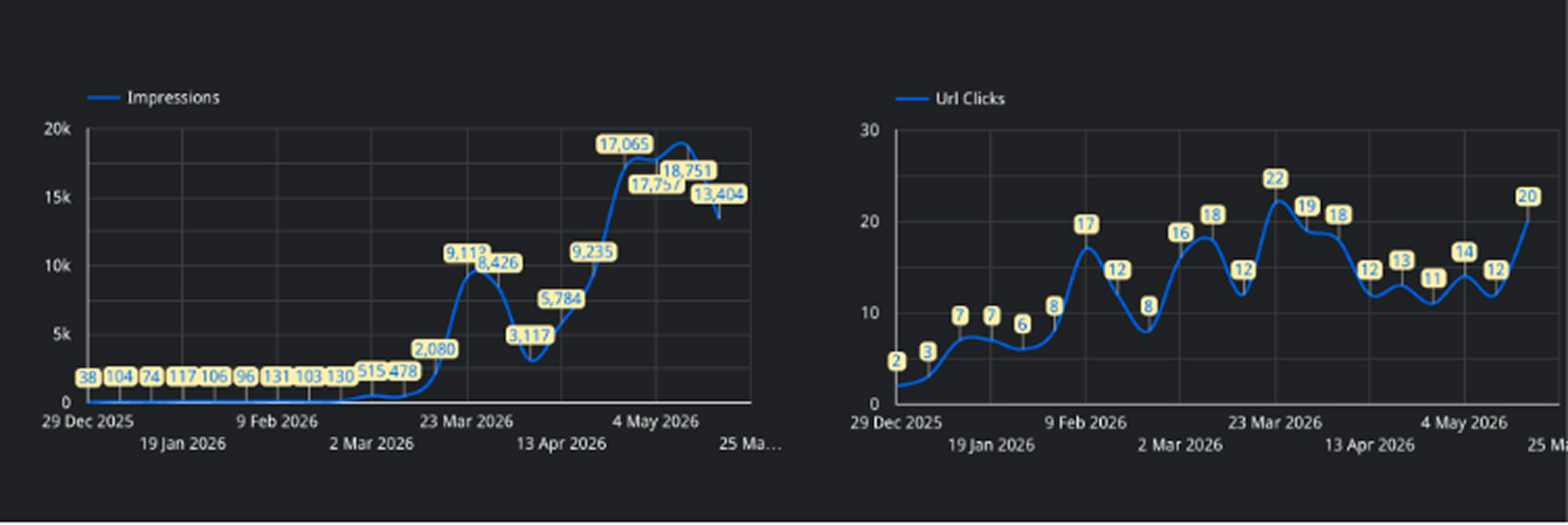
That curve did not happen by accident. It is the direct result of 50+ pieces of content going live, getting indexed, and compounding over time.
DelveAnt Had No Search Presence
The starting point was about as bare as it gets. DelveAnt is an AI-native CRM powered by 11 built-in AI agents, designed to replace the manual update cycle that slows most sales teams down. The product is genuinely differentiated. But none of that mattered online because the website was a basic two-pager with thin content, giving Google very little to index and rank.
The brand name itself was not being recognized. Anyone searching for DelveAnt directly was being served autocorrect suggestions instead of the actual product.
On top of that, the CRM category is dominated by established players with years of content, backlinks, and domain authority. Salesforce, HubSpot, Pipedrive. Breaking through that without a content foundation was not going to happen on its own.
The goal we set was clear: break the invisibility. Get DelveAnt indexed, recognized, and ranked for the queries that its buyers were actually typing.
The Strategy We Built from Scratch
We approached this in four connected layers, and each one reinforced the next.
Building the content foundation
The first job was giving the site substance. We produced 50+ blog posts designed to cover the full customer journey, from awareness through decision. Before writing a single word, we did keyword research focused on long-tail, lower-competition terms and mapped content to what DelveAnt’s buyers care about using a Jobs-to-Be-Done framework.
The question we kept coming back to was simple: what is this person actually trying to solve when they search for an AI CRM? DelveAnt’s core promise is to remove the manual data-entry burden and give sales reps pipeline clarity without the admin overhead. The content answered that directly. Alongside the blogs, we rewrote the landing page copy to clearly reflect that positioning.
Going after competitors head-on
Avoiding big competitors in a crowded category is a losing game. Instead, we used their authority as a lever. We created comparison content and pricing breakdowns targeting buyers already evaluating alternatives. Someone searching “DelveAnt vs HubSpot” or “DelveAnt pricing” is not at the start of the funnel. They are close to a decision. That content intercepted them at exactly the right moment.
The question we kept coming back to was simple: what is this person actually trying to solve when they search for an AI CRM? DelveAnt’s core promise is to remove the manual data-entry burden and give sales reps pipeline clarity without the admin overhead. The content answered that directly. Alongside the blogs, we rewrote the landing page copy to clearly reflect that positioning.
Directory listings and base authority
We systematically listed DelveAnt across relevant software directories, review platforms, and B2B listing sites. This did two things: it brought in referral traffic, and it created the citation signals that search engines and LLMs rely on when deciding whether a brand is credible enough to surface.
Optimizing for LLMs, not just Google
We structured content so that AI tools like ChatGPT, Claude, and Perplexity could understand and cite DelveAnt accurately. Clear entity definitions, consistent brand mentions across indexed sources, and authoritative topic coverage around AI-native CRM as a category. The result shows up directly in the traffic data.
What the Numbers Looked Like After Six Months
The numbers started moving within weeks of the content going live. Impressions climbed sharply from late February 2026 onward, peaking at over 18,700 in a single week by April 2026.
138%
Impressions Growth
64,758 total
138%
Impressions Growth
64,758 total
138%
Impressions Growth
64,758 total
138%
Impressions Growth
64,758 total
Zooming out to the full period, the aggregate numbers reflect how far the site’s visibility had come.
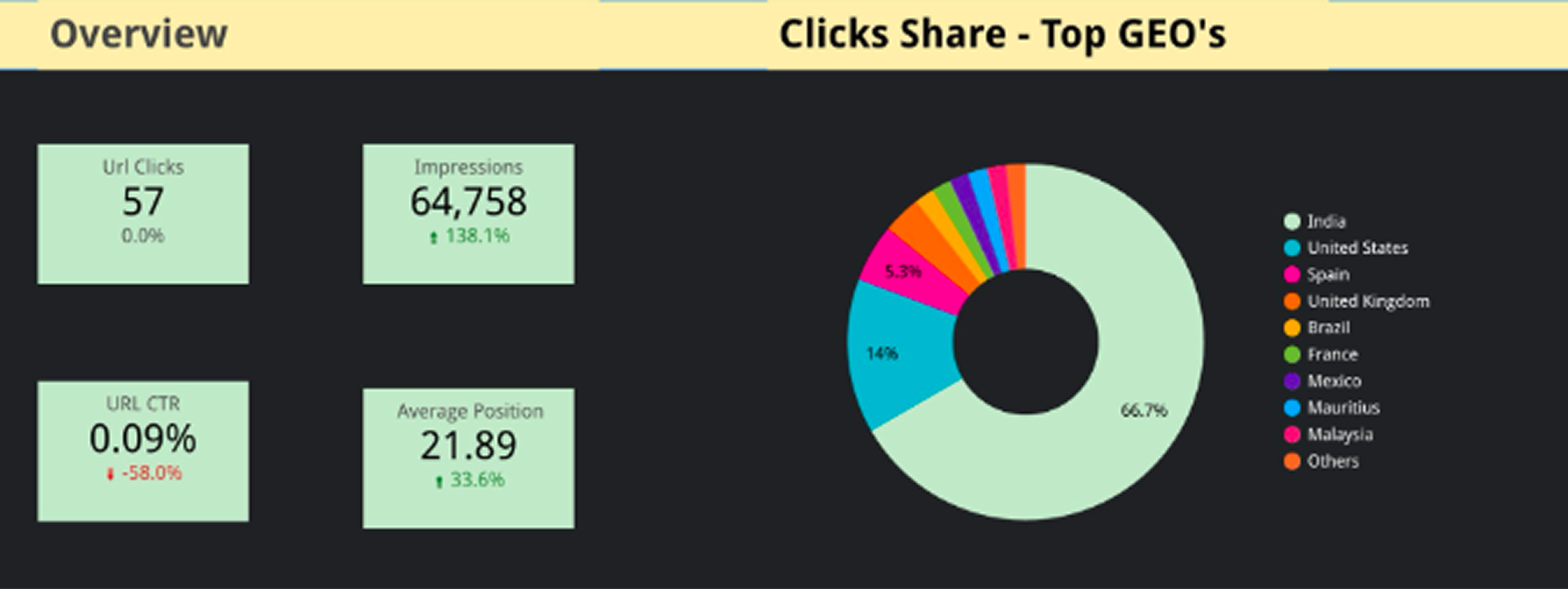
The geographic spread is worth noting. 66.7% of impressions came from India, with the US at 14% and Spain at 5.3%, all without a single rupee spent on paid amplification. The landing page tells its own story, separate from the blog traffic. Impressions on the core page peaked at 18,751 in a single week in May 2026.
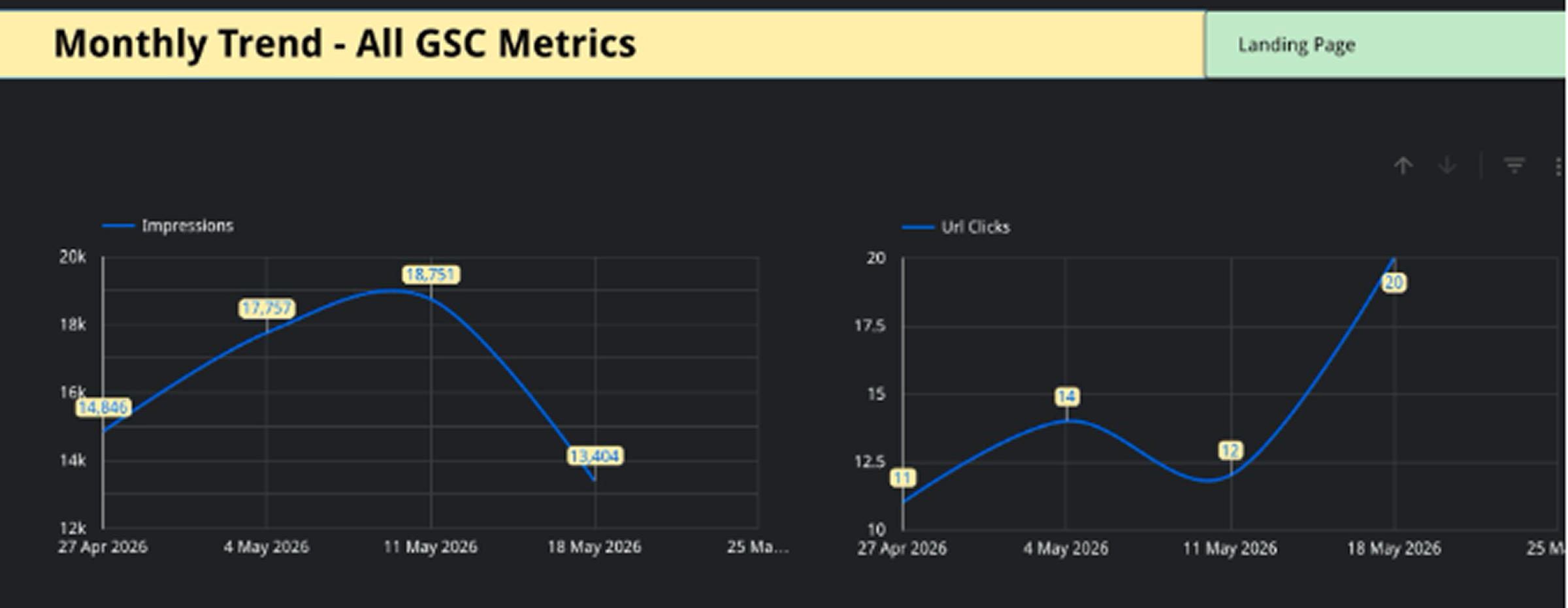
A rewritten landing page with clear positioning and the right keywords does not just improve conversions. It pulls in search traffic on its own.
Where the traffic came from
The source breakdown tells the clearest story about what the work achieved. Google organic sessions grew 61.7%. But the LLM referrals are where this gets interesting:
| Source |
Sessions |
Growth |
|---|---|---|
| Google / Organic | 713 | +61.7% |
| ChatGPT / Referral | 77 | +75.0% |
| Perplexity / Referral | 18 | New |
| Claude.ai / Referral | 18 | New |
| Bing / Organic | 102 | +3.0% |
| Kovaion.com / Referral | 132 | +187.0% |
The traffic source breakdown is where the LLM strategy shows up most clearly.
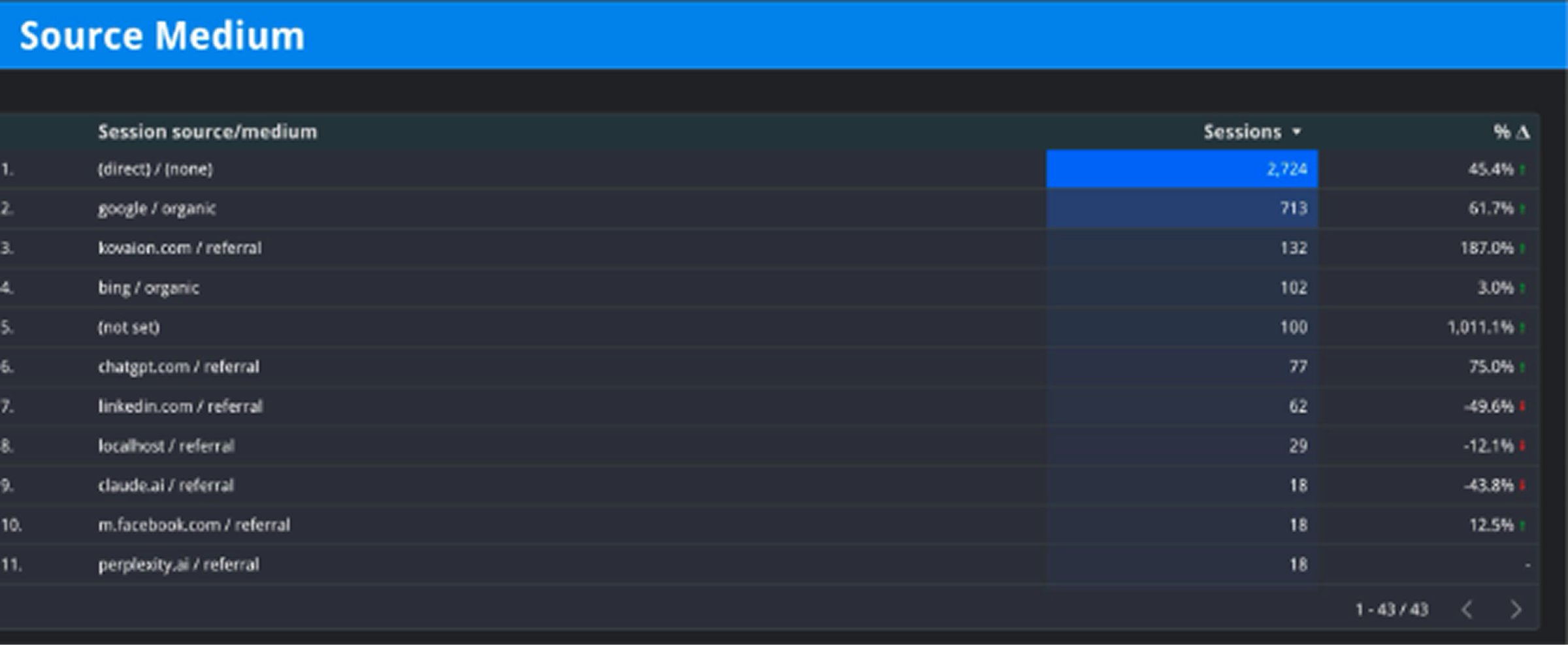
ChatGPT, Perplexity, and Claude are all in the referral list. That is not a coincidence. It is a direct result of structuring content so that AI tools could understand and cite DelveAnt accurately.
The Google Search Console numbers show visibility. The Google Analytics numbers show what happened when people actually arrived.
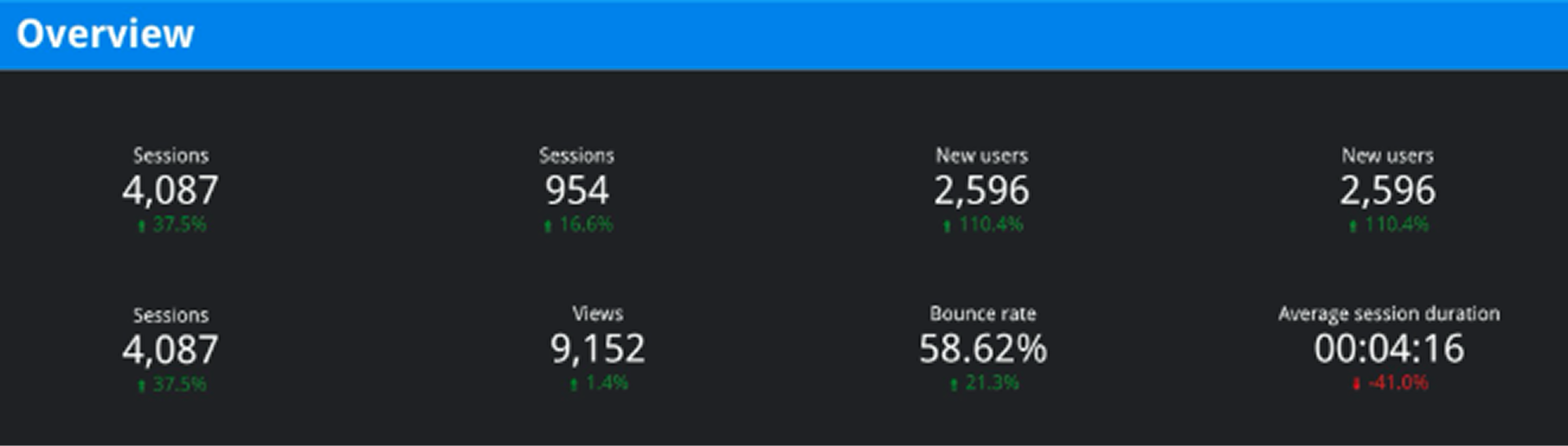
New users grew by 110.4%, indicating the content was reaching people who had never heard of DelveAnt before. That is what organic growth is supposed to do.
The Five Decisions That Made the Difference
A few strategic choices drove the outcome here:
1. Fix the brand name problem first.
Google was not recognizing DelveAnt as a real brand. Before any traffic strategy made sense, we needed the site indexed and the brand name understood correctly by search engines. Everything else depended on that.
2. Write for people who are close to buying, not just browsing.
We created comparison pages and pricing breakdowns targeting buyers already evaluating CRM options. Someone searching “DelveAnt vs HubSpot” is in a very different headspace than someone searching “what is a CRM.” The former is ready to decide.
3. Treat LLMs as a traffic source, not a trend.
ChatGPT, Claude, and Perplexity are currently sending users to websites. We structured DelveAnt’s content so AI tools could understand and cite the brand accurately, and it paid off. Those three platforms are all in the referral traffic report today.
4. Get listed everywhere the buyers look.
Software directories and review platforms are where CRM buyers do their research. Getting DelveAnt listed across those platforms built credibility with both human visitors and the algorithms deciding what to rank and cite.
5. Win the small keywords first.
Salesforce and HubSpot lock up the big CRM terms. We targeted specific, lower-competition queries DelveAnt’s actual buyers used, built authority there, and used that as a foundation to compete for bigger terms over time.
About Nextvant
Nextvant is a growth marketing and demand generation agency for scaling B2B companies. The work spans SEO and content, paid media, HubSpot services, GTM engineering, and product marketing, all built around one goal: creating, capturing, and converting demand into a measurable pipeline.
Let’s Talk
Whether you’re launching a product, entering a new market, improving pipeline performance, or building the systems behind scalable growth, we’d be happy to discuss how we can help.