
How this company reduced 30% of bad leads by transforming from Pay As You Go to Bundle Pricing

*This story covers the NextBillion.ai pricing revamp from the Pay-as-you-go pricing model to the Bundled Pricing model.

Very few factors impact a SaaS business’s success as much as its Pricing does. It has been found that SaaS businesses spend no more than 6-hours in their lifetime on their pricing structure.

Not dedicating sufficient time to its pricing strategy makes it even more essential to look into how companies plan to bill their customers and the outcome that comes from it.

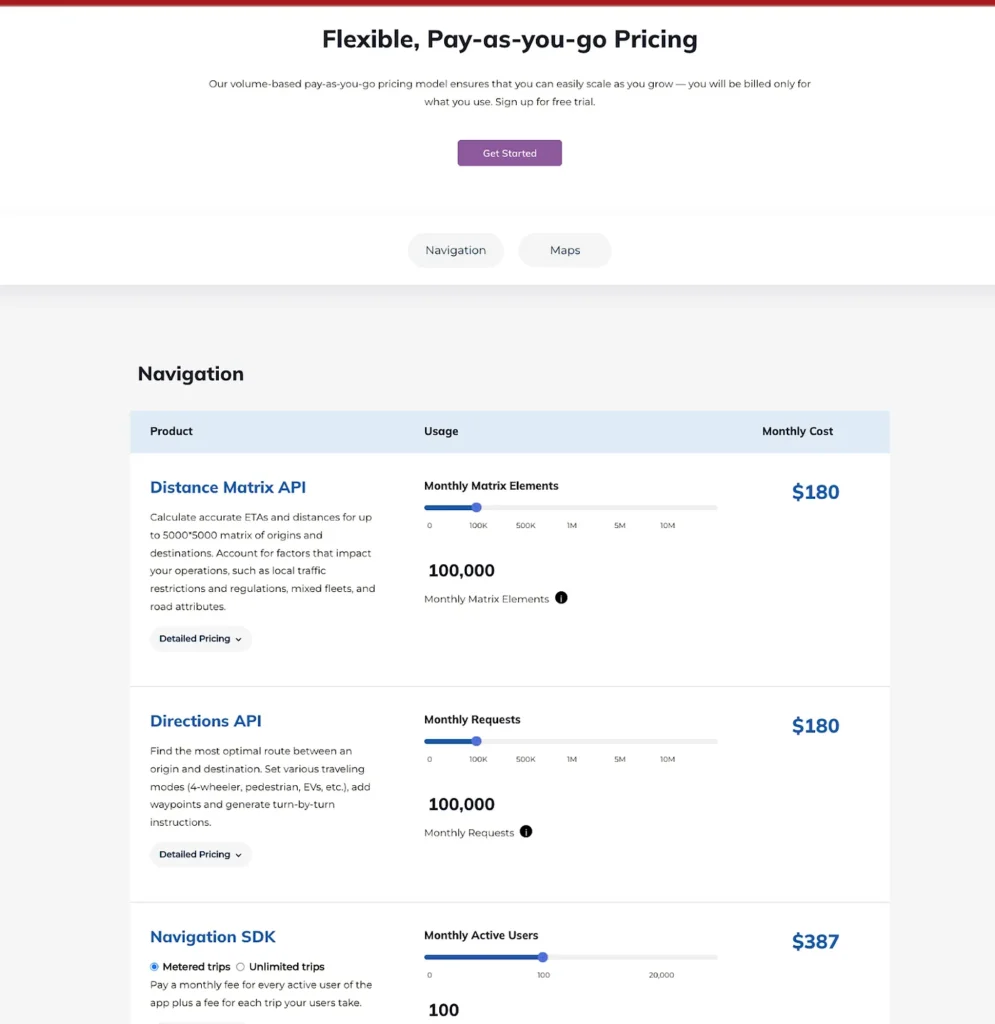
NextBillion.ai, like its peers, started with a Pay-as-you-Go pricing model, along with Tier-based pricing.

Why the Pay-As-You-Go pricing strategy made absolute sense

  • As an early-stage Start-up, this gave our customers the flexibility to pay only for the APIs they have used.
  • The prices dropped significantly at higher volume with Tier-based pricing. Helping us convert big-ticket clients easily.
  • It helped in winning the pricing battle against the competitors. The pricing was low and the offerings better, making NextBillion.ai an obvious choice for the Location technology.
  • It came with a high value of flexibility, scalability, and unique features.

At the outset, The Pay-As-You-Go pricing strategy perfectly aligned with NextBillion.ai’s goals and made sense.
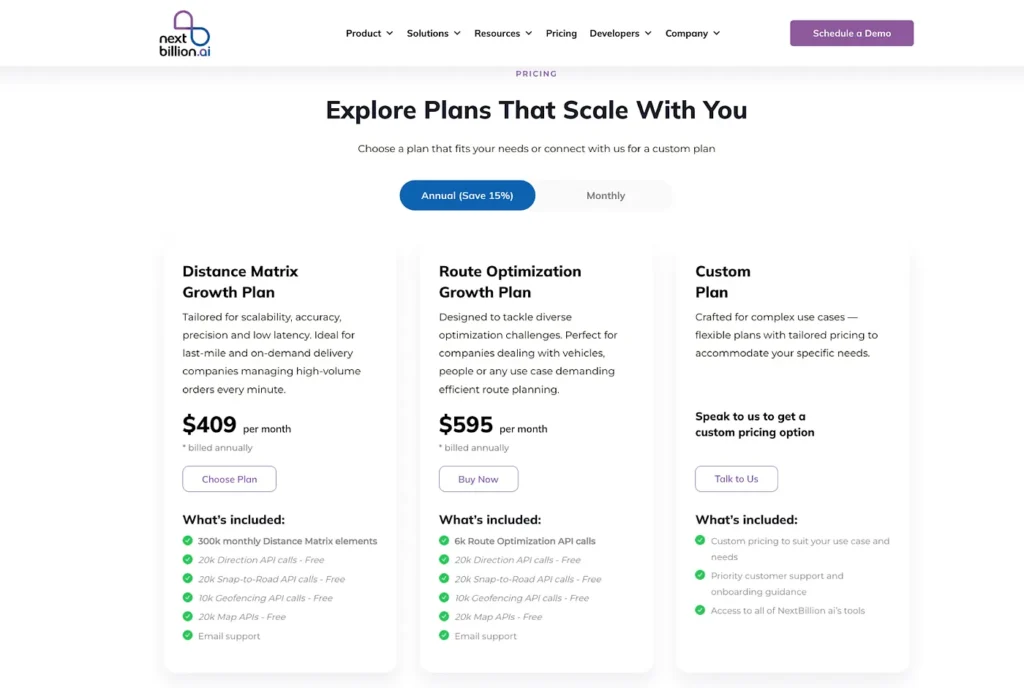
The Shift to Bundled Pricing — A Strategic Move

For anyone who is not familiar with bundled pricing. It is a pricing model where individual products are bundled at a discounted price that might not be available individually. For example, McDonald’s Meals is an excellent example of bundled pricing, where many products are offered at a comparatively lower price when bought together.

As the NextBillion expanded its product lineup and the customer acquisition over the next few months.

Over the period, as a location technology business, it also became clear that we needed to focus on fewer industries. (Read why NextBillion.ai started focusing on fewer industries.)

We started deep-diving into every customer persona and use case by analyzing buying patterns and listening to every customer’s calls.

The data showed that most customers frequently requested similar services (APIs) together.

Hence, shifting from PAYG to a Bundled pricing model made sense.

Several other strategic reasons compelled this Pivotal change –

  1. Market Maturity — The targeted industry has evolved and matured. The prospects had absolute clarity about their business requirement and the APIs they would need — bundled pricing simplified sales strategy by offering a predefined package that resonated with market sophistication.
  2. Predictable Revenue Stream — Like every other Pay-As-You-Go SaaS business, revenue predictability took a lot of work despite a growing user base. Specific industries using location technology have a seasonal dependency, often leading to low API consumption. Bundled pricing aimed to create a more stable and predictable revenue stream.
  3. Targeted Industry — NextBillion.ai has been spreading its efforts across multiple industries. With bundled pricing, the organization started focusing on specific sectors where the bundles would be the perfect fit. This targeted approach led to improved sales and marketing effectiveness and efficiency.
  4. Reduce Churn — Most customers appreciated the clarity and value of bundled pricing. The lock-in effect helped businesses retain customers for a longer time.
Outcomes of Bundled Pricing

With some initial apprehension, we released bundled pricing. Over the next three months, we closely monitored our lead volume, existing customer usage, and sales calls. Apart from a few tiny user bases, there were no significant push-backs from any of our users.

Here are the learnings we had after five months of using bundled pricing strategy –

  • Filtered Lead Volume — The startup experienced a shift in lead generation. At the same time, the sign-ups via students or early-stage start-ups dropped initially. The bundled pricing attracted more genuine leads who were interested in product offerings.
  • Showcasing Value — Bundled pricing gave us a platform to showcase the breadth of products and services that NextBillion.ai can offer its prospects. Straightforward product bundling also helped us quickly compete with the smaller players in the European and North American regions.
  • Revenue Predictability — One of the significant advantages we had with Bundled pricing was the newfound revenue predictability. This stability allowed the team to focus more on resources where it needed the most.
  • Simplified Customer Experience — With market analysis and a deeper understanding of our target audience, we realized that our two flagship products were central to most bundles. Two primary bundles simplified the customer experience and facilitated purchasing decisions for our clients.

Bundle Pricing Framework Example

Moving from PAYG to bundle-based pricing requires a significant strategy shift in your business model. It requires careful planning and consideration of factors like market size, target audience, and existing customers for the execution.

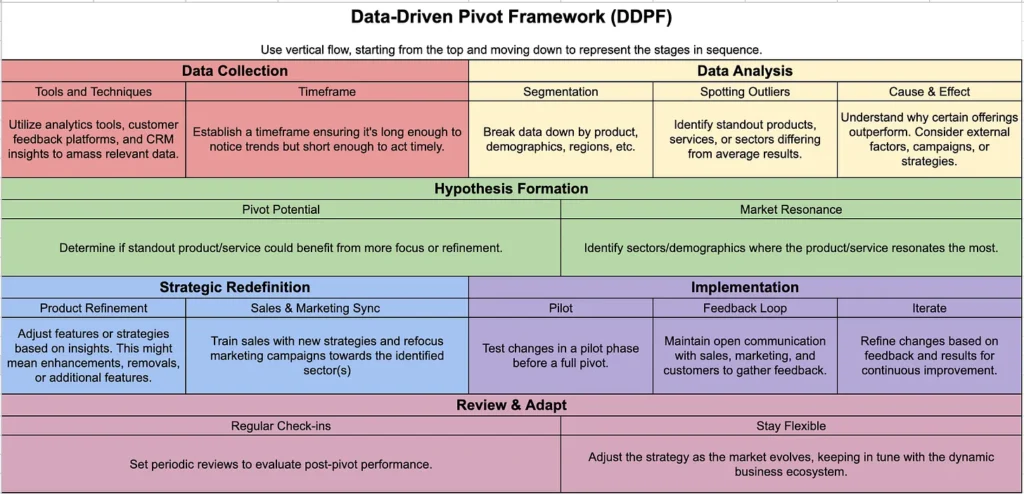
Here is a framework that we utilized for our pricing strategy –

Current Pricing Model — Understand and create a detailed document on the current pricing model. Here are some of the pointers which we covered.

  • What is the usual API consumption?
  • How are APIs charged?
  • What is the infrastructure cost?
  • How are customers currently billed?

Identify Customer Segment — Segment your customer based on Industry, usage pattern, requirements, and willingness to pay. A clear customer segment would help bundle the product based on customer needs, industry, and requirements.

Determine Value Metric — Determine the critical value metric that matters most to your customers. It could be price, volume, or complex features. Ensure to include these key metrics when bundling your product.

Design Bundle Plans — Create plans per your business personas for various segments, industries, and users. Consider offering multiple tiers and bundles that align with your prospects and users. Each plan should have a clear set of products, features, and limits.

Pricing Tiers and Features — Clearly define any pricing tiers for your bundle. Be transparent about what customers get in each tier, including features, support, and restrictions.

Pilot Program — Before fully transitioning to a Bundle pricing model, run a pilot program with a subset of your customers. Gather feedback and suggestions data to make necessary changes to your pricing.

Communicate — Communicate the new pricing to your customer through multiple channels. Clearly explain the transition’s reason, the associated benefits, and further billing process. Give ample time for your customers to consider and resolve all feedback and queries on priority. Develop clear strategies to retain customers who might be hesitant about the pricing change.

Monitor and Iterate — Continuously monitor prospect calls and keep the conversation with sales open. Take regular feedback and follow up on deal closure. Be ready to iterate your plan and pricing if needed.

Legal and Compliance Considerations: Ensure your new pricing complies with all legal or regulatory requirements. The laws may differ for each, especially if you have clients across different countries.

Measure Success — Have clear Key Performance Indicators (KPIs) to measure the success of the new bundled pricing. It could be customer acquisition rates, shorter sales cycles, revenue growth, or customer satisfaction scores.

Conclusion

Remember, transitioning from one pricing model to another is a significant change, and adopting the new pricing may take significant internal and external time. Responsiveness and a feedback loop are essential to make the Bundle pricing strategy successful.

In conclusion, NextBillion.ai’s shift from the PAYG pricing model to bundle-based pricing was driven by revenue predictability, market maturity, target industry, and churn.

This shift brought positive outcomes to the business in terms of filtered leads, revenue predictability, and simplified customer experience.

As the startup continues to evolve, its customized solutions and negotiation flexibility keep it on a path to growth and success in the dynamic world of technology startups.

Pricing Strategy For New Products — A Complete guide for founders

“26% of high intent users visit B2B Pricing page on a website.”

Most founders create their first pricing model based on guesswork or replicating their competitor’s pricing.

Since there is no clear pricing strategy and distinction between the pricing segments, their customers buy one of the plans based on their respective budgets, which leaves room for broader improvement.

While some enterprise customers might perceive the pricing extremely cheap, the other end of the spectrum tends to find it extremely expensive.

With no analytical study or data to back, this pricing strategy usually never gives the team a clear path for expansion.

Which brings us to our next section

Why is SaaS pricing important?

SaaS pricing isn’t just a number; it’s a strategic cornerstone that can make or break your business’s growth potential.

Unlocking the true potential of your business involves a multi-faceted approach, with SaaS pricing playing a pivotal role. Consider these essential growth drivers:

  • Expanding Your Customer Base: The key to growth is attracting more customers. Your pricing strategy should be a compelling invitation, showcasing the undeniable value customers receive when they choose your product.
  • Mitigating Customer Churn: Reducing churn rates is vital for long-term success. Craft a pricing model that ensures customers continuously experience value.
  • Enhancing Customer Lifetime Value (CLV): Elevating CLV requires a nuanced pricing strategy. It begins with customers recognizing the value proposition when they step into your ecosystem, ensuring their product journey is rewarding and satisfying.

Every one of these factors intertwines with your long-term pricing strategy. Your pricing should tell a story of unparalleled value to enroll more customers effectively.

When customers perceive this value from the first touchpoint, churn naturally decreases, and CLV inevitably rises.

It’s a journey to growth that starts with the right pricing strategy.

3 Types of Pricing Strategies

1. Competitor-Based Pricing/Market-Based Pricing —

As the name suggests, a competitor-based pricing strategy depends on your competitor. You can price your product higher, lower, or at par with your competitors. This pricing is usually based on publicly available information and does not consider the expenses occurring at the backend.

The most commonly used pricing strategy can help you survive the market. It also leaves a lot of possibilities for making revenue on the table open.

2. Cost-Based Pricing —

This is the easiest to calculate pricing strategy. Cost-based pricing is simply the Cost of development and Margin on top of that.

Cost of your product = Cost of development + Cost of Infrastructure, Overhead, Marketing, etc + Margin

Cost-based pricing is usually implemented when there is minimal information about the customer and their willingness to pay for a product.

This strategy can often turn disastrous in the long run, as it never considers the user and relative purchasing power.

3. Value-Based Pricing —

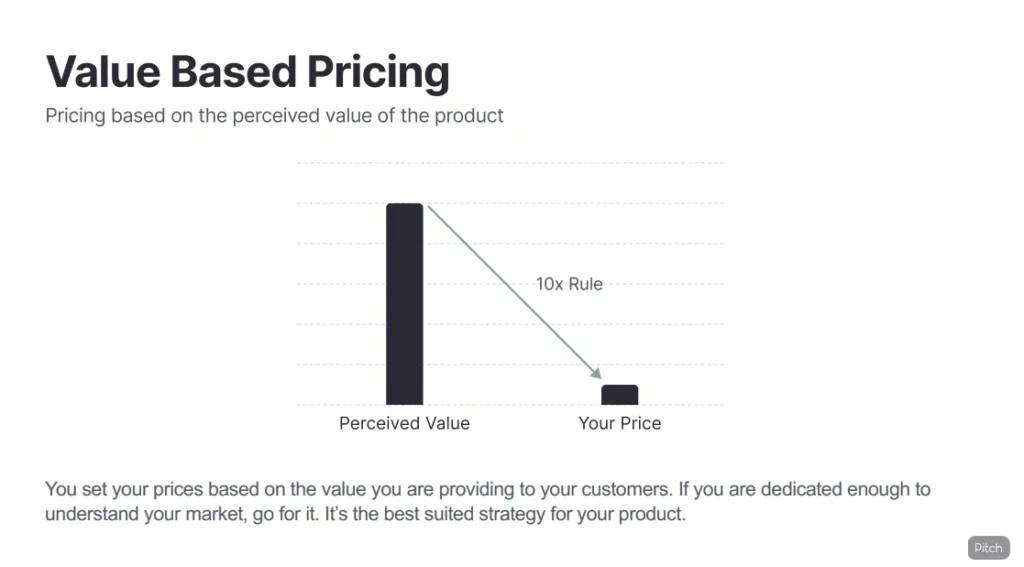
This is an ideal pricing model for any SaaS Business. Value-based pricing is the strategy to price your customers based on the value that they perceive from the product.

The higher the value, the higher could be the price. Suppose the User-Persona understanding of the product is good.

In that case, you will understand a customer’s requirements points effectively, which will help you offer absolute value at the correct price to the customer.

If you are looking to read about pricing models (PAYG, Flat pricing, Freemium, etc.) -> Read — Top Eight Examples of Successful SaaS Pricing Models

Continue below if you want to learn about how to price your SaaS Product.

How to Price your SaaS product?

1. Clearly define your customer.

Before you start pricing your product, the most important thing is understanding your customers and their needs.

The crucial role of understanding the user persona is that you won’t address or price a solopreneur like you would address a CXO or director of a larger organization.

By creating the Ideal Customer Profile, you can tailor your product — and pricing to what they need. You can reach out to them with a more meaningful solution that would give them the most value for the Cost.

2. Create clear boundaries between different types of customers.

Before you price your product, it is essential to define the target segment. Are you targeting Individuals? Or Small business? Or mid-Segment? Or Universities. Will you be targeting Universities, Individuals, and enterprises?

Segmenting users helps successfully price your product based on individual requirements and needs. For example, a university requirement would not be similar to a freelancer, which would completely differ from an enterprise use case.

Hence, it is crucial to clearly define your product’s boundaries and associated features for each, which helps differentiate between the customer.

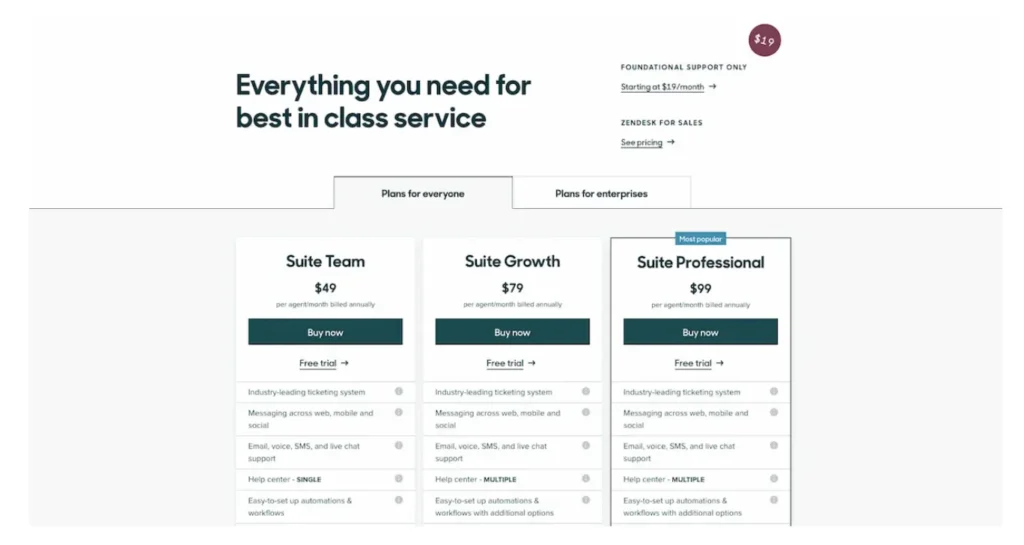
Here is an example of how Zendesk has segmented its users into two categories. One which targets smaller teams or businesses.

And the other targets the enterprise. Precise segmentation helps position and list features and value each segment would get from the respective pricing model.

3. Price your customer, not the product.

One major mistake most SaaS founders make is creating a pricing structure that resonates with their product rather than their customers. It is essential to price your product based on your customer rather than its perceived value.

For any B2B SaaS product, there are a bunch of customer profiles that have different requirements, needs, and budgets. While as a founder, you would expect all customers to use your product to its full potential by using all the features, most of the time, that’s different.

“90% of the customers use limited sets of features on a product, which defines the intrinsic value of your product to them. “

Hence, it’s essential to look at the product’s pricing from the customer’s point of view (Cost, decision-making ability, etc.) and then add product value to it.

4. Choose the right Value Metric.

Per user, per view, per subscriber, per contact, and per API calls are different examples of Value metrics.

“A value metric is something that a user or prospect associates value with.”

Value metrics are how you would charge your customer.

Finding the right value metric is one of the most essential aspects of product pricing. The correct value metric helps you to scale with your customers. If your customer resonates with the value metric, they will continue using the product and upgrading as they scale.

Even if the usage drops, they tend to downgrade their subscription to a lower perceived value metric, thereby mitigating churn.

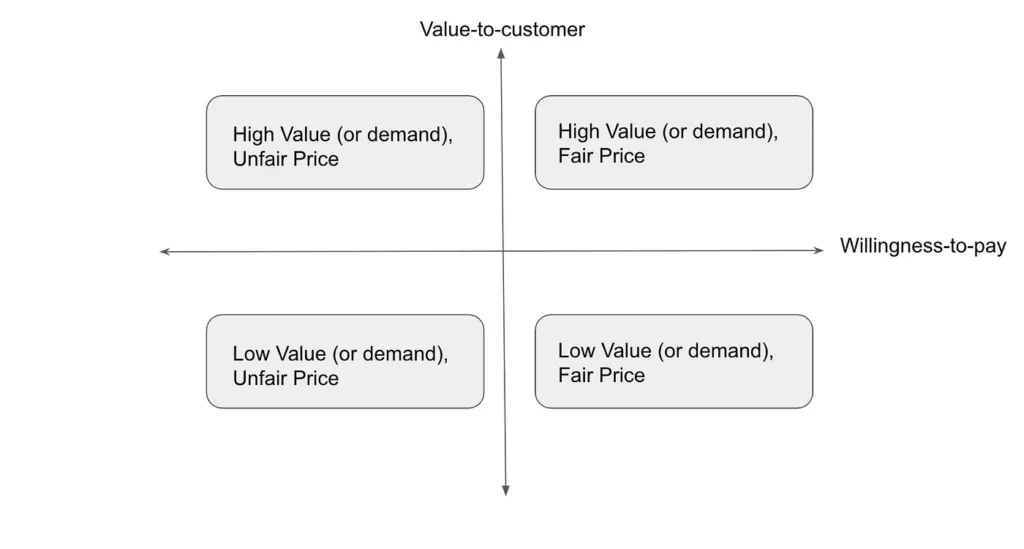
An excellent way to find the correct pricing for your SaaS is to put all your features in the chart below and think what value metric would make sense to land in the top left corner.

The top left of the chart gives the customer a high value at a fair price.

It is also essential to keep a few things in mind while defining the value metric for your business.

  • Keep it Simple — Value metrics should be simple to understand. If done correctly, a prospect would quickly understand the pricing and bundle that would meet their requirements.
  • Aligned with Outcome — A value metric should be measurable on the outcome. It is essential to understand the needs of your customers and the result they are rooting for. If your value metric echos the output, it lands in the first quadrant.
  • Grows with Customer — A value metric should increase as the customer scales. The higher the usage, the higher the usage of value metric.

5. Determine the right price point.

If you can track the value your product adds to your customer business, it becomes easy to define your value metric.

But to an early-stage startup, having that data is a daunting task.

Hence, we will discuss two standard methodologies to determine the price point for a SaaS Business.

a. The 10X Value model

The rule is simple: whether you are pricing your product at $30 or $1000 per month, can you tell your customer that the product would return 10X value to them?

This means it is crucial for customers to feel that they are getting 10X the value they are paying. If it’s lesser, they might not convert.

Having data helps to define the 10X value clearly. Reach out to your customers, talk to them, and measure the actual results of your product.

Is it saving 40% of the time? Or Save 3X Fuel consumption? Have the success value on the website, while you can increase the price by clearly explaining the significance.

b. Van Westendorp Model

Van Westendorp’s data-driven model uses customer/prospects survey questions to determine the pricing they are willing to pay. Rather than asking users for a single price point, the model might be comfortable paying. Asks the set of these four questions to its user –

  • At what price would you consider the product so expensive that you would not consider buying it? (Too Expensive)
  • At what price would the product start to get expensive so that it is not out of the question but you would have to consider buying it? (Expensive/High Side)
  • At what price would you consider the product a bargain — an excellent buy for the money? (Cheap/Good Value)
  • At what price would the product be so low that you would feel the quality couldn’t be outstanding? (Too Cheap)

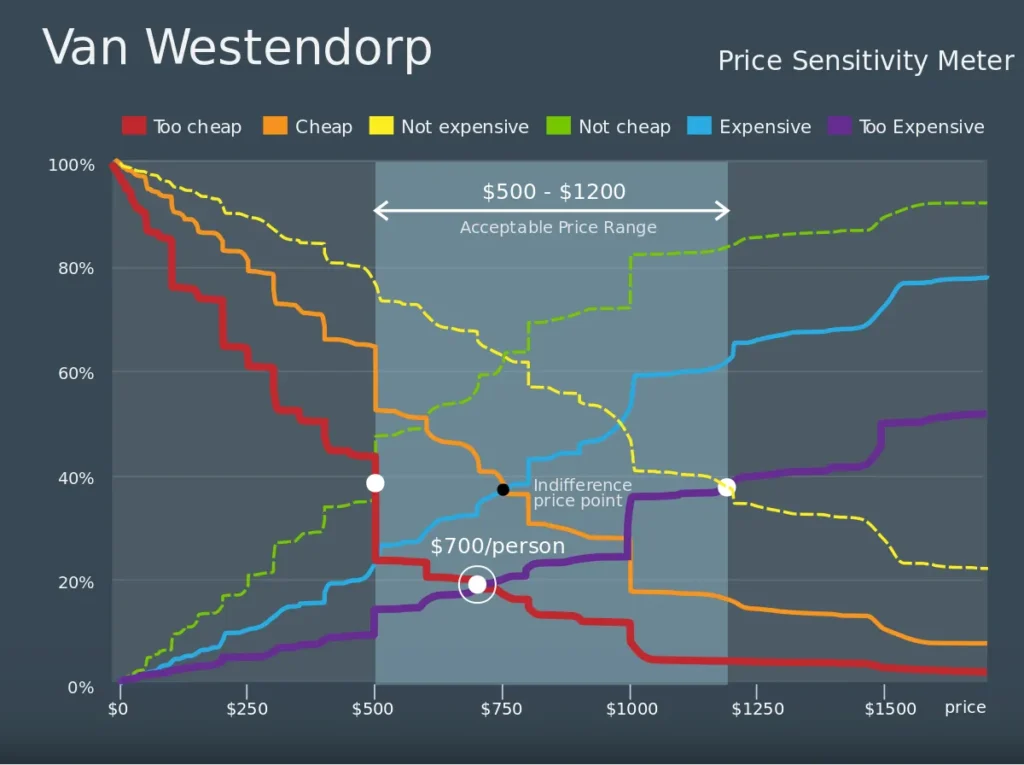
Once the survey is done, it is plotted on a line graph with the Price on the X-axis and the Number of respondents on the Y-axis.

Based on the common intersection points of the lines, you can find the pricing range that most customers would be willing to pay.

In the above graph, that range is $500 — $1200. This shows that the pricing tier can start well above $500 but must be within $1200.

Van Westendorp’s pricing model works better with businesses in a slightly evolved stage, where many customers or prospects can go through the survey and produce the desired result.

6. Creating Tiers and Add-Ons

Let’s break it down with an example of marketing CRM.

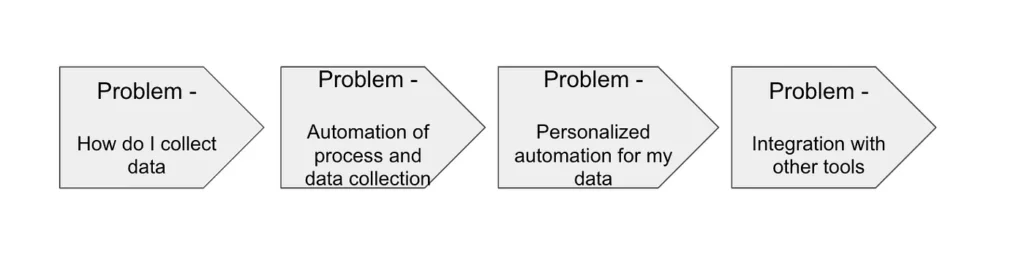
Think of creating a value metric structure for a CRM platform (customer relationship management) for marketing folks. A typical problem and solution journey for a marketer would look something like this.

Design a value metric tier to address at least one problem entirely for its user. While also expanding along with their customer as they move from one task to another in their journey.

“I always look at pricing from a customer’s perspective and the size of the organization they are vs. how they’re using my product as the bigger they are, the more resources (and needs) they might have, so the pricing usually goes up as segment grows.”

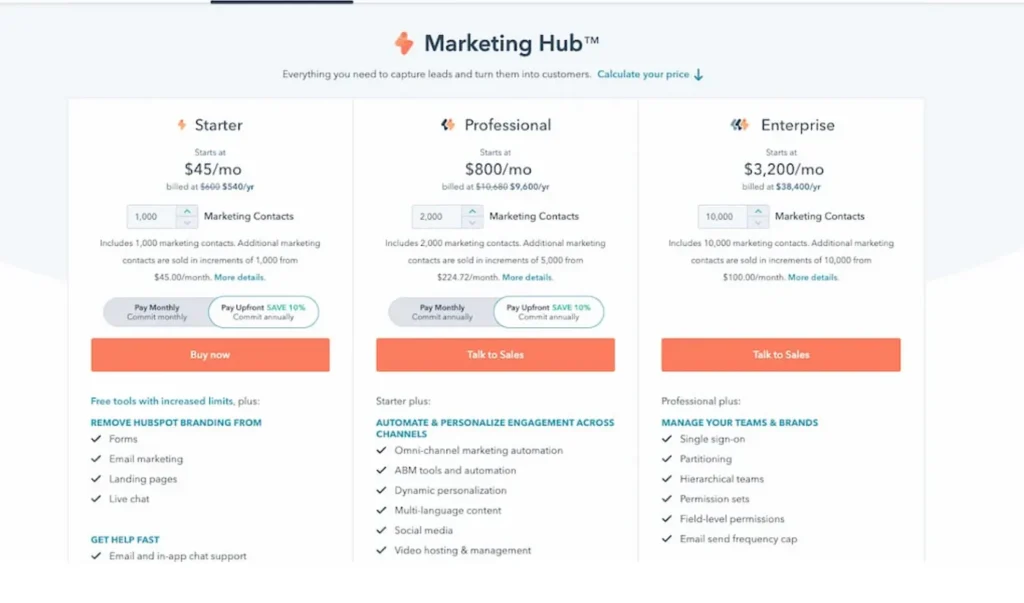
Hubspot pricing is a good example that reflects the value metric journey in their pricing strategy. While Hubspot prices increase for each segment, they tend to solve one problem from the image above entirely in each tier.

7. Discounting

As for discounting, determine what would entice them to pre-buy or use the product more.

If that’s not a factor in your business model, don’t discount on the per unit, but you could add a support level and discount that.

Discounting depends a lot on the stage of the business; at an early stage, you might have to offer some significant discounts, which would help you onboard more customers.

Or you can offer discounts on annual contracts for large enterprises.

8. Testing Higher Prices

The 10x rule suggests that you should charge a higher price if your product brings a lot of value to your customers. This makes sense both for your customers and for your business.

It would help if you calculated how much real profit you make from each customer each month and how much you’ll earn from them over their lifetime as your customers.

Then, use this information to test different prices based on how many customers you convert.

For example, if you make $15 per month profit from a customer at a $39 price point and $25 per month at a $49 price point, you can use these numbers to see which price gives you the most profit when considering conversion rates.

Let’s say you convert 30% of leads at $39 but only 24% at $49. With the math, you’ll find that at $39, you make $450 in total monthly profit from 100 leads, and at $49, you make $600 in total monthly profit from the same number of leads.

So, even though you lose some customers with the higher price, it still makes sense because you’re making more profit overall.

You can keep increasing the price until you lose many customers and your profit decreases. This approach can be good if you rely on your business for income because a little more profit from each customer is often worth having a lower conversion rate.

The key takeaway is that testing higher prices can be a good strategy, especially if you need profits to sustain your living expenses.

Conclusion

B2B SaaS pricing is not as complex as most people perceive. But, it is essential to understand your Ideal customer profile, the value metric that resonates with their targets, and then price accordingly.

How to make your first outbound call — A step by Step Guide

As an organization, start exploring the potential of Outbound channels to generate leads and expand their client base. Understanding that Outbound calling is not the reverse of Inbound calling is imperative.

This blog covers some recommendations on handling your prospects via Outbound calls. Whether you are a team leader, an SDR, or a founder looking to make their first outbound call, this blog covers everything essential to make it successful.

We’ll delve into establishing trust, crafting an impeccable elevator pitch, and ensuring your prospects eagerly anticipate your next call.

Outbound vs. Inbound — Quick Summary

Inbound calls are customer-initiated, responding to inquiries or issues. They’re timely, reflecting existing relationships.

Outbound calls, initiated by businesses, seek to generate leads or sales. They aren’t time-sensitive and often involve contacting prospects without prior connections.

Success hinges on creating interest and building initial trust.

How are Outbound calls different from Inbound Calls?

Some critical differences between inbound calls

  • Prospects may have yet to do significant research into solutions, so they may not understand deeply what they want.
  • It’s only sometimes necessary that a prospect is looking to solve an immediate problem in their business. Hence, it’s essential to dig deeper by establishing a clear link to a business problem(s) that’s important to them and how your product/service can help them.
  • Establishing trust with the prospect. It is crucial to successfully advance the deal through each phase by ensuring confidence in the seller, product, and company.
  • Given the prospect’s limited familiarity with the product and company, we will likely encounter more objections on outbound generated first calls. Handling objections effectively is crucial.

Ona positive note, if a prospect has agreed to the meeting, it means that the value proposition, messaging, and the company resonated with them, so something relevant needs to be figured out.

The objective of an Outbound Call

TL;DR — Find a hook that makes them want to take the next call, establish credibility, and find a pathway to the next call

Key objectives we should aim to accomplish on the first outbound call are –

  • Find problem statements/business priorities/hooks that are important to the prospect that we would likely be able to address via location tech. Listen without interruption.
  • High-level examples / high-level details of relevant solutions that you provide as a product/solution for such problems
  • Establish credibility (e.g., customer names, investors, the background of team/founders, etc.)
  • Aim to get a clear pathway to the next call.
  • Ask — Did we address your questions? Who else can benefit from this? Are you ready to move forward with a (Demo Prep, Demo, etc.)

That’s it!

The prospect may not be a decision-maker or up the ladder on a buying journey. Hence, while keeping the conversation limited, understanding the opportunity is essential.

  • Avoid long, one-sided monologues about your company. Listen to understand, not to pitch.
  • Go into the technical details of our of your product. Demos are also likely optional (but maybe good to keep handy)
  • Discuss what a pilot or trial could look like
  • Deep technical/operational details of the problem they’re facing

Elevator pitch

Unlike an inbound call, we will almost certainly need to give an elevator pitch to your prospect. Remember to practice this in case you dont remember it.

But outlining some key elements from my experience of what we’ve found helpful for such a pitch.

Importantly, this elevator pitch shouldn’t last more than 3–4 mins.

Description of what your organization does –

  • Remember that the goal is to find hooks / or keywords that the prospect will immediately connect with and wish to learn more about.
  • So use simple to-understand phrases of what your organization does that a prospect can associate with.
  • Avoid using complex terms that someone may not be accustomed to or connect to a problem that your product may be able to solve.

Add some use case/industry solution-specific keywords.

  • Provide keywords that are relevant to the industry you target. This allows us to see if they connect with one or more keywords.
  • Learn frequently used industry jargon that would resonate with your prospect.

Add clear differentiators

  • Add clear differentiators that make you stand out from your competitor without explicitly mentioning the competitor.

Add clear business problem statements.

  • “People often want to reduce their bills or improve operational efficiency through better planning.” add clear problem statements or connect with your product marketing team to describe unique problem statements.

Throw in some credibility pointers.

  • E.g., “Top investors fund us “work with all kinds of small and large customers, including companies like “Name few companies,” “Have great G2 Reviews,”

Prep suggestions for the outbound call

For outbound calls, it’s essential to do some prep work before the call to understand what could be attractive to the prospect. Some suggested ideas for crucial prep work.

  • Industry of the prospect and the use cases that typically occur.
  • Prospect’s LinkedIn profile to learn about their role and likely seniority
  • Examples of onboarded customers in similar industry
  • Be sure to have an agenda set before the call. Feel free to share it in the meeting invite. Confirm the schedule with the prospect at the beginning of the call.
  • The BDRs should share the messaging that resulted in them securing the meeting. This will assist the Account Executive in preparing for the next call.

If the prospect is critical or a senior decision maker from a large enterprise account –

  • Look up recent articles/blog posts/YouTube videos by that person and/or company to see what they’ve been talking about recently.
  • Read the company’s publicly available reviews and see what problems you can solve for them using your product.
  • Keep some demos and demo videos handy if we need to showcase something.
  • Consider adding one of the top-management employees from your organization.

Ways to get prospects to talk

Some ideas on getting the prospects to talk

  • Confirm the agenda and ask, “What else would you like to get out of this call?” or “What is most important to you?”
  • Throw keywords around use cases and business problems that might be relevant to that industry.
  • Ask about the prospect’s role and what fundamental business problems they are working on. And then dive deeper into one or more issues with a location component.
  • A simple reminder is to ask permission to ask questions if the prospect is not engaging. This can take the edge off of the conversation.

Things to avoid on your first outbound call

The key goal is to have the prospect connect with one or more hooks (or keywords/phrases), so they want to come back to the next call, maybe together with other team members.

A vital part of that is to keep the conversation interactive to the extent possible.

So, a few key things to avoid

  • Avoid long, one-sided presentations. As a thumb rule, other than the elevator pitch, which could be 3–5 minutes, everything else should be less than 2 minutes, and then ideally, allow the prospects to speak.
  • Avoid super long decks, 3–4 slide decks to add structure to the call without making it long-winded, where we risk losing the prospect’s attention.
  • Spending too much time on a direction/use case/value prop that the prospect needs to resonate with.

What are the next steps?

The following steps could take a few different forms. Some suggestions on how to handle this

  • Ideally, fix a meeting for a specific date on the call itself.
  • An alternative is to suggest a “placeholder” a few weeks out — e.g., 2 weeks, and say, “Let’s keep it, and we can move it closer to the date if needed”’. Or, say, “I’ll check in with you closer to the date.
  • If there is no interest in a meeting, maybe ask, “Can I follow up with you in 3 weeks to see if it makes sense to connect in the short term?”
  • And then send an email after the call with resources like a demo video and/or case study.
  • Always check, “Who else in the organization can benefit from this?”
  • If the prospect looks to end a call with, “Let me connect you with someone else internally who would be more relevant,” — definitely ask for a specific name so we can reach out directly. Ideally, we should rely on something other than this person to make an intro.

Outbound calling is Hard. But, few things can make it easy. One process, the second is grit!

So…

Managing your Marketing data (Tofu, Mofu, Bofu, Customer, External, and more!)

Data management is the strategic art of collecting, organizing, and utilizing data to fuel marketing initiatives. Think of it as the engine that powers effective campaigns, enabling businesses to make informed decisions, target the right audience, and optimize their marketing strategies.

Data management involves two key aspects: handling external data sources, which include information from various channels outside your organization, and nurturing internal data, such as user insights and customer data. The goal? To transform raw data into actionable insights, ensure your marketing efforts are reasonable and exceptional.

This blog will delve deeper into data management, uncovering its secrets, techniques, and practical applications.

Throughout my career, I’ve had the privilege of working with some fantastic organizations, and today, I’m here to share some of the data management strategies that have worked wonders for us.

Now, let’s roll up our sleeves and get into the nitty-gritty of the two types of data that most organizations hold:

External Data: This category comprises data from non-registered users, individuals who may not have accepted terms and policies, or data procured from third-party providers.

Internal Data: On the flip side, internal data encompasses information from users who have registered or shared their data on your platform through various forms.

Keeping external this data segregated in a dedicated sheet is crucial. Regular maintenance is vital here to ensure no spam or unsubscribed data lurks within this list.

Every time you email a customer, this data must undergo sanitization. The emails can target a broader audience or carry specific marketing content (TOFU/MOFU or BOFU).

The goal?

To identify any traces of spam, blocks, or unsubscribes and cleanse them from our records.

External Data Buckets

In the realm of external data, employ a systematic approach to categorize and manage valuable information into three distinct buckets:

  1. Green Verified 🟢 : This category includes data that has been meticulously collected and confirmed using a reliable third-party tool. It’s the cream of the crop, ensuring the highest level of accuracy.
  2. Yellow Verified🟡 : The yellow verified data consists of user information whose email IDs couldn’t be confirmed by third-party tools, often due to server-level blocks. To enhance its reliability, proactively engage with these users through email campaigns to verify their inbox delivery. Any data lingering in this bucket for over 30 days is promptly moved to the green verified category.
  3. Red Verified🔴 : Data in this category is either incorrect or non-existent, and promptly remove it from our database to maintain data integrity.
  4. Mapped Accounts: Identify these as top targets or wish list accounts. Collaborating closely with our sales team, create a dedicated green verified data pool containing key stakeholders. This pool is the foundation for our targeted campaigns, allowing us to penetrate these accounts effectively.

Additionally, there are instances where you acquire bulk data from third-party sources, and its verification status may need to be discovered.

In such cases, swiftly initiate email verification processes to confirm their green status and allocate them to the appropriate bucket.

This structured approach ensures that our external data remains accurate, reliable, and aligned with our marketing objectives.

Cleaning & Targeting External Data

When it comes to maintaining the integrity and effectiveness of our external data, a systematic approach is vital:

  1. Immediate Removal: If a user from the external database signs up on our website after receiving any communication, remove them from the external data list. This ensures that you don’t inadvertently target engaged users through our communication.
  2. Filtering Unwanted Data: Remove any data that has been blocked, unsubscribed, or marked as spam from the external data sheet. This ensures that focused communication efforts are made.
  3. Upgrading Yellow to Green: Once an email is successfully delivered, Yellow verified data, representing users whose emails couldn’t be initially confirmed, should be transitioned to green verified status. Remove all blocked, marked as ‘spam,’ ‘unsubscribed,’ or ‘found to be incorrect’ from the Yellow Verified category.
  4. Comprehensive Data Mapping: For green verified data, it’s essential to map the users with their respective company names, designations, city locations, and company verticals. Employ manual methods to acquire this information if company data needs to be included. Once you have comprehensive user details, they should be treated as mapped accounts, as in Point №6.
  5. Verification for Mapped Accounts: Initiate email confirmation processes for mapped accounts to determine their green verified status. Retain correct email addresses while rectifying the incorrect ones through permutations-combinations logic or third-party tools. It’s also advisable to identify both official and personal email IDs.
    This opens up opportunities for running targeted ads using platforms like Google, Facebook, and LinkedIn, focusing on reaching the right audience through email campaigns and banner ads.
  6. Tailored Content and Campaigns: Categorize all mapped accounts by similar designations and verticals. This segmentation allows for delivering highly relevant content, such as case studies, to specific groups. For instance, content related to Chief Technology Officers (CTOs) can be directed to all CTOs, while HR-related content can be sent to senior HR professionals. Paid campaigns and drip marketing are practical tools for ensuring that content aligns with the recipients’ interests and roles.

This comprehensive approach maintains the quality of our external data and maximizes the impact of our marketing efforts by delivering tailored content to the right audience segments.

Always maintain a real-time check on all kinds of external data status. Create a summary sheet with a ‘status’ tab in a table suggesting how many yellow/green verified data for every product is available.

Creating a Mapped Account List

Now, let’s dive into the nuts and bolts of creating a mapped account list. This list is no ordinary roster; it’s a compilation of companies and accounts our sales team identified as having substantial business potential.

Some accounts may fall under the enterprise category, while others could belong to small and medium-sized businesses (SMBs).

When assembling this crucial list, several vital pieces of information need to be gathered for each account:

  1. Business Verticals: This refers to the industry type in which each account operates. Whether it’s banking, manufacturing, or any other sector, understanding their business vertical is essential for tailoring our marketing efforts effectively.
  2. Designation of Key Stakeholders: Knowing the key decision-makers within these accounts is paramount. Identifying their roles and responsibilities allows us to target the right individuals with our campaigns.
  3. Names & Email IDs: Collect these key stakeholders’ personal and professional email IDs. This enables us to establish direct lines of communication with them, enhancing our engagement.
  4. City and Country: Knowing the location of these accounts, down to the city and country level, helps us personalize our outreach and align our strategies with regional considerations.

Categorize these accounts based on their business verticals to further enhance our understanding.

For example, an organization might fall under the “Manufacturing” vertical, with a sub-vertical specifying their particular niche, such as “Electronics Manufacturing.”

Here’s a list of some common business verticals to give you an idea:

  • AGRICULTURE AND ALLIED INDUSTRIES
  • AUTOMOBILES
  • AUTO COMPONENTS
  • AVIATION
  • BANKING
  • CEMENT
  • CONSUMER DURABLES
  • EDUCATION AND TRAINING
  • ENGINEERING AND CAPITAL GOODS
  • FINANCIAL SERVICES
  • GEMS AND JEWELLERY
  • HEALTHCARE
  • INFRASTRUCTURE
  • INSURANCE
  • IT
  • ITES
  • MANUFACTURING
  • MEDIA AND ENTERTAINMENT
  • OIL AND GAS
  • PHARMACEUTICALS
  • PORTS
  • REAL ESTATE
  • RETAIL
  • SCIENCE AND TECHNOLOGY
  • SERVICES
  • STEEL
  • TELECOMMUNICATIONS
  • TEXTILES
  • TOURISM AND HOSPITALITY

By meticulously organizing our mapped account list and gathering these essential details, you’re setting the stage for highly targeted and effective marketing campaigns.

Internal Data

Now, let’s delve into the intricacies of internal data, a treasure trove that can be categorized into three distinct types:

TOFU (Top-Of-The-Funnel):

  • Capturing the Introduction: TOFU data represents users who have just entered our business category or engaged with introductory content. They may have perused our preparatory materials, subscribed to our content, or filled out a form to access it. For instance, a user who lands on our blog article titled “Job-hopping makes Millennials better hires” subscribes to our blog after reading it falls into this category. Similarly, anyone who visits a webinar page and completes the form for access belongs here.

Typical Users: TOFU data typically comprises blog subscribers, webinar attendees, ebook downloaders, and those who engage in roundtable discussions.

MOFU (Middle-Of-The-Funnel):

  • Beyond Beginners: MOFU data encompasses users with a better-than-beginner understanding of our business category. They have transitioned from TOFU to MOFU by engaging with content that delves deeper into our products or services. A prime example of MOFU content includes ebooks.

Typical Users: This category comprises ebook downloaders, consumers of whitepapers, and anyone who engages with content that takes them a step further into our product or business offerings.

BOFU (Bottom-Of-The-Funnel):

  • Expressing Genuine Interest: BOFU data houses users who have shown a keen interest in our products or services. They often make a tangible commitment by signing up for trials or demos. These users are at the stage where they are considering or actively evaluating our offerings.

Typical Users: BOFU data encompasses individuals who have signed up for website trials, requested product demos, participated in roundtable discussions, expressed interest in product trials or demos post-webinar, engaged in chat interactions, or reached out via direct mail using organization contact email IDs while showing a product interest.

By categorizing internal data into these three distinct buckets, one can gain valuable insights into user intent and tailor our marketing strategies accordingly.

Nurturing TOFU, MOFU, and BOFU Data

Once the data has been categorized into TOFU, MOFU, and BOFU, it helps build momentum and effectively nurture these leads. Here’s how to do it:

  1. Drip Campaigns: Create a well-structured drip campaign within your CRM or email marketing platform. This campaign is a dynamic tool to continually engage and move our TOFU, MOFU, and BOFU data up the conversion ladder. Maintaining a growing and active base for each data category is crucial to customizing your products or services.
  2. Remarketing Ads: Extend your reach by running remarketing ads on platforms like Google, Facebook, and LinkedIn. By mapping these ads to their current organizations, you can maintain brand visibility and reinforce your message to these leads.
  3. BOFU Engagement: For BOFU data, it’s all about expediting the conversion process. This involves encouraging them to take the first step, such as scheduling a usage demonstration or demo call. As the trial period draws closer to expiry, the drip campaign should create a sense of urgency to encourage purchase.
  4. Post-Trial Follow-up: If a customer doesn’t convert after the trial period, initiate contact to understand their reasons and gather feedback. Create a separate list for non-converted trials, often called “Dormant Prospects.” Send a series of three emails at intervals of five days, three months after the trial period expires — to reopen the discussion.
  5. Complex Product Support: It’s crucial to ensure that customers thoroughly understand complex products. Offer product walkthroughs and a seamless onboarding experience to facilitate their engagement. Keep an eye on their actions within the platform and gently encourage them to take the desired steps.
  6. Feedback Loop: After one month of non-conversion, reach out to these leads again, seeking their feedback. This feedback can provide valuable insights into any barriers preventing conversion.

Implementing these nurturing strategies helps maintain engagement with our leads and increases the chances of conversion.

Remember, the key is to keep the lines of communication open and adapt your approach based on their behavior and responses.

Customer Data

In the dynamic landscape of customer data, one can categorize it into two distinct types: existing customers and churned customers.

Existing Customers:

It’s all about fostering growth and expanding our relationship with our existing customers. Here’s the game plan:

  1. Profile Enrichment: Dive deep into our existing customer accounts and identify opportunities for cross-selling. For instance, if a customer has already purchased one of our products, there’s a ripe opportunity to introduce them to another business unit (BU) within their organization that could benefit from the same product. Additionally, one can pitch complementary products to the same account, enhancing their overall experience.
  2. Strategic Timing: When pitching to another BU within the same company, timing is crucial. Wait until after a managed service campaign concludes. However, if it’s not a managed service campaign, initiate outreach as early as the second month following the sale. Our pitch should emphasize the value and benefits of the additional product or service, illustrating how it can further address their needs and objectives.

Churned Customers:

For customers who have churned, it’s imperative to handle them with care and a clear plan in mind:

  1. Separate Bucket: All churned companies should be isolated into a different category. You can activate engagement with these customers after a six-month hiatus.
  2. Managed Service Campaigns: Recognize that churn is nearly inevitable for managed service campaigns, often reaching 100%. To address this, one must have a well-defined strategy to re-engage with these customers.
  3. SaaS Product Approach: For SaaS products, the first email to churned customers should promptly inform them that their account has been deleted. This initial contact should also seek their valuable feedback on their experience.
  4. Strategic Re-Engagement: Following the removal of their account, wait for three months before reaching out again. This time, three emails should be crafted to secure another appointment to discuss our latest products and how they align with the customer’s requirements.

By effectively managing our existing and churned customer data, you not only nurture current relationships but also have the potential to rekindle ones that have momentarily lapsed.

Competitor Data

In the ever-evolving landscape of marketing, it’s essential to keep a watchful eye on your competition. One valuable source of data that often goes overlooked is competitor customer data. Here’s why you should consider harnessing this helpful resource:

Turning the Tide: When you’re aware that the need for your product or service is already established within your industry, it presents a unique opportunity. Competitor customer data can be a goldmine waiting to be explored. These individuals or companies have demonstrated a genuine interest in a product or service similar to yours.

Sources of Competitor Customer Data: You can acquire competitor customer data from various sources, including competitor user logos, case studies, platforms like G2 Crowd, Trust Pilot, and more. These sources can provide insights into potential leads actively engaged with your competitors.

Converting Competitor Customers: The art of converting competitor customers is fascinating. A quick search on Google will reveal an array of hacks and techniques for effectively wooing competitor customers. (Or another blog on this!)

Managing B2B Email Campaigns

Actively classify our B2B mailers into three distinct buckets: TOFU, MOFU, and BOFU. These buckets remain dynamic, allowing us to adapt and refine our strategies based on specific objectives and performance metrics.

Bucket Benchmarks: Each bucket has its own benchmarks that guide our efforts. These benchmarks act as our North Star. Our primary goal remains actively generating more trials and, eventually, conversions from these prospects.

Actively leverage various email marketing tools to execute our drip campaigns seamlessly. Our Data Intelligence team actively sets up these mailers and ensures their active integration with our ecosystem, including platforms like WordPress, CRM systems, websites, and other third-party tools.

The Data Intelligence actively monitors the performance of our drip campaigns weekly. This actively involves tracking key metrics and actively extracting actionable insights. These insights are then actively shared with the broader team, ensuring all strategies align with our overarching goals.

Data Intelligence Team Responsibilities

  1. Mastering CRM Operations: It’s crucial for the team to actively familiarize themselves with every aspect of the CRM, from its processes to its management.
  2. Data Input Management: They actively ensure that all trial and demo data is promptly entered into the CRM. Some data sources, like chat interactions, webinars, roundtable discussions, and inbound emails, require manual data input.
  3. Dormant Account Identification: After every 45 days of trials and demos without conversion, the team actively flags these accounts as inactive accounts, enabling the data team to prioritize their efforts more effectively.
  4. Conversion Tracking: The team actively tracks monthly conversions on CRM for domestic and international segments, providing us with critical insights into our performance.
  5. Integration with Marketing Tools: The team actively integrates the CRM with various marketing tools such as Mailchimp, Drip campaigns, and other third-party solutions to streamline our marketing efforts.
  6. Complete Conversion Reporting: Accurately report all conversations on CRM. This encompasses domestic and international conversions, focusing on meticulous capture, even for manual invoicing.
  7. Stakeholder Involvement: The data intelligence team actively involves and empowers all marketing stakeholders to refer to the CRM for lead, conversion, and churn tracking. This collaboration ensures that everyone remains aligned with our objectives.
  8. Training Initiatives: The team actively trains new and existing employees on the CRM system, ensuring that all team members are well-equipped to utilize its functionalities effectively.

By meticulously categorizing, cleansing, and harnessing the power of data, businesses can make informed decisions, engage with their target audience more effectively, and ultimately drive growth.

Remember, data management is not a one-time task; it’s an ongoing process that requires dedication, adaptability, and a commitment to delivering exceptional value to your audience.

13-Step Guide To Creating A User Onboarding Flow

“Human beings like to discover and achieve things without help; we feel more satisfied when we do something new without anyone’s help than when we are helped.”

An excellent user onboarding flow aims to provide new users with a seamless and engaging experience as they start using a product or a service.

An adequate onboarding flow should guide the user through the key features, help them understand the value proposition, and encourage them to become active and engaged customers.

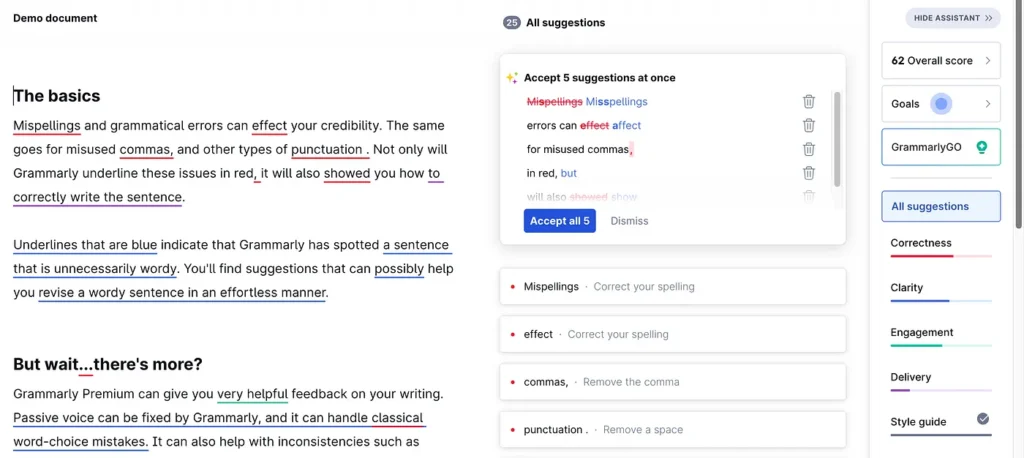
Grammarly, a cloud-based typing assistant, is an excellent example of an efficient user onboarding flow. Grammarly relies on a “Learn by doing” approach, where users interact with the product using the highlighted areas, effectively working as product hotspots.

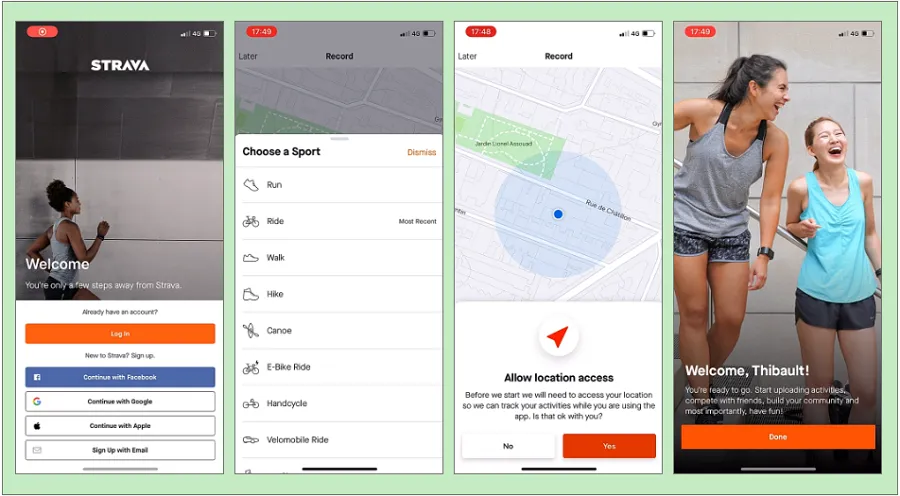
Here’s an example of a great user onboarding flow for a mobile app such as Strava

Upon opening the app for the first time, users are greeted with a welcoming message and a brief description of the app’s purpose — tracking fitness activities and goals.

The app prompts users to create an account or log in. Users can provide their fitness goals, preferred workout types, and basic information to personalize their experience during this step.

What should be the objective of a User Onboarding Flow?

Personalized: The onboarding should be tailored to the specific needs and goals of the user.

Interactive: The onboarding should be engaging and interactive rather than just a series of static pages.

Action-oriented: The onboarding should focus on helping the user take action and start using the product.

Educational: The onboarding should teach the user about the product’s features and how to use them.

Easy to follow: The onboarding should be easy to follow and understand, even for users who are new to the product.

Step-by-Step Guide To Create A User Onboarding Flow

Creating a great user onboarding flow is essential to ensure new users have a smooth and positive experience with your product or service.

A well-designed onboarding flow can help users understand the value of your product, get started quickly, and reduce the chances of them getting frustrated or abandoning the process.

Here’s a step-by-step guide to creating a great user onboarding flow:

1. Set Clear Objectives:

Start with a clear objective for your user onboarding flow. Align with all stakeholders to decide the purpose you wish to achieve with the initial onboarding.

The goal of the onboarding process can vary between User Activation, User engagement, Product Adoption, Monetization, segmentation, profiling, compliance acceptance, etc.

The objective of user onboarding should align with your business goals.

2. Simplicity is Key:

Keep the onboarding process simple by reducing the steps and information provided during the journey.

A simple onboarding process improves user experience, leads to faster time to value, reduces abandonment, increases conversion rates, and is scalable.

3. Gather Minimal Initial Information:

Keep a healthy balance between data collection and user privacy. Ensure that you follow the progressive profiling method in your onboarding journey.

Progressive profiling is a methodology where the user can handle long forms during the initial onboarding.

Instead, only necessary information is collected upfront, and other details are as the user journey progresses.

4. Provide Value Immediately:

It is essential to start delivering value to your customer immediately upon beginning the user journey.

Show them product core features that would benefit them as early as possible. This would keep them hooked to the product and engaged throughout their usage.

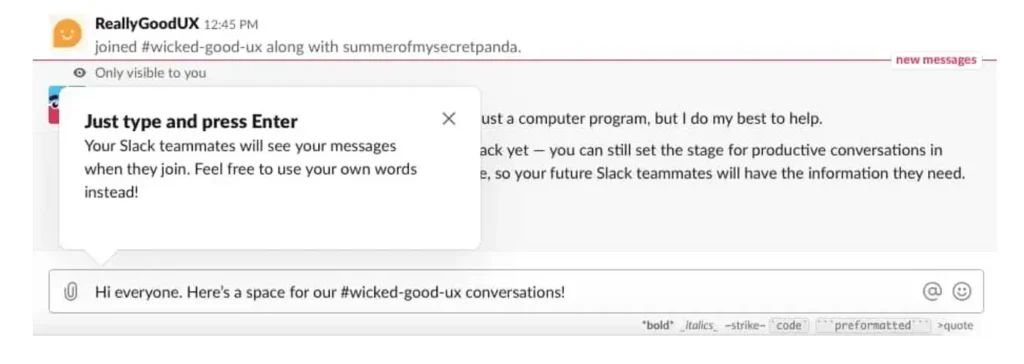
Slack is an excellent example of providing value immediately; by sending the first message, a user quickly realizes the product’s core value.

5. Interactive Tutorials:

The usage of informative, interactive tutorials enhances the onboarding experience significantly. These tutorials help educate users about the products, features, and capabilities.

There is an abundance of tools that can help you with building interactive tutorials. Some popular tools are WalkMeUserPilotChameleonWhatFixUserlane, etc.

6. Personalization:

Tailoring the onboarding journey per the user’s needs, preferences, and characteristics helps build an enhanced personalization experience.

Some personalization strategies are based on User preference, User Geography, Behavioral data, Progressive profiling, Notifications, and Personalized email.

Netflix is a typical example of how personalization can win customers. Netflix quickly asks for many genres before suggesting a long list of movies.

7. Clear Call-to-Action (CTA):

Having a clear Call-to-Action (CTA) in the onboarding journey is as important as the one on the marketing landing page. A clear, concise CTA helps the user move quickly to the next step in their journey.

It helps in defining the AHA! Moment, and also highlighting the product’s actual value.

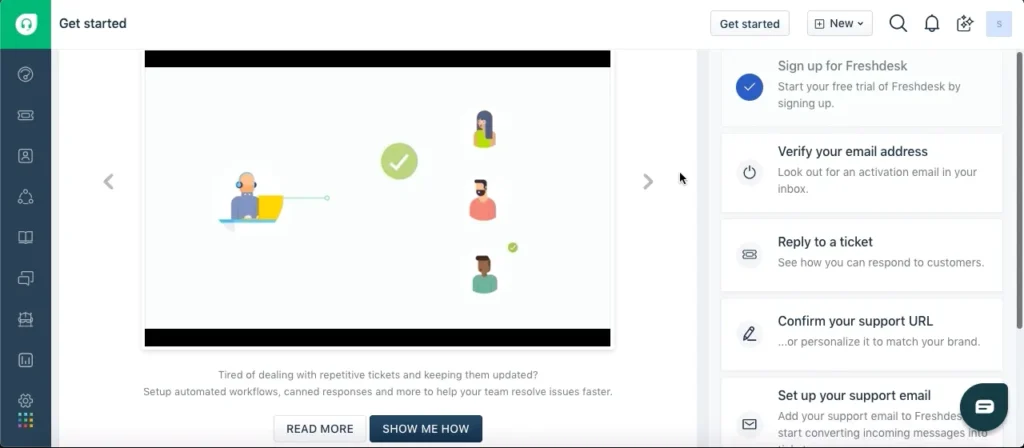
Here is an example of how Freshworks puts clear CTAs ‘Read more’ & ‘Show me how’ to move users to the next step.

8. Visual and Interactive Elements:

CTA transition, Storytelling, Visual animation, and Page transition are examples of adding visual and Interactive elements to the onboarding journey.

Animations, videos, and interactive elements should be done thoughtfully and in alignment with the user’s needs and goals.

Overuse or poorly executed animations can lead to a cluttered and distracting interface, so it’s essential to strike a balance and ensure that these elements enhance, rather than detract from, the overall user experience.

For example, Fitbit uses these interactive videos to push users to use their premium features, which help them build healthier lifestyles.

9. Progress Indicators:

Progress indicators help users with a clear sense of direction, transparency, and motivation. Progress indicators help guide users step-by-step in the onboarding flow, helping them determine how much they need to go further.

For complex products, progress indicators also tend to reduce the anxiety of being unable to get on board.

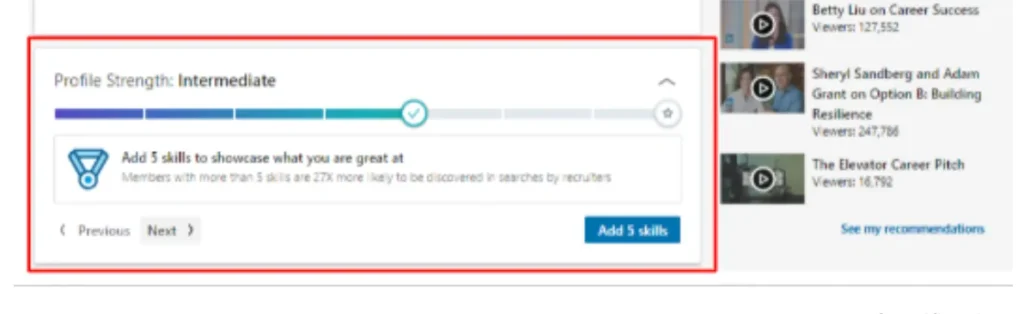
LinkedIn progress bar nudges you to enter more information on the profile while demonstrating the progress with the indicator bar.

10. Feedback and Assistance:

Have a defined method and process for the user to raise feedback, concerns, or request assistance. This helps them feel comfortable while being independent on the product usage journey.

You can use tools like IntercomDriftUserpilot, etc., to activate in-product chat for real-time feedback or assistance.

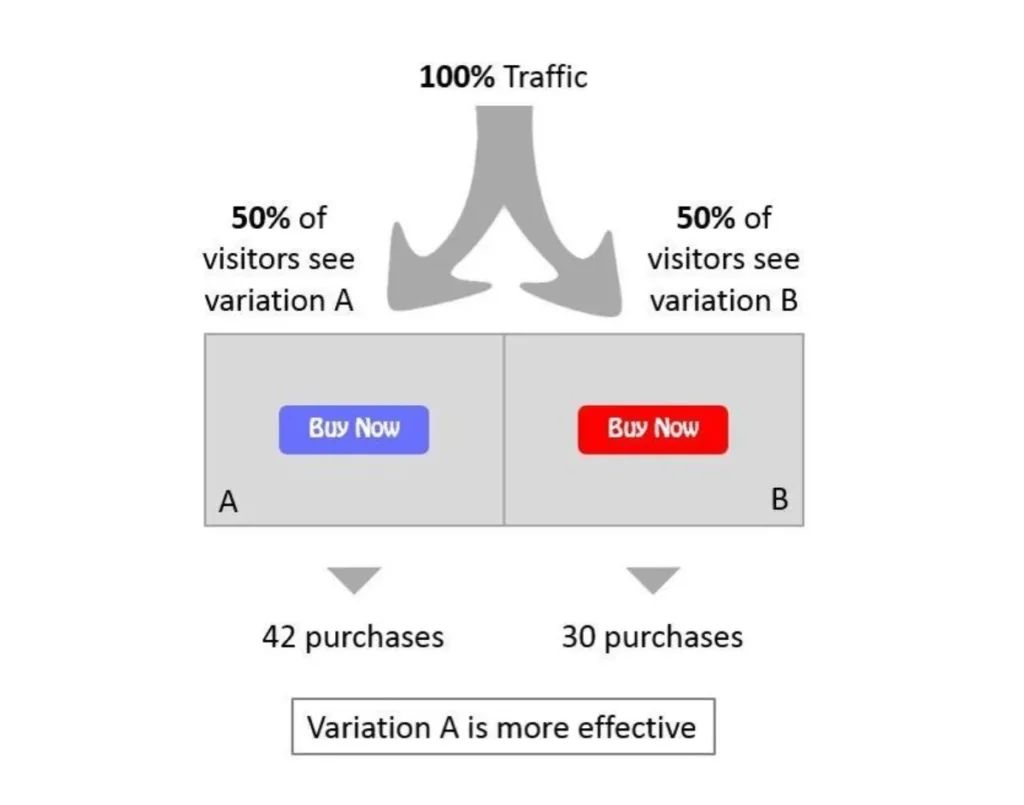
11. A/B Testing

Like most product marketing practices — It is essential to have A/B testing when setting up an onboarding flow. Divide your customers into buckets, and plan an A/B testing campaign.

This would help define the best process and practice that resonates with your ideal customer profile. And help reduce abandonment.

12. User Analytics

Tracking user metrics during product onboarding is no less important than monitoring other metrics. Data-driven decisions can improve your onboarding flow.

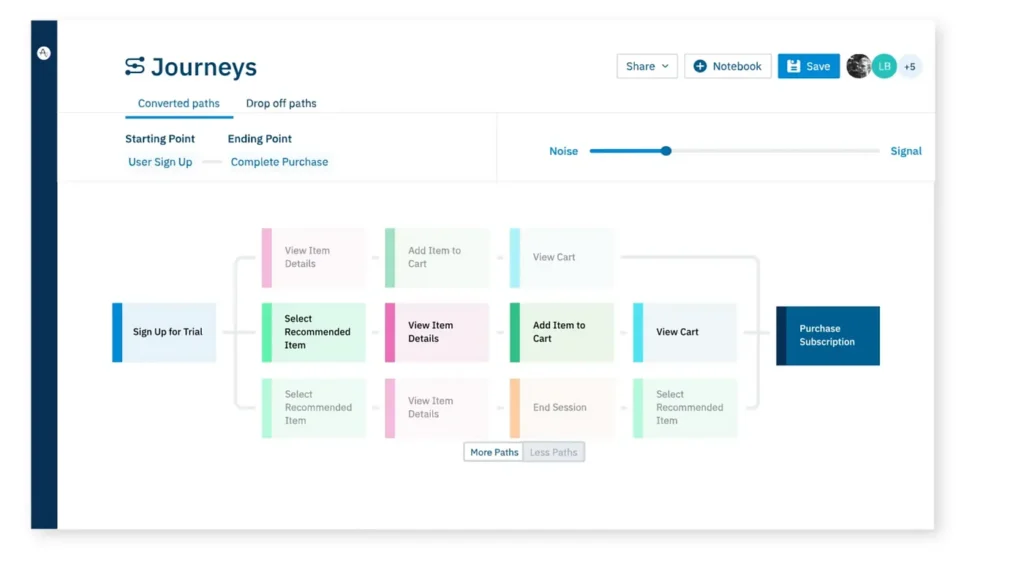
It can help you pinpoint stages where your user drops off or gets stuck. It also helps in understanding the onboarding performance and if there is a need for a significant overhaul.

Tools like AmplitudemixpanelSegment, etc., help collect the user analytics for a product.

13. User Feedback Loop:

Having a defined User feedback Loop is very important. It helps in deriving the iterative process for any onboarding process. Get on a call with your product champions to understand what they like or dislike about the onboarding flow.

Do regular surveys to understand the changing dynamics of your customer interest to enhance the Onboarding journey.

Conclusion

User Onboarding can belong to different organizational functions (PMM, CSM, Product, etc.). However, it remains one of the most collaborative campaigns where people from various teams align to make a new user — a product champion.

The specifics of any onboarding flow will depend on the product, target audience, and business goals.

Regularly iterate and improve your onboarding process based on user feedback and data analysis to ensure it remains effective and user-friendly.

9 steps to create a Sales Battle Card [+6 Free templates]

In the ever-evolving landscape of modern business, a timeless concept has adapted with the times – Battle Cards. While they may not conjure images of medieval warfare, their strategic importance endures.

Consider this: just as warriors of old sent scouts to gather intelligence on their adversaries, today’s savvy businesses deploy Competitive Intelligence and Product Marketing teams to collect insights. These insights form the foundation of Battle Cards, empowering sales and marketing teams with a clear advantage in the competitive arena.

In this digital age, the battles have shifted to virtual battlegrounds, often occurring within Zoom calls rather than on traditional battlefields. Join us as we explore the significance of Battle Cards in contemporary SaaS (Software as a Service) environments, where knowledge is power and success is often determined by a well-prepared playbook.

What exactly is a Battle Card?

A Battle Card is an internal, continuously updated compendium housing comprehensive information about your organization and its competitors. 

It is a repository of critical insights into your products, features, key differentiators, and strategies for adeptly addressing objections, ensuring your team is equipped for victory in modern business.

Battle cards are usually created by competitor intelligence or product marketing teams in a different format (template shared below) that helps sales at various customer lifecycle stages. 

Why do you need Battle cards? 

Battle cards are a forward method for equipping your team to navigate competitive scenarios effectively. They provide a unified reference point, ensuring that your sales team presents a cohesive message regarding Value proposition, key differentiators, objection handling, and more. This consistency empowers individual sales representatives to communicate uniformly, fostering a more robust and impactful sales approach. 

Not having a battle card more than often leads to a varied approach of addressing a prospect question by different people, which makes it extremely difficult to measure the success or failure of a particular process. 

Who uses a battle card?

Battle cards are usually created to be used by any team or individual who is part of the customer-facing units. These may include

  • BDRs (Business Development Representative)
  • AEs (Account executives)
  • SEs (Solution Engineers)
  • Customer Success 
  • Customer Support

Each battle card covers a few different points that help in helping each team handle customer queries effectively. For example, an AE battle card should have more information and details than BDR’s battle card, considering their call are shorter, and the objective is to get the agreement for a more extended call with AEs. Similarly, a solution engineer’s battle card should have more technical information than others. 

Gathering Competitor information for Battle Cards 

Crafting Battle Cards isn’t a walk in the park, especially for teams like Competitive Intelligence (CI) or Product Marketing Management (PMM). It can get tricky, especially when dealing with larger companies with many products.

The key here is to avoid burdening one person with handling all of them.

Here’s a straightforward approach to gather the info you need for creating Battle Cards:

1. Start with Your Competitor’s Website

Begin by checking out your competitor’s website. It’s often a treasure trove of information. Look through these pages to get all the details you need:

  • All Product and Solution Pages
  • Webinars (for understanding their product messaging)
  • Pricing Info
  • Customer Stories (to see who they’re targeting and what they’re offering)
  • Product Updates Blog
  • Knowledge Base, FAQs, and Help Center Docs
  • Developer Documentation (if you’re dealing with technical stuff)
  • Any Page That Talks About Competitors

Tip: Use SEO tools to find any hidden or unlisted pages.

2. Dive into YouTube

YouTube is full of helpful content. Search for anything relevant, like reviews, product demos, or walkthroughs that can help with your Battle Cards.

3. Make the Most of Review Sites

Websites like G2Crowd, Capterra, Trust Pilot, and others are great places to find information. Read customer reviews to understand your competitors’ differences and where they shine.

4. Explore Third-Party Research

Consider using third-party research sites agencies or hiring freelancers if you need help finding much info publicly or if the products are complex. They can dig deep and provide you with valuable competitor details.

5. Tune into Customer Calls

Listening to customer calls can be a goldmine. You can uncover common questions and objections and learn about competitors’ solutions. Tools like Gong and Chorus are handy for listening to recorded calls or joining live ones.

6. Keep an Eye on Events and Forums

Stay connected with events and public forums like Slack groups and Discord communities. These places are excellent for gathering competitor info, understanding customer feedback, and figuring out what’s working and what’s not. Look out for keywords that matter to your analysis.


8 Steps to Craft an Effective Sales Battle Card

Creating a Battle Card is not a one-size-fits-all endeavor. It should encompass various aspects, addressing different functions and stages of the customer lifecycle.

To help you get started, here are some essential elements that your Battle Card should include:

1. Unified Communication and Messaging

Consistency is critical when it comes to communication and messaging across all channels. Your Battle Card should define your messaging and provide an overview of your business. This ensures that your positioning resonates effectively with your customers and helps gauge its success or failure.

2. Competitor Business Overview

To equip your sales team with insights into your customer’s business and their approach, include an overview of your customer’s business. Cover aspects such as their products, customers, product ratings, pricing, and more.

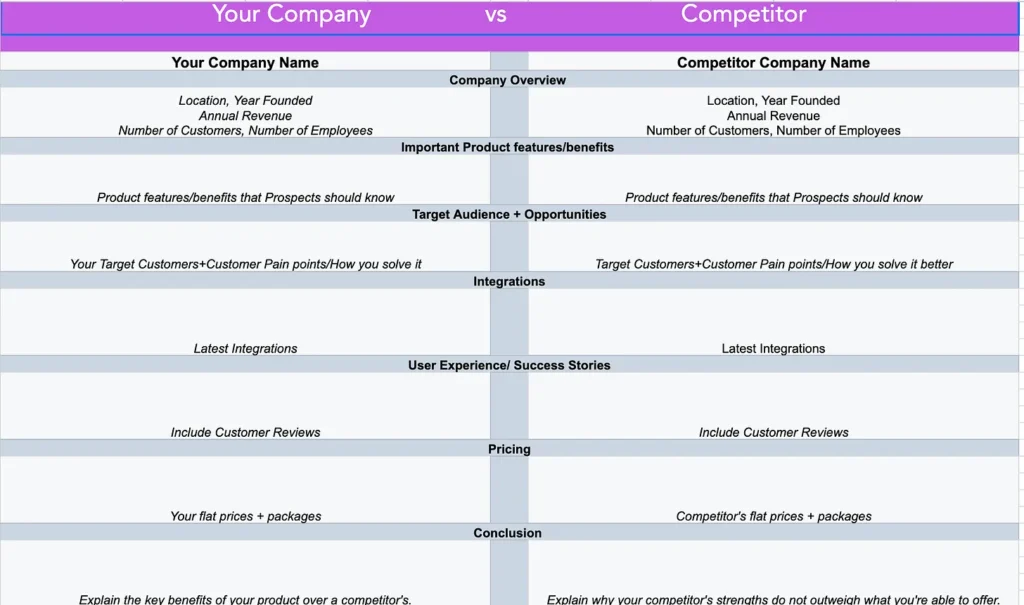
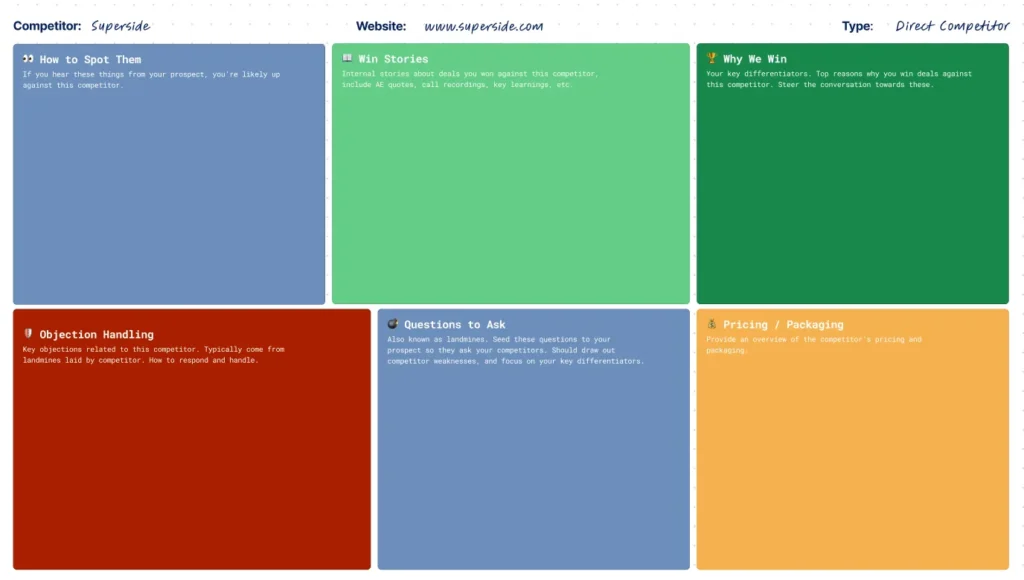
3. How to Spot Them

Create a list of keywords and pointers that assist your sales team in quickly identifying the competitors they are up against. These keywords may also include terms that different businesses interchangeably use. Your Battle Cards should be adept at recognizing these words to prepare your team with the proper responses.

4. Why We Win

Provide your sales team with a list of winning metrics for your product or solution against a competitor. Include real-life success stories from deals you’ve won against this competitor, incorporating quotes and call recordings where possible.

5. Objection Handling

Address the most common objections that your team is likely to encounter. Recognize that customer objections can vary for different units within your team, such as BDRs, AEs, and SEs. Ensure each unit has its own objection-handling questions and appropriate answers. Keep these objection-handling resources regularly updated.

6. Questions to Ask (Landmines)

Include questions that allow you to strategically challenge your competitors and plant requirements in your customer’s mind. These questions should be tailored to highlight your product’s strengths and identify mutually beneficial outcomes for both businesses.

7. Why We Lose

Provide insights into why sales deals may not close or why prospects might favor a competitor over your offering. Offer guidance on how to address these challenges effectively.

8. Pricing & Packaging

Clearly outline and compare your competitors’ pricing and packaging structure with your own. Explain how your offering delivers better value for money or provides additional features.

Also Read – How to price your SaaS product.

9. Good to Have

Consider including these additional elements in your Battle Card:

  • Customer Reviews or Customer Stories
  • Information on Integrations
  • Strategies for Overcoming FUD (Fear, Uncertainty, or Doubt)

Incorporating these elements into your Battle Card will empower your sales team with the information and tools to effectively navigate competitive landscapes and secure victories.

FREE Battle Card Templates

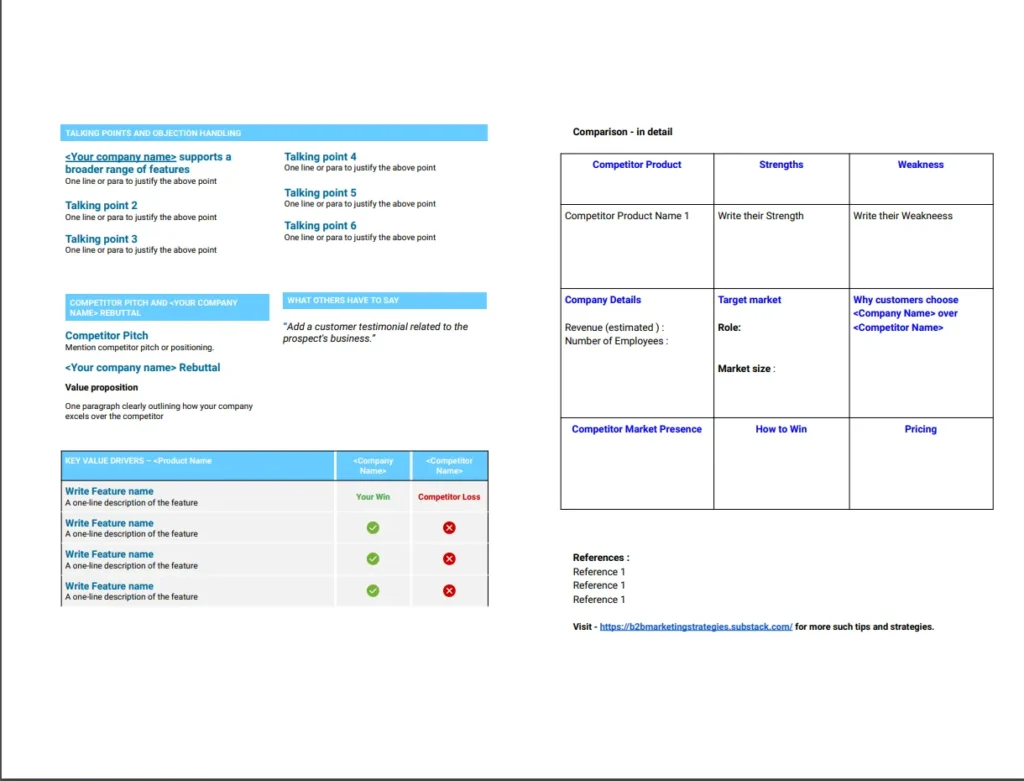
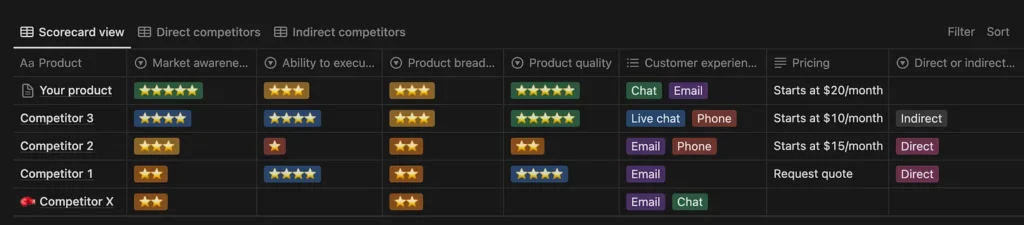
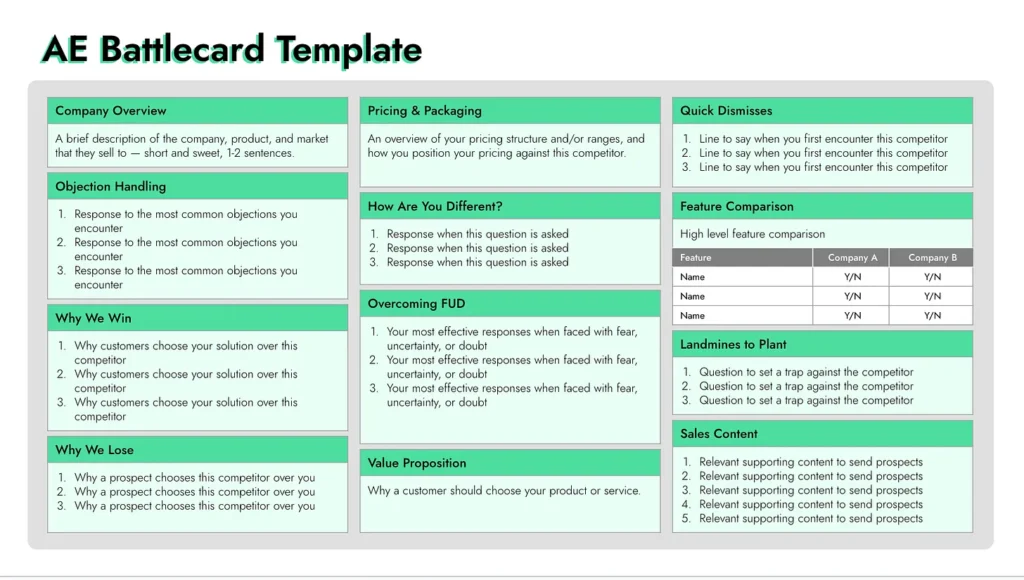
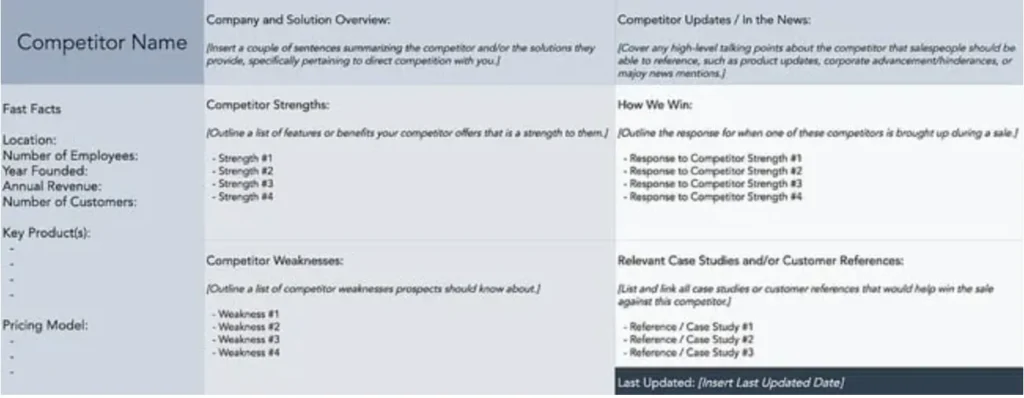
Now that your team knows where to focus start planning out your Sales Battle card with these fantastic templates I have collected from various sources available online 

  1. B2B Marketing Strategies Sales Battle Card Template – HERE
    *This is the template I frequently use

2. Notion Competitor Analysis Battle Card – HERE

3. Role-Based Battle Card Template – HERE

4. Hubspot Battle Card Template – HERE

5. Content-Beta Battle Card Template – HERE

6. Klue Battle Card Template – HERE

Do’s and Don’t while creating a Battle Card

  • Avoid too much information. 
  • Make it easy to find
  • Update regularly (Every quarter is a significant frequency).

Sales-Led Growth vs. Product-Led Growth, and the Compelling Case for Product-Led Sales


“Large enterprise customers – at some point in their lifecycle – want to have a direct engagement with the PLG (Product-Led Growth) company to remove certain blockers and to ensure they are maximizing value from the product. This is also a massive revenue upside opportunity for PLG businesses in general.” 

Two primary paths—Sales-Led Growth and Product-Led Growth—have long been debated, championed, and dissected. Yet, in this exploration, we uncover a third, potentially revolutionary approach: Product-Led Sales.

Dive in as we explore the intricacies of SLG, PLG, and the transformative power of Product-Led Sales.

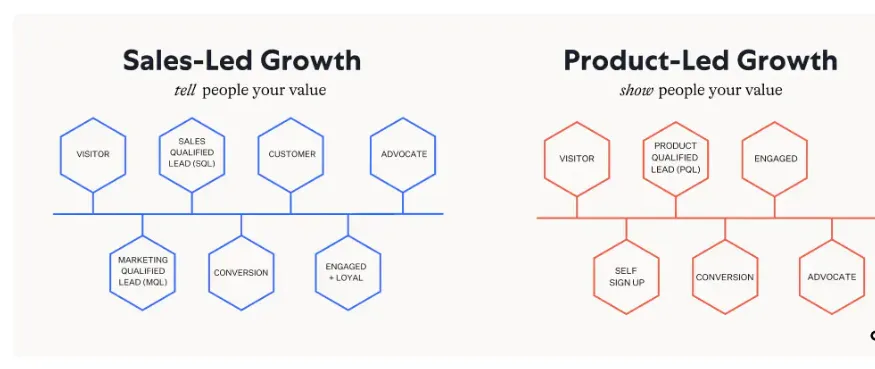
What is Sales-Led growth (SLG)? 

As the name suggests, sales-led growth is a motion where a business grows using a slightly more traditional method. As in early trade, face-to-face communication dominates the scene, crafting tailored pitches per client needs. The direct and customized approach defines Sales-Led Growth. 

Key Components 

  • High Touch Sales Process – SLG prioritizes human interaction. Every sales engagement is an opportunity to understand the customer’s needs and customize solutions per the requirements. 
  • Personalized Solution: Rather than going one-size-fits-all, SLG creates personalized offerings and presentations for every prospect, avoiding generic tropes. 
  • Dedicated Sales Team: SLG is a bandwagon of sales folks with intensive product knowledge and exceptional negotiation skills that help them pitch the product as per customer needs. 

What is Product-Led Growth?

As consumer behavior changed with digitization, the gradual focus on the customer’s digital journey took precedence over it. This is where Product Led Growth entered. In Product-Led Growth, the product itself is a driving factor, leaving decision-making to the customer after using it. 

“Products have become the most dominant form of growth. Your product should be designed in a way that it markets itself.”

Key Components – 

  • User Experience: For any PLG model, user experience is paramount. Businesses strive to make their product so intuitive and valuable that the user naturally wants to adopt and advocate its usage. 
  • Organic Growth: PLG relies heavily on Virality and organic growth. It depends on users sharing the product, putting in some good reviews, etc., avoiding any need for aggressive sales tactics. 
  • Self-Serve Model:  PLG uses Free Trial, Freemium, and friendly user onboarding to empower its users to explore, try, and even purchase products without any sales intervention. 

How to decide between Product-Led Growth vs Sales-Led Growth for your business. 

Should one adopt a Product-Led Growth (PLG) approach or veer towards the tried-and-tested Sales-Led Growth (SLG) model?

Both strategies come with their set of merits, intricacies, and challenges.

Before delving into the stories of tech giants and their strategic pivots, let’s first dissect the core tenets of PLG and SLG, providing you with a clearer roadmap to discern which might align best with your business vision.

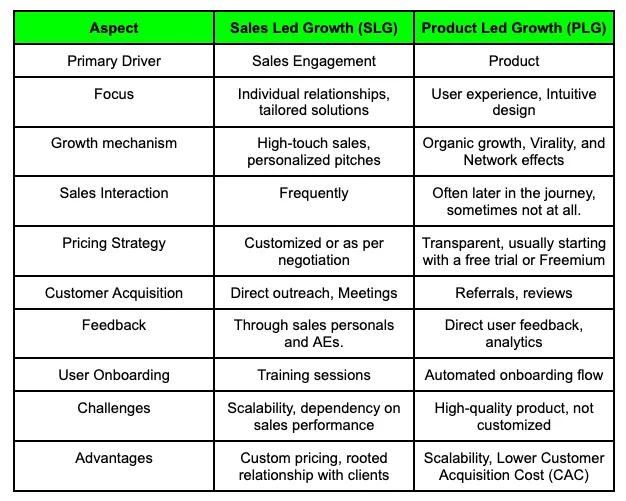
Choosing between PLG & SLG depends on factors like product type, target audience, business model, etc. Here are a few pointers to consider when comparing the two

Product Type

  • SLG – Enterprise software, complex B2B products, and technical tools often scale with Sales-Led Growth. Suitable for products that require some handholding or have a longer learning curve.
  • PLG – Ideal for products that have a simpler onboarding and adoption journey. Have early Aha! Moment, which helps them stick to the product for a longer time. 

Target Market 

  • SLG – Sales Led approach is most suited for enterprise accounts that often have longer sales cycles, involve multiple stakeholders, larger budgets, and require customized solutions for their requirements. 
  • PLG – If targeting a broader user base, including small business individuals who require scalability, the PLG approach is more suitable. 

Sales Cycle 

  • SLG – Works exceptionally well with businesses with longer sales cycles, as building personal relationships that sustain the time is crucial. 
  • PLG – Quick decision-making based on product-defining features dominates PLG growth. Users evaluate the product based on their requirements and make decisions online. 

Resource allocation

  • SLG – Significant resources are spent on building and training the sales team. Additionally, significant resources go into creating sales materials, demos, etc. 
  • PLG – Product development, user experience, and organic marketing resources are available. Customer support plays a crucial role in the post-sign-up journey. 

Feedbacks and Iterations

  • SLG – Feedback is often based on clients’ respective usage. They are fed into the backlogs and picked as per priority. Iterations are usually slowly spread over a few months. 
  • PLG – Since a lot depends on user experience. PLG business uses an agile methodology where feedback and rapid iterations are common. 

Pricing 

  • SLG – Pricing is often customizable, with bulk discounts. In most cases, pricing is personalized as per custom requirements. 
  • PLG – Pricing is primarily transparent and fixed. Tiered-based pricing is the most common pricing model used. 

Market Entrance 

  • SLG – Differentiated, relationship-building, and customized offerings can be key differentiators when entering a crowded market. 
  • PLG – A unique product, key feature differentiator, or ease of use is our highlight of winning in a crowded market 

Successful tech titans each chart a unique growth trajectory, shedding light on evolving business tactics. Consider Dropbox. Initially, they fervently embraced the Product-Led Growth (PLG) model, simplifying user onboarding.

However, as enterprise clientele grew, the allure of a direct sales strategy became undeniable, helping them cater to these clients’ nuanced requirements.

Slack‘s progression paints a similar narrative. Their freemium model, initially, wasn’t just a tool—it was a movement, rapidly embedding itself in workplaces globally.

But as Slack’s momentum surged, the brand realized the potential of a tailored sales strategy, especially when targeting heavyweight corporations.

And who could bypass Zoom in such a discourse? Today, they’re synonymous with virtual connectivity. Yet, their journey began with the product as the hero—intuitive, reliable, and user-friendly.

However, as enterprises queued up for Zoom’s offerings, the brand discerned the merit in a sales-led approach, specifically for these high-ticket accounts.

These tales echo a consistent theme: PLG’s prowess in capturing the market is undisputed, but when navigating the intricate terrains of large enterprises, a sales-led approach isn’t just beneficial—it’s imperative.

Disadvantages of using SLG or PLG models

Sales-Led Growth (SLG) or Product-Led Growth have disadvantages that make businesses choose one. Let’s try to jot down some of the top disadvantages –

Disadvantages of Sales-Led Growth –

  1. High CAC – High CAC is what worries most businesses while adopting the SLG. A personalized approach, building a large sales team, custom demos, content, etc, can significantly increase the customer acquisition cost. 
  2. Scalability – Scaling a SLG model requires a large sales team. That’s one prominent reason most sales-led companies work on limited mapped accounts. 
  3. Longer sales cycle – Large enterprises often involve multiple stakeholders in decision-making, leading to a long sales cycle. 
  4. Messaging Inconsistency – Only when the training process is well defined, different sales reps often pitch business, messaging, and value propositions inconsistently. Often leading to brand disruption, longer sales cycles, and loss of deals. 
  5. Less focus on products – The product focus often takes the back seat regarding sales-led business. The priority is constantly building relationships, which stagnates product growth.

Disadvantages of Product-Led Growth – 

  1. High Ticket Customer – Selling expensive plans or additional tasks without direct sales involvement becomes extremely difficult. 
  2. Intense competition – Since PLG realizes a broader audience, it risks high competition and fewer focus times per user, which might make it easier to get users onboarded. 
  3. Low Conversion – If the product journey needs to be better defined. It might lead to users only sticking to a freemium model, never upgrading to a paid version. 
  4. Product dependability – It is essential for the product to have a good user experience and interaction to convert, which increases the business dependency on the development and associated teams.
  5. Customer Loyalty – Mediocre PLG models often need more customer loyalty and increase churn chances due to no-deep-rooted relationships.

Ultimately, the most suitable model depends on the nature of the product, the target audience, and the company’s resources and strengths.

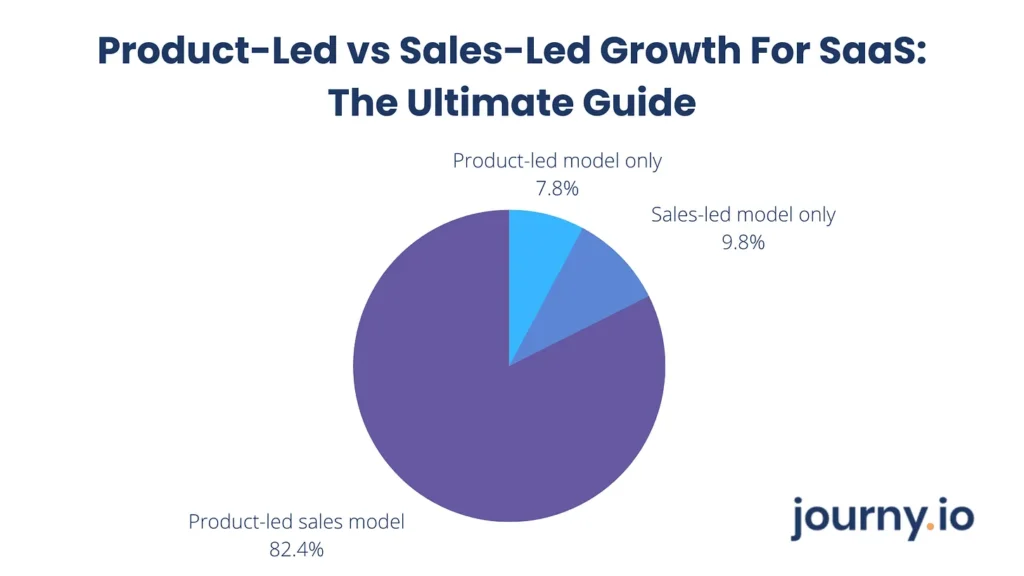
Each SLG and PLG, respectively, come with their own set of advantages and disadvantages. PLG has been a rage for companies starting in the last decade.

But over time, the most prominent advocates of Prodcut-Led Growth realized that to close more significant enterprise deals, they also needed a Sales-Led Growth motion. 

So what’s the future for the new-age business

What is product-Led Sales?

“Sales isn’t going away, but the old sales model is undergoing a paradigm shift. The companies that understand this transition and skillfully combine sales efforts with Product-Led Growth are the ones that will thrive.”

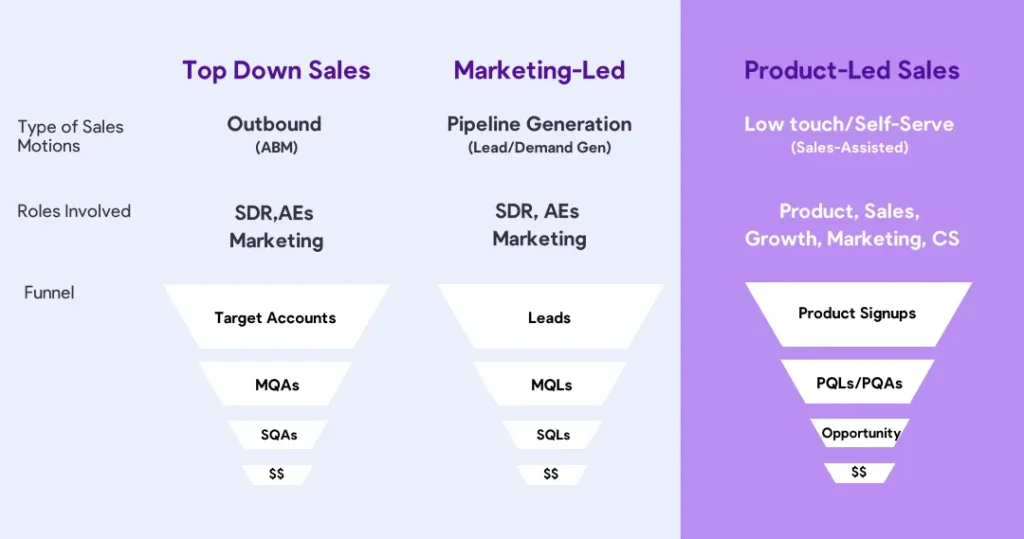
Product-Led Sales is a strategy that infuses the best elements of Product-Led Growth and Sales-Led Growth.

While the product remains the primary driver to attract users, there is also a proactive sales process to amplify growth for high-value accounts or complex product requirements.

How does Product-Led Sales work?

  • Product First – Like the PLG model, the product is at the forefront. User starts their journey with a free trial or freemium to explore the product, and various features are retained on the platform.
  • Sales Intervention: Once a user’s high usage and intent are observed through product analytics, the sales team develops them further, offering customized solutions or premium offerings for higher pricing.
  • Customized Approach: Unlike traditional Sales, PLS is not invasive. The sales process is triggered only based on customer usage data and interest. 

How to Implement Product-Led Sales: A Step-by-Step Guide

  • Product Optimization: Ensure your product offers an intuitive and engaging user experience before anything else. Display key features prominently and have a detailed user-onboarding flow. Have a feedback loop that addresses usability concerns and ensures core feature adoptions. 
  • Segmentation: Use a product analytics tool to track user journeys, actions, and engagement. Divide user groups based on geography, organization size, usage frequency, and feature usage to segment them for further flows. 
  • Outreach: Establish triggers based on pre-defined criteria (like feature usage) loop in the sales team when the user hits these trigger points. Ensure sales outreach is personalized based on use and user behavior. 
  • Sales Process: Train the sales team for a consultative selling approach, helping users find more value from the product and its features. Provide custom solutions or packages for complex requirements.
  • Feedback and Iterations – Actively solicit feedback on products, additional needs, or challenges during sales. Channel this feedback to the product team for feature enhancements or refinement. 
  • Ongoing engagement – Just like organic growth helps build the product’s interest. Similarly, periodic organic efforts on organic activities like content development, webinars, tutorials, etc, help engage users regularly. It also helps in re-engaging dormant users. 

Conclusion

The trajectories of Dropbox, Slack, and Zoom are compelling testaments to the evolving nature of business growth strategies.

While Sales-Led Growth (SLG) offers a personalized touch and Product-Led Growth (PLG) capitalizes on product strengths, the fusion—Product-Led Sales—hints at the future.

As businesses grapple with rapidly changing market dynamics, embracing strategies that offer adaptability, scalability, and, most importantly, a laser focus on customer value becomes crucial.

The intersection of SLG and PLG might be the strategic sweet spot modern businesses have been searching for.

18 types of Product marketing content for B2B businesses

The marketing strategy for any business revolves around content – a lot of content, Top-of-the-funnel, Middle-of-the-funnel, Bottom-of-the-funnel, Sales enablement, customer success, and many more.

These are further broken down into categories and segments depending on the target audience, demography, number of products, etc. 

Behind every successful product lies a tale of targeted content, touching hearts, and solving problems.

While most SaaS businesses focus a lot more on Top-of-the funnel content, which helps them build an audience and convert their visitors to leads, a definite strategy for converting Leads to customers is equally essential. 

This is where Product Marketing Content enables businesses in 2 ways –

  1. Connecting product with marketing
  2. Enabling sales and success

In a content cycle, a product marketer focuses a lot on Bottom-of-the-funnel content, helping visitors understand the product, services, and features, accelerating the buying process, and helping make the decision faster.

The product marketing content (of various types) deep dive into nuances of the product from multiple facets that resonate with customer pain points and help them solve their problem effectively. 

Since Product marketing as a function works closely with Sales. They also develop content that helps in sales enablement – 

  1. Addressing prospect concerns and queries about the product
  2. Creating assets to train and enable sales and success teams to make them market-ready. 

Here is a list of 18 types of Product marketing content for B2B businesses –

  1. Teaser campaigns
  2. Product Launch Blogs
  3. Product Introduction Video
  4. Product Webinar
  5. Case Studies and customer testimonials
  6. White papers
  7. Comparison Doc
  8. Tutorials and Demos
  9. Product Datasheets
  10. Third-Party Reviews
  11. User Manuals and Guides
  12. Tutorial Videos
  13. Digital Adoption Platform
  14. User-Generated Content (UGC)
  15. Referral Campaigns
  16. Community Forums
  17. Product Newsletter
  18. Drip Campaigns

Since most Product marketing content revolves around Bottom-of-the-funnel content and Sales Enablement.

To simplify things, we can divide the content based on the customer journey and product lifecycle. 

  1. Awareness Stage: Introducing the Product
  2. Consideration Stage: Deep Dives and Details
  3. Decision Stage: Convincing the Prospect
  4. Post-Purchase: Onboarding and Retention
  5. Advocacy Stage: Turning Customers into Champions
  6. Continuous Engagement

Product Marketing content based on Customer LifeCycle

1. Awareness Stage – Introducing the Product

This stage is when the user, after his journey across TOFU, MOFU content is introduced to the product or services for the first time. This stage intends to capture attention, spark interest, and create awareness.

The primary objective is to make potential customers curious and eager to learn more. Here’s how content helps in this stage 

  • Teaser campaigns: These campaigns help to generate curiosity and anticipation around the product. The content created should have a mystery around it, making the user guess and talk about what’s coming.

    You can use social media channels and email campaigns to reach your subscribers or create website banners to generate curiosity. Call-to-actions may include hashtags, joining the waitlist, sign-up for early access, etc.  

    Tip: Sticking to brand identity is essential so that the product is recognized as part of the more prominent family. 
  • Product Launch Blogs: One of the favorites for B2B SaaS, Product launch blogs highlight product features, benefits, and the problem the product would solve.

    The blog should have a capturing headline to gain immediate attention, address the pain point, and introduce the product as a solution. Highlight unique features and any other highlights. 

    Tip: Use a popular blogging platform for distribution
  • Product Introduction Video: Create a video explaining the product features, the pain points addressed, and the solution in a visually appealing way. Understand user persona to decide the video style; it could be animated or stock footage video, depending on the type of user segment.

    Product videos are an excellent way to reach a YouTube vase audience and SEO benefits. You can also use the video on the product landing page. 

    Tip: TikTok videos have a great reach in the North American market

2. Consideration Stage: Deep Dives and Details

In the customer’s journey, the consideration stage is highly pivotal. This is where a customer is already aware of the product and is now evaluating if it fits their need and requirements.

They consider every product feature, weighing it against the alternatives and understanding deeper insights that help them make the decisions. 

Here are all the content’s that fall under this stage

  • Product Webinar: Product webinars provide a comprehensive real-time overview of the product, features, and functionalities. Most webinars capture product usage in live scenarios, with active Q&A sessions to engage with customers. 
  • Case Studies and customer testimonials: Case studies are the best way to showcase how your product has been helpful in the real world with examples. Start with a clear problem statement, followed by a solution provided, realized benefits, and a customer testimonial to make it authentic. 
  • White papers: Create in-depth analysis of new industry trends. Offer in-depth research explanations to trending topics that help establish your organization as a thought leader. 
  • Comparison Doc: Create a detailed comparison doc with various alternatives. Have detailed feature breakdowns, pricing comparisons, unique selling propositions, etc, that help differentiate your business and others. 
  • Tutorials and Demos: Product walkthroughs are one of the best ways to help customers understand product features and their usage for the solution. It also helps in clearly explaining the use of the product. Demos or Free trials give a clear first-hand experience, developing authority and reliability. 

3. Decision Stage: Convincing the Prospect

This is a crucial stage for both the customer and the seller. The customer is on the verge of making the decision, and the objective is to instill trust in him about the product’s effectiveness and reliability.

This is done through testimonials, case studies, and exhaustive datasheets. 

  • Product Datasheets: Product datasheets are comprehensive insights into product characteristics and features. Good product datasheets are highly influential pieces of content in decision-making for customers.

    It summarizes a product’s performance, technical aspects, components, materials, and use cases. Product sheets are often created as per customer requirements or are vertical-specific. 
  • Case Studies: As in the previous section, Case studies highlight the real-world efficacy of your product, presenting successful applications and tangible results.

    They begin by outlining the client’s initial challenges, then delve into how the product served as a solution, emphasizing measurable outcomes like sales boosts or time savings.
  • Third-Party Reviews: Third-party reviews have been a rage in recent years. Reviews help build credibility and trust when put forward through a genuine source. Websites like G2Crowd, Capterra, trust Pilot, etc, are popular places to collate user reviews. 

4. Post-Purchase: Onboarding and Retention

For most industries, the average eight-week retention is below 20 percent. Considering the average cost of acquisition of a mid-market SaaS user is about $1500 – $6000, post-purchase engagement and retention remain a central mystery to solve for most SaaS businesses.

Content in this phase aims to guide users through the early stages of the product. A properly executed Onboarding process can lead to long-term satisfied customers and improve retention. Here are different types of content for this stage

  • User Manuals and Guides: The most crucial content at this stage is a thorough, structured walkthrough that helps users understand the product. Getting started, features list, and frequently asked questions are some of the pointers to be covered in the manual.
    Downloadable versions should be easily accessible on the website and in-product and must be shared via email on onboarding. 
  • Tutorial Videos: Video consumption is at an all-time high. Create step-by-step demos and highlight interactive elements to create a user-friendly video. Keep track of video consumption to see how your videos are being used. 
  • Digital Adoption Platform: Digital Adoption Platforms (DAP) are no-code products that integrate over any application, software, or development and provide contextual information to the user as they navigate. DAP is intently focused and helps improve product usage, eventually increasing retention. 

5. Advocacy Stage: Turning Customers into Champions

Customers are not just product users but actively endorse and promote it. This stage is crucial as it leverages word of mouth, arguably the most trusted form of marketing. 

Let’s take a look at the type of content for this stage. 

  • User-Generated Content (UGC): User-generated content refers to any content—videos, blogs, reviews, images, or testimonials—created by users or customers rather than the brand itself. UGC can help significantly reduce content generation costs while enhancing authenticity. UGC is also a great way to generate SEO juice with its fresh take and approach.
  • Referral Campaigns: Referral campaigns incentivize your current customer base to introduce your product to others. Businesses can organically expand their customer base by offering rewards or bonuses for each successful referral. At its core, a referral is a vote of confidence from one customer to another potential customer.
  • Community Forums: Community forums are platforms where users can share their experiences, ask questions, and offer solutions related to the product. It’s a collaborative space where company representatives and product users interact. These forums nurture a sense of community, belonging, and support among users. They can also serve as feedback channels for product improvements.

6.Continuous Engagement

Continuous engagement is vital to maintaining and growing customer relationships, ensuring they remain informed and valued.

It is necessary to keep the customers updated on new releases and product updates that constantly add value to their business. This also helps in reducing churn and increases chances of Upsell & Cross-Sell.

<Read this excellent article – A complete guide to retention and churn rates for B2B SaaS>

  • Product Newsletter: Create a monthly newsletter updating users on the latest product and feature releases to keep customers updated on new improvements.

    Highlight key advantages or value of these updates, accompanied by video gifs to make them interactive and easy to understand. Cross-post this newsletter as a blog to increase the outreach and ripe SEO benefits. 
    Tip: Use data or behavior to tailor content, ensuring it’s most relevant to their interest. 
  • Drip Campaigns: Create Targeted emails based on user behavior, purchase history, or engagement levels. This nurtures and guides users, leading them from customers to product champions.

    Drop in tips, tricks, user stories, etc., to demonstrate potential. Integrate email with CRM for tracking and refining targeting. 

In Conclusion

The journey of content in product marketing is intricate, dynamic, and transformative. As we traverse from the initial touchpoints of awareness to the enduring relationship of advocacy, it’s evident that content is not just about words or videos. 

It’s about connecting, resonating, and constantly engaging with our audience. It’s a continuous dialogue that requires intuition, strategy, and, most importantly, understanding the ever-evolving needs of our customers. 

While the stages we discussed provide a framework, the real magic lies in the nuances—the personalized touch in an email, the authenticity of a testimonial, or the clarity of a tutorial. As SaaS businesses, our challenge is producing content and crafting experiences that lead, guide, and walk alongside our customers at every step of their journey. 

In this digital age, where choices are ample and attention spans are short, let’s pledge to make every word, video, and campaign count. 

Because, in the end, it’s all about forging lasting relationships, one content piece at a time.

To Pivot or Not to Pivot: The Simple DDPF Framework that helps you decide easily

When do you know when to Pivot? 

And 

When do you know you’re almost there and need to persevere more?

On one side, there’s the potential of wasting resources in a direction that’s not viable; on the other, there’s the risk of abandoning a strategy just when it’s about to bear fruit. 

For any business today, agility is more than a buzzword – it’s a survival trait.

Pivoting a product or SaaS business can be crucial to reshape a development or an entire organization. Numerous tales of success pepper the corporate world, showcasing companies that have brilliantly repositioned themselves based on market feedback.

Here are the few notable ones with stories all across the web – 

Groupon: It started as a platform called The Point, aimed at mobilizing groups of people around specific causes or goals.

However, as they monitored user activity and feedback, they saw a different pattern emerging. Users frequently leveraged the platform’s group mechanics for buying deals in bulk, creating a demand pattern that had yet to be the initial focus.

PayPal: Confinity, the predecessor of PayPal, began as a security software company for handheld devices. As they merged with X.com and analyzed user interactions and transaction data, they noticed increased users leveraging their platform for money transfers.

This unexpected user behavior, backed by precise transaction data, led them to pivot towards becoming a dedicated money transfer service. PayPal, as we know it today, arose from closely observing and acting upon these data-driven insights.

The underlying thread in these stories? 

The significance of making the right decision at the right time

One of the most potent tools in a business’s arsenal is the capacity to pivot based on a data-driven approach. Let’s discuss the Data-Driven Pivot framework in detail in this blog.

but…

Before we delve deeper into the intricacies of the DDPF, let’s understand what product and business pivots entail.

What is a Product Pivot?

Product Pivot typically means a change in direction or strategy related to the offered product. This could be due to various reasons. 

  • Market Feedback – The product is not resonating with the target audience
  • Technical Constraints – Sometimes, the product is not technically feasible or too costly to implement
  • Evolution – As the product matures and more data becomes available, more insights suggest a better or more profitable direction.

Examples 

  • Feature refinement – Enhancing popular features that users prefer and phasing out the less popular ones.
  • Platform Change – Moving from one platform to another (e.g., Mobile based to Web-based or vice-versa)
  • Target Audience – Shifting the focus to cater to a different demographic or market segment. 

What is a Business Pivot?

A business pivot is broader and might encompass a wide range of changes. 

Business model change – Moving from one business model to another, for example, from a premium to a subscription model. 

Target Market Shift: Shift from one audience and later target a different audience, for example, moving from B2B to B2C. 

Value proposition: Changing the core value the business provides. 

Examples 

  • Slack: Originally a gaming company named Tiny Speck, they pivoted to become a communication platform when they realized the internal communication tool they developed for their team had more potential than the game they were building.
  • Twitter: Before becoming the microblogging service we know today, Twitter began as Odeo, a network where people could find and subscribe to podcasts.

Why are Pivots crucial?

Customers’ needs and preferences keep evolving. The product needs to adapt to these changes to abstain from being obsolete. 

Pivoting allows a product to stay relevant and meet the demands of its user base. Adapting to continuous user feedback helps align more closely with what users want while navigating competitive pressure. 

Pivoting at the right moment can help address technical limitations, ensuring the product remains scalable and technically sound. A product with a great set of users may generate less revenue than expected. Pivoting can involve exploring new monetization strategies or tweaking existing ones to better align with a market willingness to pay.

Most importantly, Pivoting allows businesses to leverage new trends, ensuring they take advantage of potential growth avenues.

Here is an excellent insight into the Slack Pivot story 

Types of Pivots:

Zoom-in Pivot: Where a single feature becomes the whole product.

Zoom-out Pivot: Opposite of Zoom-in. What was considered the entire creation becomes a mere feature.

Customer Segment Pivot: A change in the target audience for the product.

Platform Pivot: Transition from an application to a platform or vice versa.

When to Pivot? 

Many startups begin their journey with a broad vision, hoping to cater to diverse needs across various sectors and assuming that a wider net can capture a more significant market share. 

But, often, the right path can be carved out with data. 

A business might discover that one product or service performs better by delving deep into metrics and sales trends. It’s not just driving its sales but might influence other offerings’ uptake.

Additionally, there may be more specific sectors where this product resonates more profoundly, offering better conversion rates. 

The Data-Driven Pivot Framework (DDPF)

How do organizations, especially those invested in specific product lines or strategies, decide the right moment and approach for a pivot? 

While the idea of pivoting, popularized by books like ‘The Lean Startup,’ has been around, the Data-Driven Pivot Framework offers a structured, data-centric approach to this age-old challenge.

Enter the Data-Driven Pivot Framework (DDPF), a comprehensive guide to offer businesses a structured, data-centric methodology to evaluate, plan, and execute a pivot, ensuring alignment with market demands and maximizing the chances of success. 

Download Framework – HERE

Let’s dive deep into the intricacies of this framework. 

Data-Driven Pivot Framework (DDPF)

  1. Data Collection 
    1. Tools and Techniques – Utilize analytics tools, customer feedback platforms, and CRM insights to collect relevant data. Implement tools like Google Analytics, Mixpanel, or similar platforms to understand website traffic, user behavior, and funnel performance.
      Platforms like SurveyMonkey, Typeform, or direct customer interviews to understand customer satisfaction, pain points, and needs. This qualitative data is invaluable. Platforms like Hotjar or FullStory can provide heatmaps, session recordings, and funnel analysis.
    2. Timeframe – Establish a consistent timeframe for data collection, ensuring it’s long enough to notice trends but short enough to act timely. For understanding immediate changes, like the impact of a recent marketing campaign or a new feature release, 1-4 weeks might be sufficient.

      For more strategic planning and to smooth out any short-term anomalies, looking at data from 3 months is often helpful. This can be especially relevant for B2B businesses with longer sales cycles. For high-level strategic insights, understanding seasonality, and year-over-year growth, a 12-month period can be beneficial.
  1. Data Analysis
    1. Segmentation – Break down your data by product, customer demographics, regions, and other relevant segments. Before diving into segmentation, clarify why you’re segmenting the data.

      Are you trying to understand a specific user group’s behavior? Do you want to analyze a particular region’s sales? 

      Types of segment
      • Product-Based
      • Customer Demographics
      • Geographical/Regional
      • Behavioral Segmentation
      After segmenting, analyze each segment’s data. This can uncover unique patterns, preferences, or challenges specific to each segment.
    2. Spotting outliers: Identify any standout product, service, or sector that differs from average results. Sometimes, what may seem like an outlier could be an honest and meaningful data point. For instance, a sudden spike in sales could be due to a successful marketing campaign.
    3. Cause and effects – Understand why particular products or services outperform others. Look for factors like marketing campaigns, sales strategies, target audience, etc. Some analysis that can be performed
      1. Correlation Analysis: Check if two variables move together. For instance, did a spike in blog traffic correlate with increased sales?
      2. Historical Data Analysis: Compare current data with historical data to see if similar patterns occurred in the past and what caused them.
      3. External Factor Analysis: Consider external events. For example, did a competitor’s product launch affect your sales? Or did a significant industry event drive more attention to your service?
      4. A/B Testing: If unsure about the cause, consider running controlled experiments. For instance, if you believe a new webpage design improves user engagement, run an A/B test to confirm.
  2. Hypothesis formation
    1. Market Resonance – Identify the sectors or demographics where the product or service changes would resonate most. Understand how competitors’ products or services are positioned in the same segments. Identify any gaps or opportunities that your changes might address.
    2. Pivot Potential – Determine if the standout product or service could benefit from more attention or refinement. Study key performance indicators (KPIs) such as sales, user engagement, and customer feedback related to the standout product or service, and identify areas of strength and those that need improvement.

      Assess whether the product or service can handle increased demand or usage and consider technical constraints, production limits, or potential supply chain challenges.
  3. Strategic Redefinition
    1. Product Refinement: Adjust features or strategies based on insights. This could mean enhancements, removals, or even adding complementary features.

      Review customer feedback, market research, and internal teams, and prioritize the most consistent and impactful insights to address. Assess each possible adjustment’s technical feasibility, resource requirements, and potential user impact.
    2. Sales Realignment: Train the sales team on new strategies and equip them with updated materials and tools. Adjust sales goals and KPIs to match the updated product and potential market. Monitor these metrics closely to gauge the success of the realignment.
    3. Marketing Retargeting: Adjust marketing campaigns to target the identified sector(s), target audience, and demographic effectively. Develop a content plan that addresses the target audience’s needs, questions, and interests. Adjust ad campaigns, considering the platforms frequented by your target demographic.
  4. Implementation:
    1. Pilot: Launching a pilot phase allows for a controlled environment to test the effectiveness of the refined product, sales strategies, and marketing campaigns before fully committing. Outline what you aim to achieve with the pilot, such as user engagement, conversion rates, or sales metrics; these objectives will help evaluate the pilot’s success.
    2. Feedback Loop: Maintain open communication channels with sales, marketing, and customers to gather feedback on the changes. Proactively reach out to stakeholders for their insights. Organize focus groups or interviews with a subset of users to get in-depth feedback.
    3. Iterate: Based on feedback and results, iterate on the changes for continuous improvement. For suggested changes or enhancements, create prototypes or mockups. Test these changes with a small group before broader implementation and schedule periodic reviews to discuss the implemented changes and their outcomes.
  5. Review & Adapt:
    1. Regular Check-ins: Set periodic reviews to evaluate the performance post-pivot. Decide on how often these check-ins should occur — monthly, quarterly, or bi-annually, depending on the nature and pace of your business.

      Clearly define the KPIs, including sales figures, user engagement rates, or customer satisfaction scores. Maintain detailed records of every check-in. Note down what’s working, what’s not, and potential reasons.
    2. Stay Flexible: The business ecosystem is dynamic. Be prepared to adjust the strategy as the market evolves. Regularly scan the market and industry for shifts in consumer behavior, emerging technologies, or new competitors; these insights can hint at necessary adjustments to your strategy. 
      If data or feedback suggests that the current pivot strategy isn’t producing the desired results, don’t hesitate to revisit and adjust.

In Conclusion:

The business landscape is riddled with uncertainties, and the agility to adapt can be the line between obscurity and success.

While pivoting might seem daunting, primarily when deeply invested in a product or strategy, the Data-Driven Pivot Framework (DDPF) acts as a compass, guiding organizations with clarity and precision.

Harnessing the power of data helps identify when to pivot and ensures that the pivot is in the right direction.

Remember, every successful pivot story, from Groupon’s shift to daily deals to PayPal’s transformation into a money transfer service, hinged on keen observation and data-centric decision-making.

Maintaining a robust, data-driven approach will be the linchpin of continued relevance and growth as businesses evolve and markets shift.

As you reflect on your business journey, ask yourself: Are you leveraging your data to its full potential? Is there an unexplored path illuminated by the insights from your metrics? The answers might lead you to your next big pivot and, with it, unparalleled success.

We invite you to share your thoughts, experiences, and any pivot stories you might encounter. We can learn, adapt, and thrive in this ever-evolving business ecosystem as a community.

Lessons from Sending 70+ Cold Emails to 23,000+ Tech Audiences for B2B SaaS Products.

“Every single company in the world should be an email marketing company” – Gary Vaynerchuk. 

But does that hold when reaching out to developers for your B2B Product? 

Cold emailing developers is a game of precision regarding content, timing, tone, and tact. More than any other professional group, developers have cultivated an innate filter for irrelevant or valueless information. 

They’re not just looking at what you say but how, when, and why you’re saying it. This makes your first impression not just essential but critical. It can distinguish between establishing a meaningful connection and your email ending in the trash bin. 

As we delve deeper into nuances of cold emailing in B2B tech spaces, it is essential to understand and appreciate the challenges and opportunities it offers. 

Welcome to the world of crafting cold emails for developers.

TL;DR:

To effectively cold email developers:

  • Research: Ensure your prospect is the right fit.
  • Personalize: Craft a tailored message that reflects genuine interest.
  • Email Composition: Use the 1-line intro, 3-line body, and 1-line conclusion format.
  • Aesthetics: Opt for plain text over flashy designs for authenticity and better deliverability.
  • Timing: Tuesdays and Thursdays, between 10:00 a.m. and 2:00 p.m., yield the best open rates. Avoid Mondays and weekends.

Before You Begin: Prioritize Strategy Over Volume:

Consider your email database a vast, dense forest with potential opportunities (the trees). If you hastily cut down every tree without understanding its potential or value, you risk losing the finest wood to build your doors.

Similarly, indiscriminately sending emails to every contact in your database can lead to missed opportunities and dilute your messaging. 

  • Pitfalls of Spamming – Spamming isn’t just about spamming your recipients. It’s the potential harm that it can inflict on your brand image. Developers, more than most, value their time and privacy.

    Sending them emails, especially those that offer no direct value or relevance, can break trust with the brand. Developers frequently mark emails as spam; this can lead to a decreasing email deliverability rate and domain authority. 
  • Emphasizing the Importance of Testing Messaging and Value Propositions –Your messaging is your voice, and your value proposition is your promise. Getting either wrong can be detrimental.

    Before launching a full-fledged email campaign, testing and refining your messaging is crucial. What works for one developer might not resonate with another. It’s essential to pinpoint the tailored approach for your audience. 
  • The Recommended Approach – Start with a 1:1 Outreach Before Scaling – The beauty of the 1:1 approach is that it provides a personalized touch. It shows the recipients that you have taken the time to understand them and their requirements.

    Must Read – Managing your Marketing data (Tofu, Mofu, Bofu, Customer, External, and more!)
  • By starting on a smaller scale, you can gather feedback, gauge responses, and tweak your strategy. Once you have honed in on a successful approach, consider scaling, ensuring that the outreach remains effective. 

Recognizing the Developer Mindset:

As an audience, developers are unique in their preferences, challenges, and how they perceive value. By acknowledging and addressing these nuances, you’re better poised to craft an email that resonates.

  • Developers as a Unique Audience: What Makes Them Tick?At the heart of every developer is a problem solver, a logical thinker who thrives on challenges and continuous learning. They are in an industry continuously moving, with new technologies and methodologies sprouting up.

    This dynamic nature means that developers are always looking for tools, resources, or information to help them stay ahead. 

    However, this doesn’t mean they’ll entertain every email in their inbox. 

    Developers value precision, relevance, and clarity. You’re on the right track if your email can solve a genuine problem or offer valuable insights into their current needs. 
  • Addressing Misconceptions: Not All Developers are “A-grade Assholes,” But They Do Value Respect and Relevance.

    It’s vital to dispel the stereotype that developers are inherently rude or dismissive. Like any professional, developers guard against unsolicited communication that wastes their time or comes across as indigenous. 

    Their apparent ‘cold’ demeanor to cold emails often stems from a history of being bombarded with irrelevant pitches or generic messages that don’t address their unique needs. 
  • What this means to your emailing strategy is simple:
  • Show respect and ensure relevant information.
  • Respect their time by keeping your email concise and to the point.
  • Show relevance by personalizing the content, demonstrating an understanding of the challenges, and a clear value proposition. 

    To connect with developers, you must meet them on their terms. Understand their motivations, respect their boundaries, and, most importantly, offer genuine value.

Crafting Your Cold Email: Structure and Substance

Cold emailing, especially in the tech world, requires a delicate balance between capturing attention and delivering substance.

While crafting cold emails to developers, remember that developers are often inundated with messages, pitches, and updates. Standing out requires clarity, precision, and a genuine understanding of their needs. 

  • The Power of Brevity – An impactful cold email to a developer is a masterclass in brevity. Aim to capture your core message in three concise paragraphs, ensuring your email doesn’t exceed six lines.

    Why? Short emails are more likely to be read entirely, and they respect the developer’s time. 
  • Email Structure
    • Opening (2 Lines): This is your hook, your moment to grab the reader’s attention. Start with a relevant observation, a relatable challenge they might be facing, or even a recent update from their domain. The idea is to resonate immediately, signaling that the email is relevant and personalized. 
    • Middle (3 Lines): Once you’ve captured their interest, it’s time to deliver the meat of your message. Here’s the core value or proposition you’re bringing to the table. Are you offering a solution to a known challenge? Sharing insights that can help them in their work? Or introducing them to a tool or resource that can make their tasks more manageable? Be direct, genuine, and, most importantly, immediately clear about these benefits. 
    • Conclusion (1 Line): End with a compelling call-to-action (CTA) that leads them to the next steps. Whether it’s a prompt to reply, an invitation to a webinar, or a link to further resources, ensure this CTA is clear and easy to act upon.

e.g.: open 68%, click 35% (Database size 1800)

Offer Real Value- Sending a cold email is not just about getting your foot in the door but building a genuine connection. Thus, it’s crucial to deeply understand the developer’s world and convey how you can genuinely assist or add value to their journey. 

The Nuances of Tone and Messaging

Effective communication is about what you say and how you say it. When contacting developers, especially with cold emails, the nuances in your messaging can make all the difference. Like all professionals, developers desire respect, understanding, and relevance in communications directed at them.

  • Avoid Making Recipients Feel Underqualified- Developers pride themselves on their skill set and ability to keep pace with the rapidly evolving tech landscape. Any hint of condescension or insinuation that they might lack knowledge can backfire drastically.

    Instead of suggesting they need your product or service to “catch up” or “stay relevant,” position your offer as a tool or resource to “enhance” or “optimize” their already proficient capabilities.
  • Subtly Highlighting Industry Changes and Evolutions – The tech industry is constantly in flux, with innovations, methodologies, and best practices emerging regularly. While developers do their best to stay updated, a gentle nudge about the latest trends can be beneficial.

    Frame these updates not as news they’ve missed out on but as a shared exploration of exciting new frontiers in the tech world. Your tone should convey partnership and collaboration rather than a teacher-student dynamic.
  • Creating a Sense of Urgency or FOMO, But Do It Subtly – Fear of Missing Out (FOMO) can be a powerful motivator, but it must be used judiciously, especially with a discerning audience like developers.
  • Avoid overly alarmist statements like “Don’t get left behind!” or “Everyone else is already on board!” Instead, adopt a more nuanced approach.

    Mention how many industry peers value what you offer, share success stories, or discuss the potential benefits of early adoption. The goal is to create a gentle pull towards your offer, not push them into a decision.

The tone and messaging in your cold emails are as crucial as the content itself. Being attuned to the sensibilities and preferences of your developer audience can significantly enhance the effectiveness of your outreach.

Timing: When to Hit Send

Hitting the send button on your cold email is more than just a final action; it’s a strategy, much like in comedy, where timing is everything; the effectiveness of your cold email can significantly hinge on when it lands in the developer’s inbox.

Optimal Email Opening Times for B2B Tech Folks – A developer’s inbox is busy. Amidst a flurry of notifications, alerts, team messages, and more, your cold email needs its spotlight.

Studies and observations indicate specific timeframes during which B2B professionals, including developers, are likelier to engage with their emails.

Prime Times and Why They Matter –

8:30/9:00 a.m. (timezone specific): This is the start of the workday for many. Emails sent during this time can catch developers settling in, going through their daily tasks, and checking their emails for urgent communications. Your message has a chance to be on the top of their list.

1:30 p.m. – 2:15 p.m. (timezone specific): Post-lunch hours often show renewed work engagement. As developers return from their lunch breaks, they will likely check their inboxes to see what they missed or re-prioritize their afternoon tasks. This window allows your email to be among the first things they see.

5:30–6:30 p.m. (timezone specific): As the traditional workday draws close, professionals tend to clear out their emails, ensuring they haven’t missed anything important. By sending your cold email towards the end of the day, you can catch them in this final review, making them more likely to consider your proposition as it winds down.

Understanding and Leveraging the Rhythm of the Developer’s Workday – It’s essential to understand that developers, like other professionals, have rhythms and patterns to their workdays.

These rhythms are shaped by meetings, coding sprints, debug sessions, and other tasks. By strategically placing your email at times when they’re most likely to be receptive, you enhance its visibility and engagement potential.

However, remember that these timeframes are guidelines, not guarantees. It can be beneficial to test different sending times and monitor engagement rates to find the sweet spot for your specific audience.

Email Aesthetics: Less is More

A minimalist approach is often more effective when cold emailing developers in the B2B space. Let’s delve into the reasons why.

The Case Against Colorful Emails:

  • Distraction from the Message: Colorful and intricate designs, though visually appealing, can distract the recipient from the main message. Instead of focusing on your value proposition, they might get sidetracked by the design elements, missing the email’s core purpose.
  • Professionalism: Developers, especially in the B2B sector, often equate simplicity with professionalism. A simple, clean email design can come across as more severe and business-oriented, increasing the chance that your message will be taken seriously.
  • Loading Issues: Heavily designed emails with multiple images or graphics can lead to loading issues, especially on slower connections or older devices. An email that doesn’t display correctly could lead to immediate deletion.

Focus on Clarity and Readability:

  • Font and Size: Use standard, easy-to-read fonts like Arial, Calibri, or Times New Roman. Ensure the font size is readable across devices, with 14-16pt as a recommended body text size.
  • Consistent Formatting: Maintain consistency in headings, subheadings, and body text. Consistent formatting looks professional and makes skimming easier for the reader.
  • Whitespace is Your Friend: Whitespace, or the space around text and elements, improves readability and reduces visual clutter. Make sure your email has ample margins and spacing between lines and paragraphs.
    e.g., Open – 63%, Click – 29%

Minimalistic Design Elements – If you must use design elements, keep them minimalistic. A simple header or a single, relevant image can enhance the email without being overwhelming.

Ensure Your Message Shines Through – Your email’s primary goal is to convey a message. Ensure that your design choices, from font to layout, amplify this message rather than overshadow it. 

Moving Forward: Beyond the First Email

Cold emailing, particularly in the B2B space, is about more than just making a single impression. It’s about initiating a conversation, fostering a relationship, and building trust over time.

While the initial email plays a crucial role in opening the door, the subsequent interactions cement your business’s position in the recipient’s mind. Here’s a breakdown of how to approach this ongoing communication:

The Significance of the First Three Emails –

  • Setting the Tone: Your initial emails should encapsulate the essence of your brand, value proposition, and intent. It’s akin to a handshake; it should be firm, confident, and resonate with genuine meaning.
  • Building Trust: Developers, by nature, are problem solvers. If you can align your solutions with their challenges in the initial interactions, you’ll be on the path to earning their trust. It’s important to remember that trust can be hard to rebuild once broken—primarily via misleading information or over-promising.

Introducing Subsequent Offerings:

  • Webinars and Events: Introducing webinars or events can be a practical next step after establishing a foundational understanding and interest. This provides developers with an opportunity for deeper engagement, hands-on experience, or a more comprehensive knowledge of your offer.
  • Middle-of-the-Funnel Content: As you move them down the conversion funnel, offer more specific, detailed content. This could be in case studies, white papers, or technical guides that delve deeper into your solutions.

    e.g., Open 95%, click 48%
  • Reading Responses:
    • Understanding Signals: Pay attention to how recipients respond (or don’t). Are they opening your emails? Are they clicking on the provided links or showing interest in your promoting events? These signals can provide invaluable insights into their level of interest.
    • When to Push Forward: If a developer shows continued interest, it’s an indication to further the relationship. It may be time for a one-on-one conversation or a personalized demonstration.
    • Knowing When to Step Back: On the flip side, if there’s minimal engagement after multiple interactions, it might be time to re-evaluate your approach or step back. Continuing to push might turn a cold lead even colder.
    • Moving beyond the first email requires a delicate balance of persistence and adaptability. It’s about reading the room, understanding the developer’s perspective, and ensuring that every interaction adds value. 

Conclusion

Developers, the logical thinkers and problem solvers of our digital age deserve nothing less than precision-crafted outreach.

Like their coding environments, their inboxes appreciate clarity, value, and respect. As such, a cold email should not merely be an act of communication but a reflection of genuine understanding, respect, and an intent to provide tangible value.

But, what’s of paramount importance is that outreach to developers isn’t a one-off endeavor. It’s a strategically choreographed dance of initial outreach, continuous engagement, and iterative understanding.

Every step matters, from the initial, concise introduction that resonates with their current challenges to the careful, sequenced follow-ups that dive deeper into value propositions.

Remember, it’s not about the sheer volume of emails sent but the strategic finesse behind each one.

It’s about understanding the developer’s rhythm, from the best times to catch their attention to the nuances in tone that can make or break the connection. With every email sent, there’s an opportunity to strengthen the trust bridge or weaken its foundational pillars.

In sum, the essence of cold emailing developers boils down to three fundamental principles: relevance, respect, and rhythm. Be relevant in your offerings, respect their time and expertise, and sync with their daily rhythm. Master these, and you’re not just sending an email; you’re initiating a meaningful conversation.