

Table of Contents
Imagine this: a company, much like yours, increases its sales conversions by an astounding 30% within a quarter.
The secret?
A meticulously managed CRM pipeline.
Most CRM systems do more than manage customer interactions.
They are the backbone for strategizing and executing campaigns with precision and personalization.
At the heart of the CRM’s effectiveness lies its capability to structure the customer journey into various stages known as – CRM Pipeline Stages.
CRM pipeline stages can be defined as a roadmap for transforming prospects into loyal customers.
Understanding CRM stages is crucial for any marketer, as these stages represent a customer’s journey from initial awareness to product purchase.
Each stage has distinct characteristics and objectives, from identifying initial interests to guiding them toward sales.
Understanding these stages can help marketers tailor their strategies for leads at every step, enhancing the effectiveness and efficiency of their campaign.
The objective of this guide is straightforward yet vital – to equip marketers with the knowledge to navigate and optimize each stage of the CRM pipeline.
This will help marketers create a more optimized sales process and build a lasting customer experience.
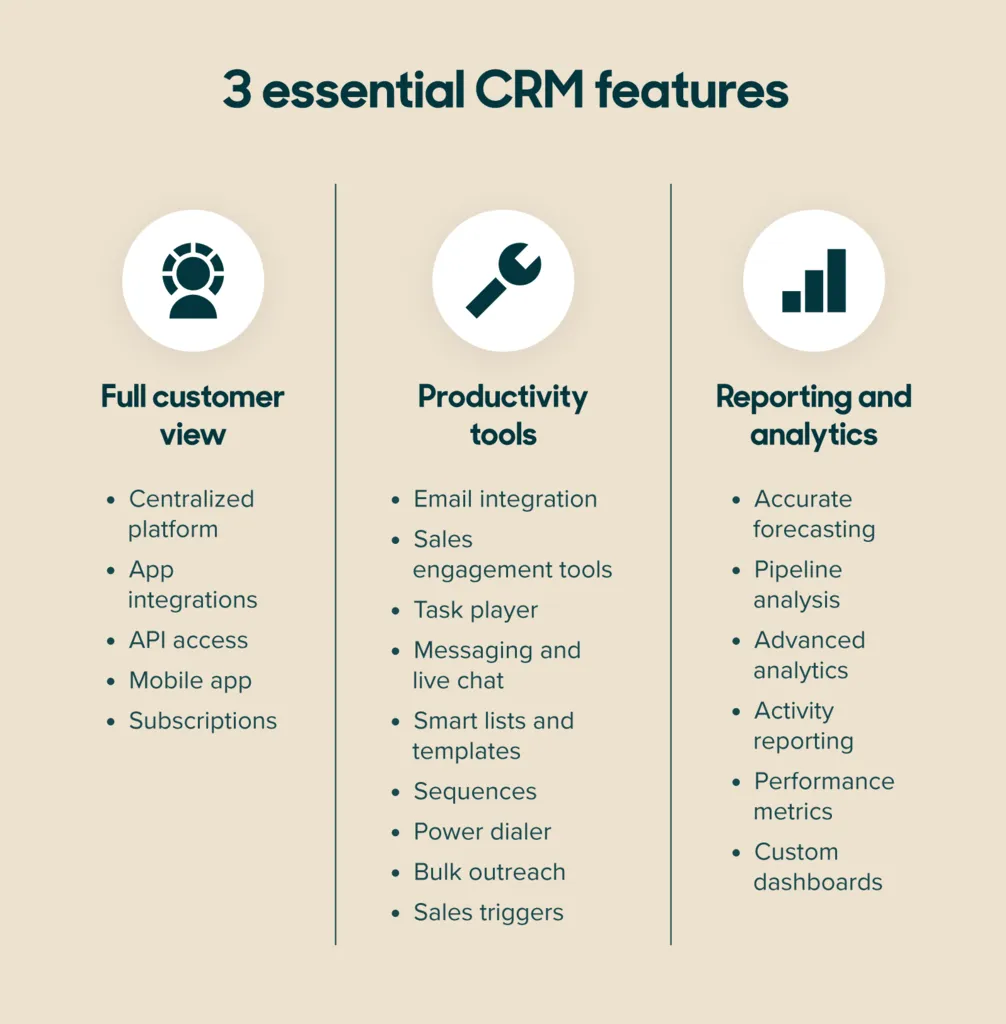
We will delve into each CRM pipeline stage, exploring their significance and how they impact a customer journey.
Whether you are new to marketing or just optimizing your CRM, this guide aims to provide valuable insights to help manage your CRM pipeline.
Why do marketing and sales need a unified CRM?
The alignment of Sales and Marketing is crucial for the success of any business, and a CRM plays a vital part in facilitating it.
The convergence of the two functions is not restricted to sharing information but strategically aligning to improve conversion and customer experience.
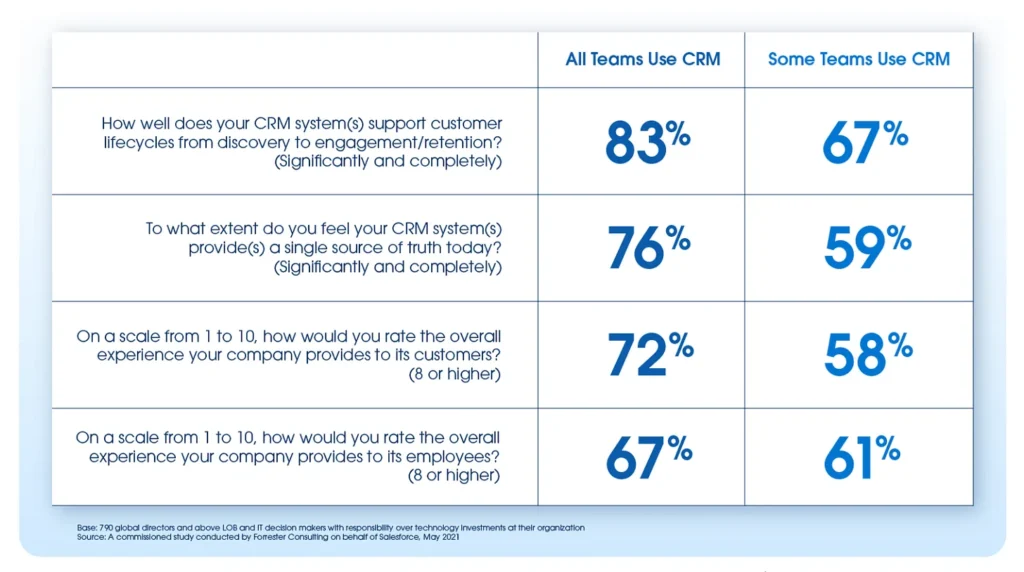
Here are stats from the Salesforce report that says
“There are tangible business benefits when CRM systems are used across teams to support the entire customer lifecycle versus siloed by department:”
Why is it important?
Unified Customer View – It provides a comprehensive view of the customer, allowing marketing and sales to understand better customer needs throughout the journey.
Enhanced Communication – When marketing and sales work together, communication barriers are broken. This ensures that teams work together rather than in silos.
Efficient Lead Management – A well-aligned system ensures that leads are nurtured and passed along the pipeline efficiently, increasing the chances of conversion and reducing the lead-to-sale time.
Breaking Down the CRM Pipeline Stages
CRM pipeline is a structured representation of a customer journey, depicting the progression of a lead (potential customer) through various stages until they become a buyer.
The CRM pipeline is not linear but a sophisticated web of various stages reflecting customer interaction and buying decision-making.
Each stage in the CRM addresses a specific aspect of the customer journey so that marketing and sales can apply targeted strategies based on these stages.
These stages are critical for tracking the effectiveness of sales and marketing strategies and forecasting revenue.
While the specific stages can vary depending on the business model, a typical pipeline includes:
- Lead Generation (Marketing)
- Usage: The initial stage where potential customers are identified and attracted.
- Context: Involves marketing activities like content marketing, SEO, ads, and social media to generate leads.
- Lead Qualification (Marketing/Sales)
- Usage: Determining if leads have the potential to become customers.
- Context: Often involves using BANT (Budget, Authority, Need, Timeline) or similar models to evaluate leads.
- MQL (Marketing Qualified Lead)
- Usage: A lead is likelier to become a customer based on their engagement with marketing efforts.
- Context: Identified through actions like downloading content or high email engagement.
- SAL (Sales Accepted Lead)
- Usage: A lead accepted by the sales team for follow-up, indicating potential for conversion.
- Context: Overlaps with SQL criteria imply the sales team’s agreement to pursue the lead.
- SQL (Sales Qualified Lead)
- Usage: A lead evaluated by the sales team as ready for direct sales follow-up.
- Context: Meets specific criteria demonstrating interest in purchasing.
- Prospecting (Sales)
- Usage: Initiating contact with qualified leads to assess their interest.
- Context: Involves reaching out through calls, emails, or LinkedIn.
- Needs Assessment (Sales)
- Usage: Understanding the specific needs and pain points of prospects.
- Context: Conducting detailed discussions or surveys to identify requirements.
- Proposal/Presentation (Sales)
- Usage: Presenting a solution that addresses the prospect’s needs.
- Context: Tailoring proposals or demos to the prospect’s problem.
- Negotiation (Sales)
- Usage: Finalizing terms of the deal.
- Context: Discuss and agree on pricing, terms, and conditions.
- Closing (Sales)
- Usage: Concluding the sales process with a purchase.
- Context: Final agreement and signatures on contracts.
- Closed Won
- Usage: The stage where the sales process successfully concludes with a purchase.
- Context: Lead makes a purchase or signs a contract.
- Closed Lost
- Usage: The stage where the lead does not make a purchase.
- Context: The lead opts for a competitor or loses interest.
- Disqualified
- Usage: A lead determined as not fit for the company’s offerings.
- Context: Lack of fit based on budget, authority, need, or timing.
- Post-Purchase (Sales/Marketing)
- Usage: Ensuring customer satisfaction and loyalty post-sale.
- Context: Providing support, onboarding, and follow-up services.
*In some models, particularly for complex B2B sales, these stages might be further divided or include additional steps like pilot projects or legal reviews.
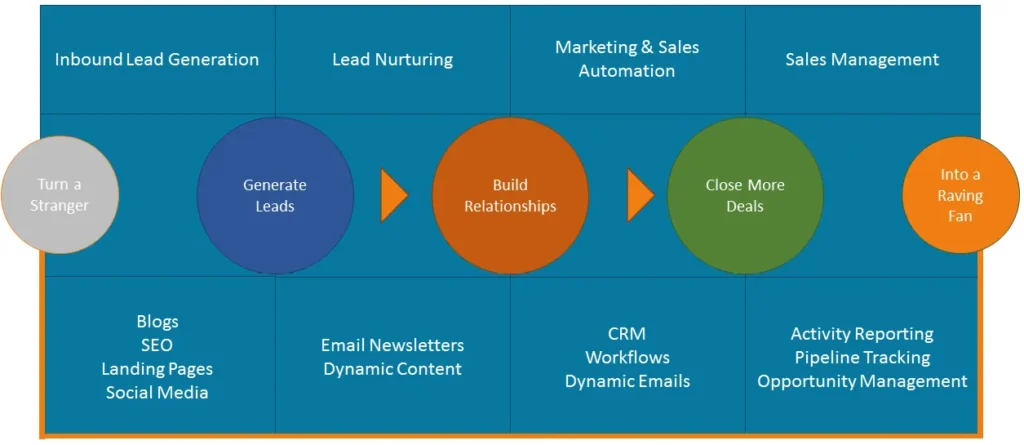
The alignment of marketing and sales in managing these pipeline stages is crucial for the smooth transition of leads from initial awareness to becoming customers.
(Stage 1 to Stage 3) – Key Strategies for Early CRM Pipeline Stages
- Stage 1 – Lead Generation
- CRM system adeptly captures leads from various sources like websites, events, trade shows, etc. To enhance lead quality, focus on the right audience, and capture comprehensive data.
Use CRM to identify the Ideal Customer Profile and capture the right information, such as personal details, source, and interest.
- CRM system adeptly captures leads from various sources like websites, events, trade shows, etc. To enhance lead quality, focus on the right audience, and capture comprehensive data.
- Stage 2 – Lead Qualification
- Implement a lead scoring system within your CRM to evaluate leads based on demographic, engagement, behavior, or other metrics.
This process helps in distinguishing potential leads from less viable ones. Leverage CRM segmentation functionality to follow up with personalization.
- Implement a lead scoring system within your CRM to evaluate leads based on demographic, engagement, behavior, or other metrics.
- Stage 3 – MQL (Marketing Qualified Lead)
- Transitioning a lead to MQL is gauging a prospect’s likelihood to purchase. Track lead interactions like website visits or content downloads. This data helps identify leads engaging more with your marketing content, signaling readiness for sales engagement.
*Ensure smooth handover to the sales team by setting up CRM alerts for when leads attain MQL status and providing sales with comprehensive insights for effective follow-up.
- Transitioning a lead to MQL is gauging a prospect’s likelihood to purchase. Track lead interactions like website visits or content downloads. This data helps identify leads engaging more with your marketing content, signaling readiness for sales engagement.
In the early stages, the CRM is a strategic tool that measures relevant signals and transitions a lead from marketing to sales with the right intent and information.
(Stage 4 to Stage 8) – Streamlining Mid-Pipeline Stages in CRM
- Stage 4 – 6 – From SAL to Prospecting
- The stage between Sales Accepted Lead and Sales Qualified Lead is crucial in the CRM pipeline. At this juncture, sales accepts the lead from marketing, evaluating the buying potential or the conversion possibilities.
The sales team gauges the marketing interaction of the lead to evaluate its qualification as a buyer. It is essential to refine SQL criteria regularly to improve the lead quality.
One can also analyze past interactions and preferences logged in the CRM to tailor communication and improve engagement.
- The stage between Sales Accepted Lead and Sales Qualified Lead is crucial in the CRM pipeline. At this juncture, sales accepts the lead from marketing, evaluating the buying potential or the conversion possibilities.
- Stage 7 – Needs Assessment (Sales)
- In the need assessment, understanding and addressing the specific needs of each prospect is the key.
Use the CRM to collect and analyze data of all previous relevant customers and interactions, enabling sales reps to create a tailored approach.
The data can also be used to conduct personalized discussions, thereby identifying prospects’ exact needs and pain points.
- In the need assessment, understanding and addressing the specific needs of each prospect is the key.
- Stage 8 – Proposal
- Crafting a proposal that resonates with the prospect is critical.
Use the information in the CRM to craft a personalized proposal that directly addresses the specific challenge based on the interaction and information available.
Keep track of how the prospect uses the proposal – number of opens, clicks, shares, etc.- and gather feedback.
Enable continuous improvements to your proposal strategy.
- Crafting a proposal that resonates with the prospect is critical.
Managing these middle stages in the CRM pipeline ensures that leads are nurtured with personalized attention, enhancing the probability of successful conversions.
(Stage 9 – Stage 11) – Closing Stages – Sealing the Deal and Beyond
- Stages 9-11: From Negotiation to ClosingThe final stage of the pipeline is crucial; this is where negotiations turn into closures. Strategies for this stage include
- Strategic Negotiations: – Utilize CRM data to understand prospect’s needs and interactions, which could be leverage for negotiation. This information helps in more strategic and informed bargaining.
- Closing with confidence – CRM systems aid in closing deals by providing a comprehensive view of the lead’s journey. This helps address any final concern by the prospect and offers tailored closure.
*Set up automated reminders and follow-ups in the CRM to ensure timely communication and maintain momentum toward deal closure.
- Post-Purchase: Ensuring Customer SatisfactionAfter closing a deal, the focus shifts to nurturing customer relationships. Strategies for effective post-purchase engagement include:
- Onboarding and Support: Utilize CRM to manage and streamline the onboarding process. Provide comprehensive support and resources, ensuring a smooth transition for the customer.
- Regular Check-ins: Schedule regular follow-ups and check-ins using CRM reminders.
- Building Loyalty: CRM tools can track customer feedback, manage loyalty programs, and personalize ongoing communication. This consistent engagement fosters a sense of value and loyalty among customers.
Successfully managing the CRM pipeline’s closing stages leads to successful sales and lays the foundation for long-term customer relationships.
Conclusion
As we wrap up this guide, take a moment to reflect on how these stages align with your current practices and where there’s room for innovation.
Whether you’re just setting up your CRM journey or are on the path to refining an established system, there’s always a new layer, a fresh perspective to explore.
So, go forth and apply these insights.
Experiment, refine, and watch as your CRM pipeline transforms from a mere business process into a thriving ecosystem of customer engagement and success.