
Table of Contents
“Every single company in the world should be an email marketing company” – Gary Vaynerchuk.
But does that hold when reaching out to developers for your B2B Product?
Cold emailing developers is a game of precision regarding content, timing, tone, and tact. More than any other professional group, developers have cultivated an innate filter for irrelevant or valueless information.
They’re not just looking at what you say but how, when, and why you’re saying it. This makes your first impression not just essential but critical. It can distinguish between establishing a meaningful connection and your email ending in the trash bin.
As we delve deeper into nuances of cold emailing in B2B tech spaces, it is essential to understand and appreciate the challenges and opportunities it offers.
Welcome to the world of crafting cold emails for developers.
TL;DR:
To effectively cold email developers:
- Research: Ensure your prospect is the right fit.
- Personalize: Craft a tailored message that reflects genuine interest.
- Email Composition: Use the 1-line intro, 3-line body, and 1-line conclusion format.
- Aesthetics: Opt for plain text over flashy designs for authenticity and better deliverability.
- Timing: Tuesdays and Thursdays, between 10:00 a.m. and 2:00 p.m., yield the best open rates. Avoid Mondays and weekends.
Before You Begin: Prioritize Strategy Over Volume:
Consider your email database a vast, dense forest with potential opportunities (the trees). If you hastily cut down every tree without understanding its potential or value, you risk losing the finest wood to build your doors.
Similarly, indiscriminately sending emails to every contact in your database can lead to missed opportunities and dilute your messaging.
- Pitfalls of Spamming – Spamming isn’t just about spamming your recipients. It’s the potential harm that it can inflict on your brand image. Developers, more than most, value their time and privacy.
Sending them emails, especially those that offer no direct value or relevance, can break trust with the brand. Developers frequently mark emails as spam; this can lead to a decreasing email deliverability rate and domain authority. - Emphasizing the Importance of Testing Messaging and Value Propositions –Your messaging is your voice, and your value proposition is your promise. Getting either wrong can be detrimental.
Before launching a full-fledged email campaign, testing and refining your messaging is crucial. What works for one developer might not resonate with another. It’s essential to pinpoint the tailored approach for your audience. - The Recommended Approach – Start with a 1:1 Outreach Before Scaling – The beauty of the 1:1 approach is that it provides a personalized touch. It shows the recipients that you have taken the time to understand them and their requirements.
Must Read – Managing your Marketing data (Tofu, Mofu, Bofu, Customer, External, and more!)

- By starting on a smaller scale, you can gather feedback, gauge responses, and tweak your strategy. Once you have honed in on a successful approach, consider scaling, ensuring that the outreach remains effective.
Recognizing the Developer Mindset:
As an audience, developers are unique in their preferences, challenges, and how they perceive value. By acknowledging and addressing these nuances, you’re better poised to craft an email that resonates.
- Developers as a Unique Audience: What Makes Them Tick?At the heart of every developer is a problem solver, a logical thinker who thrives on challenges and continuous learning. They are in an industry continuously moving, with new technologies and methodologies sprouting up.
This dynamic nature means that developers are always looking for tools, resources, or information to help them stay ahead.
However, this doesn’t mean they’ll entertain every email in their inbox.
Developers value precision, relevance, and clarity. You’re on the right track if your email can solve a genuine problem or offer valuable insights into their current needs. - Addressing Misconceptions: Not All Developers are “A-grade Assholes,” But They Do Value Respect and Relevance.
It’s vital to dispel the stereotype that developers are inherently rude or dismissive. Like any professional, developers guard against unsolicited communication that wastes their time or comes across as indigenous.
Their apparent ‘cold’ demeanor to cold emails often stems from a history of being bombarded with irrelevant pitches or generic messages that don’t address their unique needs.

- What this means to your emailing strategy is simple:
- Show respect and ensure relevant information.
- Respect their time by keeping your email concise and to the point.
- Show relevance by personalizing the content, demonstrating an understanding of the challenges, and a clear value proposition.
To connect with developers, you must meet them on their terms. Understand their motivations, respect their boundaries, and, most importantly, offer genuine value.
Crafting Your Cold Email: Structure and Substance
Cold emailing, especially in the tech world, requires a delicate balance between capturing attention and delivering substance.
While crafting cold emails to developers, remember that developers are often inundated with messages, pitches, and updates. Standing out requires clarity, precision, and a genuine understanding of their needs.
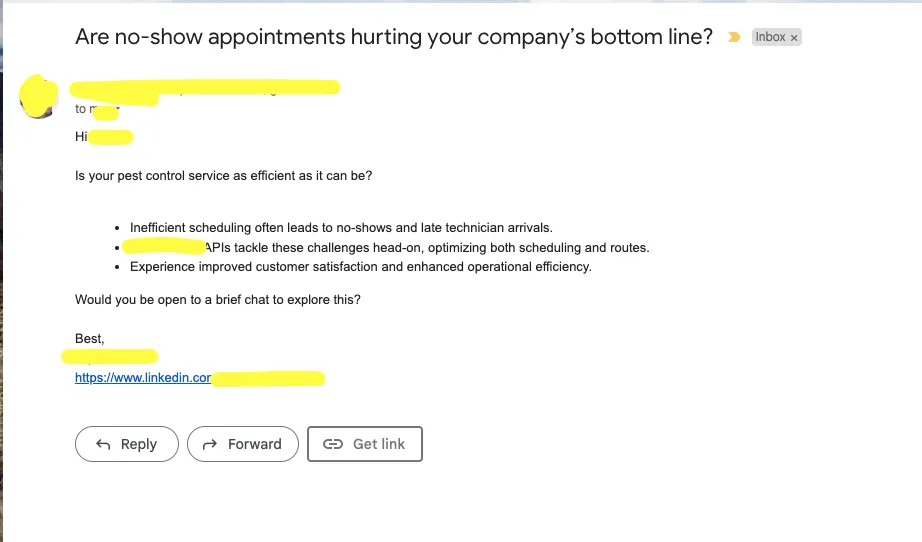
- The Power of Brevity – An impactful cold email to a developer is a masterclass in brevity. Aim to capture your core message in three concise paragraphs, ensuring your email doesn’t exceed six lines.
Why? Short emails are more likely to be read entirely, and they respect the developer’s time. - Email Structure
- Opening (2 Lines): This is your hook, your moment to grab the reader’s attention. Start with a relevant observation, a relatable challenge they might be facing, or even a recent update from their domain. The idea is to resonate immediately, signaling that the email is relevant and personalized.
- Middle (3 Lines): Once you’ve captured their interest, it’s time to deliver the meat of your message. Here’s the core value or proposition you’re bringing to the table. Are you offering a solution to a known challenge? Sharing insights that can help them in their work? Or introducing them to a tool or resource that can make their tasks more manageable? Be direct, genuine, and, most importantly, immediately clear about these benefits.
- Conclusion (1 Line): End with a compelling call-to-action (CTA) that leads them to the next steps. Whether it’s a prompt to reply, an invitation to a webinar, or a link to further resources, ensure this CTA is clear and easy to act upon.
e.g.: open 68%, click 35% (Database size 1800)
Offer Real Value- Sending a cold email is not just about getting your foot in the door but building a genuine connection. Thus, it’s crucial to deeply understand the developer’s world and convey how you can genuinely assist or add value to their journey.
The Nuances of Tone and Messaging
Effective communication is about what you say and how you say it. When contacting developers, especially with cold emails, the nuances in your messaging can make all the difference. Like all professionals, developers desire respect, understanding, and relevance in communications directed at them.
- Avoid Making Recipients Feel Underqualified- Developers pride themselves on their skill set and ability to keep pace with the rapidly evolving tech landscape. Any hint of condescension or insinuation that they might lack knowledge can backfire drastically.
Instead of suggesting they need your product or service to “catch up” or “stay relevant,” position your offer as a tool or resource to “enhance” or “optimize” their already proficient capabilities. - Subtly Highlighting Industry Changes and Evolutions – The tech industry is constantly in flux, with innovations, methodologies, and best practices emerging regularly. While developers do their best to stay updated, a gentle nudge about the latest trends can be beneficial.
Frame these updates not as news they’ve missed out on but as a shared exploration of exciting new frontiers in the tech world. Your tone should convey partnership and collaboration rather than a teacher-student dynamic. - Creating a Sense of Urgency or FOMO, But Do It Subtly – Fear of Missing Out (FOMO) can be a powerful motivator, but it must be used judiciously, especially with a discerning audience like developers.

- Avoid overly alarmist statements like “Don’t get left behind!” or “Everyone else is already on board!” Instead, adopt a more nuanced approach.
Mention how many industry peers value what you offer, share success stories, or discuss the potential benefits of early adoption. The goal is to create a gentle pull towards your offer, not push them into a decision.
The tone and messaging in your cold emails are as crucial as the content itself. Being attuned to the sensibilities and preferences of your developer audience can significantly enhance the effectiveness of your outreach.
Timing: When to Hit Send
Hitting the send button on your cold email is more than just a final action; it’s a strategy, much like in comedy, where timing is everything; the effectiveness of your cold email can significantly hinge on when it lands in the developer’s inbox.
Optimal Email Opening Times for B2B Tech Folks – A developer’s inbox is busy. Amidst a flurry of notifications, alerts, team messages, and more, your cold email needs its spotlight.
Studies and observations indicate specific timeframes during which B2B professionals, including developers, are likelier to engage with their emails.
Prime Times and Why They Matter –
8:30/9:00 a.m. (timezone specific): This is the start of the workday for many. Emails sent during this time can catch developers settling in, going through their daily tasks, and checking their emails for urgent communications. Your message has a chance to be on the top of their list.
1:30 p.m. – 2:15 p.m. (timezone specific): Post-lunch hours often show renewed work engagement. As developers return from their lunch breaks, they will likely check their inboxes to see what they missed or re-prioritize their afternoon tasks. This window allows your email to be among the first things they see.
5:30–6:30 p.m. (timezone specific): As the traditional workday draws close, professionals tend to clear out their emails, ensuring they haven’t missed anything important. By sending your cold email towards the end of the day, you can catch them in this final review, making them more likely to consider your proposition as it winds down.
Understanding and Leveraging the Rhythm of the Developer’s Workday – It’s essential to understand that developers, like other professionals, have rhythms and patterns to their workdays.
These rhythms are shaped by meetings, coding sprints, debug sessions, and other tasks. By strategically placing your email at times when they’re most likely to be receptive, you enhance its visibility and engagement potential.
However, remember that these timeframes are guidelines, not guarantees. It can be beneficial to test different sending times and monitor engagement rates to find the sweet spot for your specific audience.
Email Aesthetics: Less is More
A minimalist approach is often more effective when cold emailing developers in the B2B space. Let’s delve into the reasons why.
The Case Against Colorful Emails:
- Distraction from the Message: Colorful and intricate designs, though visually appealing, can distract the recipient from the main message. Instead of focusing on your value proposition, they might get sidetracked by the design elements, missing the email’s core purpose.
- Professionalism: Developers, especially in the B2B sector, often equate simplicity with professionalism. A simple, clean email design can come across as more severe and business-oriented, increasing the chance that your message will be taken seriously.
- Loading Issues: Heavily designed emails with multiple images or graphics can lead to loading issues, especially on slower connections or older devices. An email that doesn’t display correctly could lead to immediate deletion.
Focus on Clarity and Readability:
- Font and Size: Use standard, easy-to-read fonts like Arial, Calibri, or Times New Roman. Ensure the font size is readable across devices, with 14-16pt as a recommended body text size.
- Consistent Formatting: Maintain consistency in headings, subheadings, and body text. Consistent formatting looks professional and makes skimming easier for the reader.
- Whitespace is Your Friend: Whitespace, or the space around text and elements, improves readability and reduces visual clutter. Make sure your email has ample margins and spacing between lines and paragraphs.
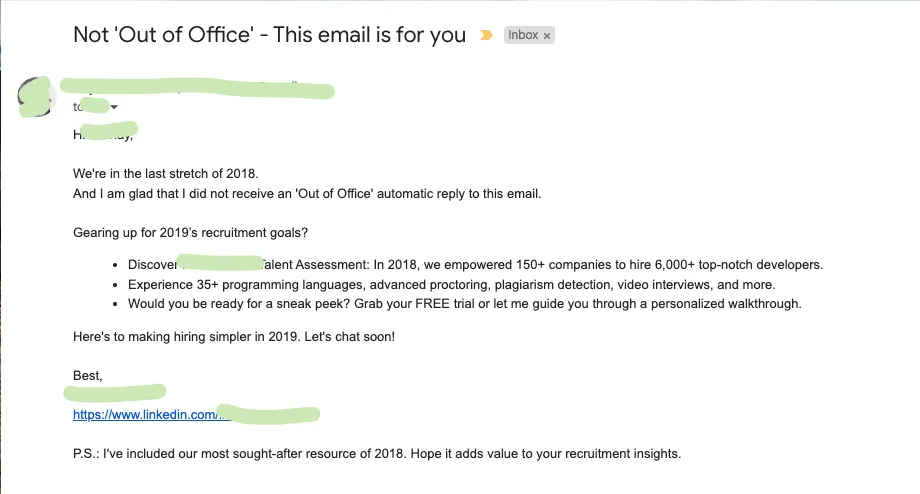
e.g., Open – 63%, Click – 29%
Minimalistic Design Elements – If you must use design elements, keep them minimalistic. A simple header or a single, relevant image can enhance the email without being overwhelming.
Ensure Your Message Shines Through – Your email’s primary goal is to convey a message. Ensure that your design choices, from font to layout, amplify this message rather than overshadow it.
Moving Forward: Beyond the First Email
Cold emailing, particularly in the B2B space, is about more than just making a single impression. It’s about initiating a conversation, fostering a relationship, and building trust over time.
While the initial email plays a crucial role in opening the door, the subsequent interactions cement your business’s position in the recipient’s mind. Here’s a breakdown of how to approach this ongoing communication:
The Significance of the First Three Emails –
- Setting the Tone: Your initial emails should encapsulate the essence of your brand, value proposition, and intent. It’s akin to a handshake; it should be firm, confident, and resonate with genuine meaning.
- Building Trust: Developers, by nature, are problem solvers. If you can align your solutions with their challenges in the initial interactions, you’ll be on the path to earning their trust. It’s important to remember that trust can be hard to rebuild once broken—primarily via misleading information or over-promising.
Introducing Subsequent Offerings:
- Webinars and Events: Introducing webinars or events can be a practical next step after establishing a foundational understanding and interest. This provides developers with an opportunity for deeper engagement, hands-on experience, or a more comprehensive knowledge of your offer.
- Middle-of-the-Funnel Content: As you move them down the conversion funnel, offer more specific, detailed content. This could be in case studies, white papers, or technical guides that delve deeper into your solutions.
e.g., Open 95%, click 48%
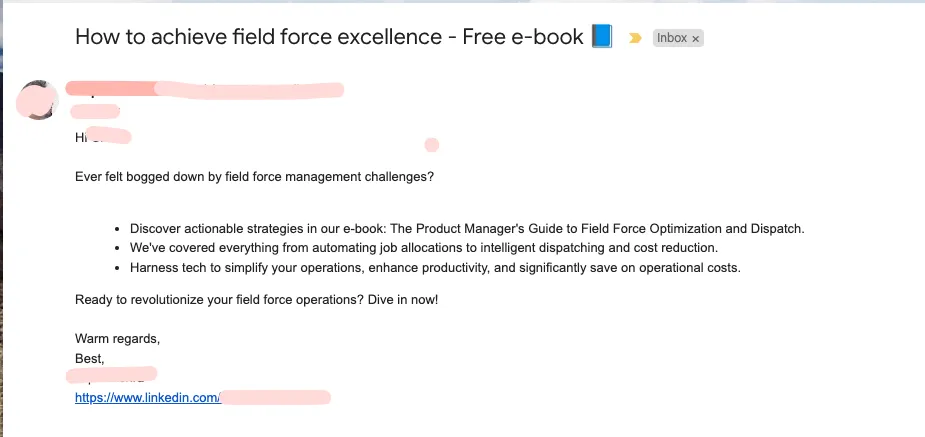
- Reading Responses:
- Understanding Signals: Pay attention to how recipients respond (or don’t). Are they opening your emails? Are they clicking on the provided links or showing interest in your promoting events? These signals can provide invaluable insights into their level of interest.
- When to Push Forward: If a developer shows continued interest, it’s an indication to further the relationship. It may be time for a one-on-one conversation or a personalized demonstration.
- Knowing When to Step Back: On the flip side, if there’s minimal engagement after multiple interactions, it might be time to re-evaluate your approach or step back. Continuing to push might turn a cold lead even colder.
- Moving beyond the first email requires a delicate balance of persistence and adaptability. It’s about reading the room, understanding the developer’s perspective, and ensuring that every interaction adds value.
Conclusion
Developers, the logical thinkers and problem solvers of our digital age deserve nothing less than precision-crafted outreach.
Like their coding environments, their inboxes appreciate clarity, value, and respect. As such, a cold email should not merely be an act of communication but a reflection of genuine understanding, respect, and an intent to provide tangible value.
But, what’s of paramount importance is that outreach to developers isn’t a one-off endeavor. It’s a strategically choreographed dance of initial outreach, continuous engagement, and iterative understanding.
Every step matters, from the initial, concise introduction that resonates with their current challenges to the careful, sequenced follow-ups that dive deeper into value propositions.
Remember, it’s not about the sheer volume of emails sent but the strategic finesse behind each one.
It’s about understanding the developer’s rhythm, from the best times to catch their attention to the nuances in tone that can make or break the connection. With every email sent, there’s an opportunity to strengthen the trust bridge or weaken its foundational pillars.
In sum, the essence of cold emailing developers boils down to three fundamental principles: relevance, respect, and rhythm. Be relevant in your offerings, respect their time and expertise, and sync with their daily rhythm. Master these, and you’re not just sending an email; you’re initiating a meaningful conversation.