Table of Contents
When did you last buy a retail product without any discount?
Discount wars are what keep retail companies afloat a lot of the time.
Slashing prices is the go-to strategy for new businesses and veterans alike. Cutting costs offers a surefire way to lure buyers, presenting them with deals too tempting to ignore.
The allure of discounts is timeless. It’s a psychological win. Discounts bring joy.
The popularity of coupon codes, special offers, and deals has even birthed a niche market. Consumers spend countless hours each week in pursuit of saving a buck.
The logic seems simple. Offer a discount, and watch sales soar.
This holds in the retail sphere. But the rules change when you step into the realm of SaaS.
SaaS is a different game than retail.
In retail, it’s all about the discount dance. Sale after sale, it’s rare for anyone to pay full sticker price. This constant flow of deals keeps businesses alive and kicking.
But if SaaS companies try to play the same game, they will likely stumble. Sales teams in retail focus on hitting their numbers for the week or quarter, banking on slashed prices to draw crowds.
Once the sale’s over and the product’s sold, they’re onto the next deal. They’re not looking to build lasting loyalty with every sale, especially when buyers chase the lowest Price.
In SaaS, you’re not just making a sale but starting a relationship.
The goal isn’t to lure people in with the lowest Price but to win them over with your value. A customer who only signs up because of a discount could leave for a cheaper option later on.
Discounting in SaaS can also make your product seem less valuable. If you’re confident in the worth of your software, why sell it short?
Offering it at a reduced price might make customers wonder if it’s worth the full cost, potentially making them hesitant to pay more later.
Research from Paddle highlights the risks, showing that discounts can slash customers’ long-term value (LTV) by 30%, increase churn, and dampen their willingness to pay full price later.

Heavy discounting may not be the best move for SaaS businesses.
Does this mean you should steer clear of discounts entirely?
Not necessarily.
There’s a place for strategic discounting, but it’s all about finding the right balance.
Understanding the CLTV (Customer Lifetime Value )
Customer Lifetime Value (CLTV) relates to our initial comparison between retail and SaaS.
In retail, the focus is often on the immediate transaction – the here and now. Success is equated by today’s sales figures, not necessarily by the ongoing relationship with the customer.
Contrast this with SaaS, where the value of a customer stretches far beyond their first purchase.
Understanding CLTV in SaaS is crucial because it encapsulates the total worth of a customer over the entire span of their relationship with your service.
This metric isn’t about a single transaction; it’s about every subscription renewal, every add-on purchased, and the comprehensive engagement a customer has with your SaaS product.
Why is nurturing a high CLTV vital for SaaS companies? – Acquiring a new customer can be expensive.
Every marketing dollar spent is an investment not just for a one-off purchase but for a sustained subscription or usage over many months or years.
A high CLTV indicates that your customers are more than just passing through. They’re sticking around, contributing to your revenue more predictably and substantially than any one-time sale could.
Saas Discount Strategy: When and How
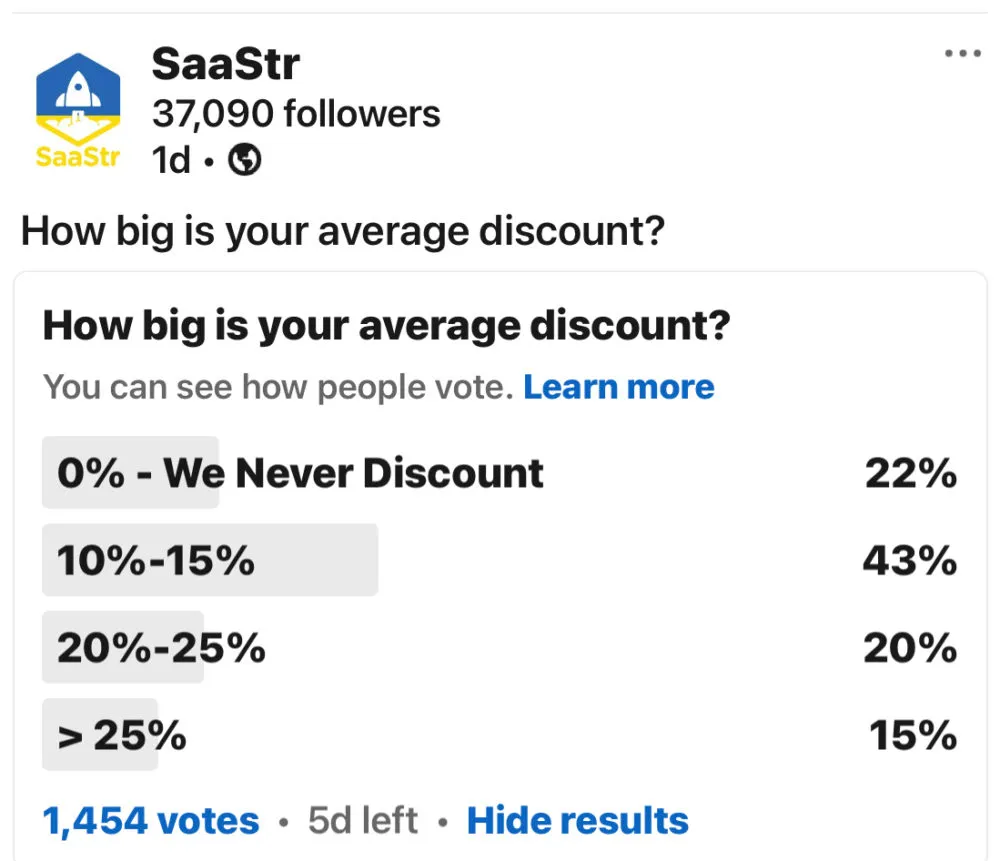
Discounts can transform a simple price cut into a powerful tool for building customer relationships. – knowing not just if but when and how.
Strategic discounting isn’t about indiscriminately slashing prices.
It’s about the right timing and the right context.
Consider discounts as precision instruments to achieve specific goals at specific times. [ref]
Whether it’s attracting first-time users, encouraging upgrades, or rewarding loyalty, the timing of a discount can significantly impact its effectiveness.
When should you consider offering a discount?
Key moments include onboarding new users during a customer’s renewal phase or responding to feedback indicating a price barrier prevents upgrades or additional purchases.
The context here is critical — a well-timed discount can nudge customers towards deepening their engagement with your service, turning a potential one-off interaction into a long-term relationship.
Moreover, strategic discounts can be seen as an investment in customer relationships rather than just boosting short-term sales.
By offering a discount at a pivotal moment in the customer journey, you’re signaling that you value their business and are willing to invest in their satisfaction and continued loyalty.
This approach enhances the perceived value of your service and strengthens the bond between your brand and your customers, contributing to a higher CLTV.
Types of SaaS Discount Strategies
Introductory Offers
Introductory offers are your first hello.
They let new users try your service at a low cost. Make these offers time-limited.
This approach avoids devaluing your product. It creates urgency, leading to trial
and eventual full-price conversion.
Users learn the value of your service. They’re likely to stick around after the discount ends.
Volume Discounts
Volume discounts encourage more use and loyalty.
Offer lower prices for higher usage or subscription levels. This rewards customers for their commitment.
It aligns your success with theirs. Customers get motivated to use your service more.
It also makes their financial planning easier and boosts your revenue.
Loyalty Discounts
Loyalty discounts thank customers for staying with you.
Discounts on renewals or long-term plans reduce churn. They show you value the ongoing relationship.
This builds a strong bond with your brand. In competitive markets, these discounts keep customers from leaving.
You’re doing more than just keeping customers. You’re creating advocates.
Each discount type helps grow your SaaS. Use them wisely to attract, retain, and build a loyal customer base.
This keeps your product’s value high and your customers happy.